
- ACCESS CONTROL SYSTEM
Intercom System Installation: When to Add One Alongside Access Control
- Locksmith Urbana IL
- 8 min read
- Urbana, IL. 61801 / 61802
Access control answers one specific question: is this credential valid. It cannot answer a different, equally important question: who is actually standing at this door. That gap is exactly what intercom system installation with access control closes, and it’s the part almost every vendor-written article skips in favor of a generic “more security is better” pitch.
This guide explains the specific functional gap an intercom fills, when adding one genuinely makes sense for a Champaign County business, and when it’s an unnecessary expense layered onto a system that already works fine without it.
The Gap Access Control Alone Can't Close
A keycard, fob, or PIN code proves that whoever presented it has a valid credential. It says nothing about whether that person is who the credential says they are, and it offers zero solution for anyone who has no credential at all, a delivery driver, a job applicant, a client arriving for a first meeting, or a vendor showing up for scheduled maintenance.
An intercom, particularly a video intercom, solves a different problem entirely: visual and verbal verification before granting entry. Someone inside the building sees and speaks with the visitor before making a decision, then remotely triggers the door release if appropriate. “What Is an Access Control System” blog covers how the credential side of your security setup works if you need that foundation first; this article focuses specifically on what an intercom adds on top of it.
This distinction matters because it reframes the decision. You’re not asking “do we need more security.” You’re asking “does our business regularly encounter people at the door who don’t have, and shouldn’t have, a credential.” If the answer is yes, an intercom addresses a real operational gap. If the answer is no, you may already be adequately covered.
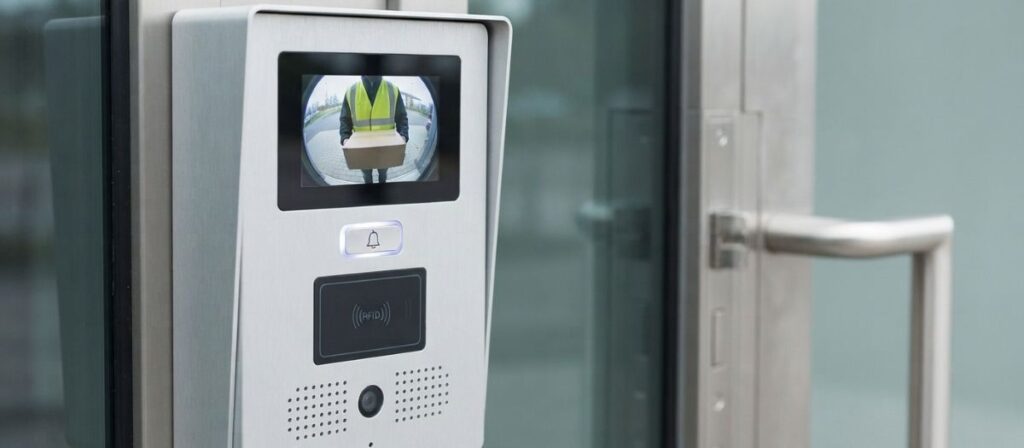
When You Genuinely Need One
Multi-tenant buildings represent the clearest case. If your property has several separate businesses or units, an intercom often becomes the primary way any visitor reaches a specific tenant at all, since there’s no single reception point and no way for a delivery driver or client to know which door leads to which business. Here, the intercom isn’t a security add-on, it’s a basic functional requirement for visitors to find and reach the right party.
Regular deliveries and vendor visits are the second clear case, and competitors mention without explaining the actual mechanism. A delivery driver without a credential has exactly two options at a locked door: prop it open, which defeats your access control entirely, or wait for someone to physically walk over and let them in, which wastes staff time throughout the day. An intercom paired with remote unlock closes this gap directly, letting staff verify and release the door from wherever they’re working without leaving their desk or the sales floor.
After-hours or unstaffed reception periods are the third case. If your business has hours when the front door is locked but people, staff arriving early, a scheduled client, an expected vendor, still need supervised entry, an intercom lets someone inside verify and admit them without walking to the door.
When You Probably Don't Need One
This is the section competitor content almost universally skips, since most of it is vendor-written and incentivized to recommend more hardware regardless of fit.
A single-entrance small office where visitors are exclusively known clients arriving by scheduled appointment, and where staff already greet arrivals at a reception desk during all operating hours, gets limited practical benefit from adding a video intercom on top of that existing process. The human verification already happening at reception does the same job an intercom would automate, just without the additional hardware and installation cost.
Similarly, a business with no regular unscheduled visitor traffic, no walk-in deliveries, no unannounced vendors, no public foot traffic, may find that its existing access control system already covers the realistic entry scenarios it faces. Adding an intercom here is possible, but it’s solving a problem that doesn’t currently exist for that specific operation.
Before committing to this installation, it’s worth being honest about which category your business actually falls into rather than assuming additional hardware is automatically worth the cost.
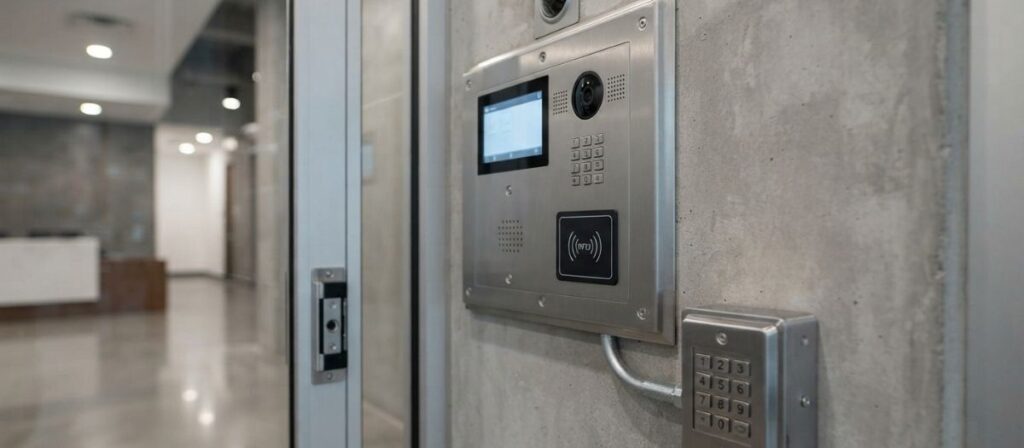
Single-Tenant vs Multi-Tenant: Different Justifications Entirely
Most competitor content treats every intercom installation the same way, but the actual justification differs meaningfully depending on your building type, and that difference should shape what system you install.
In a single-tenant commercial business, an intercom mainly serves visitor verification during specific windows, after hours, during unstaffed periods, or at a delivery entrance separate from the main customer entrance. The system can often be simpler, sometimes a single station tied directly into your existing access control panel.
In a multi-tenant building, the intercom typically needs to route calls to specific units or businesses, support multiple simultaneous tenants, and often integrate with each tenant’s individual access credentials rather than one shared system. This is a more complex installation with more moving parts, and it usually justifies a more capable platform than the single-tenant case requires.
If you’re evaluating quotes for this installation, make sure whoever’s proposing a system understands which category your building falls into, since a single-tenant-appropriate system undersized for a multi-tenant building, or an overbuilt multi-tenant system installed for a single small business, both waste money in different directions.
What Retrofitting an Existing Access Control System Actually Requires
This is the technical gap almost no competitor explains, and it matters directly if your Champaign County business already has access control installed and is now considering adding an intercom rather than building both from scratch.
The intercom’s remote-unlock function needs to communicate with whatever is actually releasing your door, an electric strike or maglock, covered in more depth in “Electric Strike vs Magnetic Lock” blog. Whether the intercom can talk directly to your existing access control panel depends on both systems’ compatibility. Some access control platforms accept a direct signal input from a compatible intercom, allowing the two systems to share the same door hardware seamlessly. Others require a separate relay or bridging controller to translate the intercom’s unlock signal into something your existing panel and door hardware can act on.
This compatibility question should be answered before committing to a specific intercom brand or system. A locksmith or installer needs to know your existing access control platform and door hardware before recommending an intercom, since assuming universal compatibility without checking risks discovering a costly integration problem mid-installation rather than during the quoting process. “How Access Control Systems Work With Existing Locks” blog covers the broader retrofit compatibility question if you’re also evaluating whether your current door hardware supports this kind of integration at all.
What Most Intercom Guides Don't Tell You
A handful of practical realities get skipped or glossed over across the competitor content we reviewed.
Illinois licensing for this work isn’t automatically the same as general locksmith licensing. Intercom and access control installation in Illinois can fall under Illinois Private Alarm Contractor licensing requirements, which is a separate credential from general locksmith licensing under 225 ILCS 447. Before hiring an installer for this specific work, ask directly which license covers the intercom and access integration portion of the job, rather than assuming any licensed locksmith automatically covers this scope.
Audio-only intercoms remain a legitimate, lower-cost option. Not every situation justifies video. If your primary need is simply confirming a voice before releasing a door, an audio-only system costs meaningfully less to install and maintain than a video system, and it’s worth considering honestly rather than defaulting to video because it’s the more heavily marketed option.
Cloud-based management adds convenience but depends on connectivity. A mobile app that lets staff answer the intercom remotely from a phone is genuinely useful for a business owner who isn’t always on-site, but it depends on reliable internet and cellular service. For a Champaign County property in an area with less consistent connectivity, confirm this dependency doesn’t create a gap during exactly the moments you’d need the system to work.
Wiring runs matter more in older buildings. Retrofitting an intercom into an older commercial structure, common around Downtown Urbana, sometimes means running new low-voltage cabling through walls or ceilings not originally built for it, adding labor cost beyond the hardware itself. An on-site assessment before quoting avoids surprises once installation actually begins.
Frequently Asked Questions
What are the basic components of an intercom system integrated with access control?
A typical system includes an entry-point station (audio or video), one or more interior answering stations or a mobile app, wiring or a network connection linking them, and an integration point, either direct or through a relay, connecting to your access control panel and door hardware.
How are intercoms connected to an existing access control panel?
Some intercom systems connect directly to a compatible access control panel using a shared signal input. Others require a separate relay or bridging controller to translate the intercom’s unlock command into a signal your existing panel and door hardware can act on.
What are common problems with intercom systems?
Common issues include unreliable wiring connections in older buildings, video quality problems from poor camera placement or lighting, and connectivity dependency for cloud-based or mobile-app-enabled systems during internet outages.
Does my business need a video intercom, or is audio enough?
It depends on your actual need. If voice confirmation alone is sufficient to verify a visitor, audio-only is a legitimate, lower-cost choice. Video adds value specifically when visual confirmation, seeing a delivery, a badge, or an unfamiliar visitor, meaningfully improves your verification process.
How much does intercom installation with access control integration cost in Champaign County?
Cost depends on whether you’re integrating with existing access control or installing both systems together, single-tenant versus multi-tenant complexity, and whether new wiring is required. An installer can give an accurate quote after assessing your specific building and existing hardware.
Can an intercom be added to a system that already has access control installed?
Yes, in most cases, though compatibility between the two systems needs to be confirmed first. Some access control panels accept a direct signal from a compatible intercom, while others need a relay to bridge the two systems together.
Do I need an intercom if my business already has a staffed front desk?
Not necessarily. If staff are already greeting and verifying visitors in person during all operating hours, an intercom may add limited practical value. It becomes more useful for after-hours periods, unstaffed entrances, or delivery points separate from the main entrance.
✅ Key Takeaways
Intercom system installation with access control solves a specific problem access control alone can’t: verifying who’s actually at the door, not just whether they’re holding a valid credential. The decision comes down to whether your business regularly encounters visitors without credentials, deliveries, vendors, walk-in clients, at times when nobody’s available to answer the door in person. Multi-tenant buildings and businesses with regular unscheduled visitor traffic get real value here; a fully staffed single-entrance office with scheduled-only visitors may not.
If you’re weighing whether an intercom makes sense alongside your Champaign County business’s access control, or need to confirm compatibility with your existing door hardware, call Locksmith Urbana IL at (217) 288-2915. We’ll assess your building type, visitor patterns, and current system before recommending whether this add-on is actually worth it for your specific operation. Visit our Access Control Locksmith Services page to see the full range of access control and security work we handle.
- Available Right Now
Dealing With a Lockout Right Now?
Locksmith Urbana IL is available 24 hours a day, every day. Same-day service, upfront pricing, and a local technician who knows the Champaign County area.
Most calls in ZIP 61801 & 61802 see a technician on-site within 35 minutes