
- Safe Lock Guide
What to Look for When Buying a Used Safe? Red Flags and What to Test
- Locksmith Urbana IL
- 8 min read
- Urbana, IL. 61801 / 61802
A safe listed on Facebook Marketplace near Campustown looks fine in photos. Solid steel, a working dial, a price that undercuts a new unit by hundreds of dollars. What the photos can’t show you is whether that safe’s fire insulation already did its job once in a house fire, whether a relocker inside has silently triggered and permanently sealed the bolt work, or whether three other people still know the combination. What to look for when buying a used safe goes well beyond a visual check for rust and dents, and most articles on this topic stop at exactly the point where the real risk begins.
This guide covers the test that matters more than any other, the hidden failure modes competitors never mention, and what buying used actually means in a college town market like Champaign County.
The One Test That Determines Everything Else
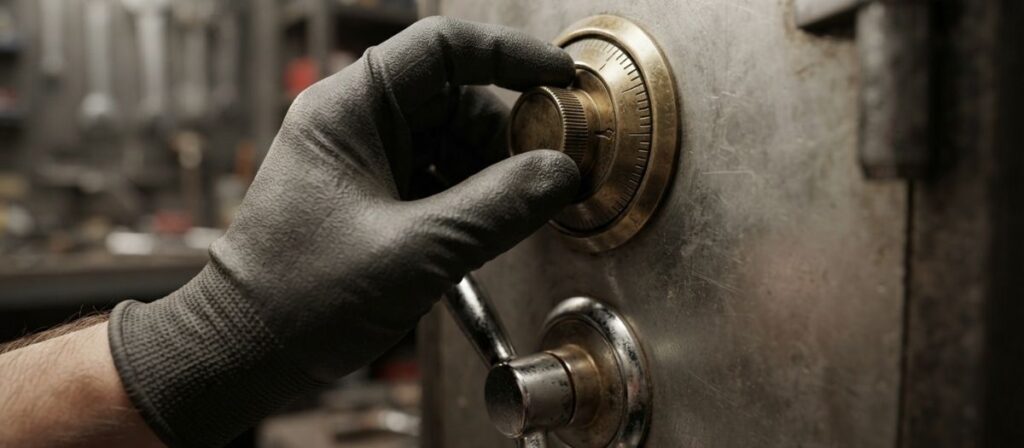
Before you evaluate a single cosmetic detail, confirm the safe currently opens on demand, more than once, with the door swinging completely free on its hinges. Ask the seller to open it while you watch, close it, and open it again. Do this a minimum of three times. A dial that sticks on the third turn, a keypad that skips a digit on a repeat attempt, or a door that drags rather than swinging cleanly on the hinge are not minor quirks, they’re the specific failure signs that predict a full lockout later.
This test matters more than every other red flag combined, because a safe that won’t reliably open is worth close to nothing regardless of how solid the steel looks or how impressive the brand name is. If the seller hesitates, claims it “usually works,” or wants to demonstrate it only once, treat that as your answer and walk away rather than negotiating around it.
The Hidden Mechanism: Relockers
This is a genuinely serious gap in every source we reviewed on this topic, and it’s specific to how certain safes are actually built.
Many mid-range and higher-security safes include a relocker, a secondary internal locking device engineered to trigger permanently if the safe is drilled, dropped, or exposed to extreme heat. Once triggered, a relocker seals the bolt work in place regardless of whether the correct combination is entered, and the only way back in is professional drilling. A used safe that’s been dropped during a move, sat through a house fire, or was clumsily “serviced” by a previous owner attempting a DIY fix could have a triggered relocker with zero visible external sign of it.
This means the visible drill marks and pry damage covered below aren’t the only history that matters. A safe that looks completely untouched from the outside can still be internally dead on arrival if a relocker fired at some point in its past. The lock-cycle test above is your best practical defense here, since a relocker that’s already triggered simply won’t open no matter how correctly you dial the combination.
Reading Damage: What's Cosmetic and What's Structural
Inspect the door seam, hinge line, and area around the keyhole or dial closely, using a flashlight if the listing photos weren’t taken in good light. Drill marks, sometimes plugged and painted over to hide them, pry damage along where the door meets the frame, and any welded patches are all signs of a prior forced-entry attempt or repair, and they compromise the safe’s actual security regardless of how the seller describes its condition.
Rust deserves particular attention around hinges and seams, where moisture collects. Beyond surface rust, check for internal wall bulging, sometimes called wall cancer, a sign that internal rust or material breakdown has occurred between the safe’s outer and inner steel layers. A door that doesn’t sit flush, or bolt work that drags noticeably when closing, usually means the frame itself has been forced or dropped at some point, and even a cosmetic repair rarely restores the original tested resistance.
Fire Damage Doesn't Always Look Like Fire Damage
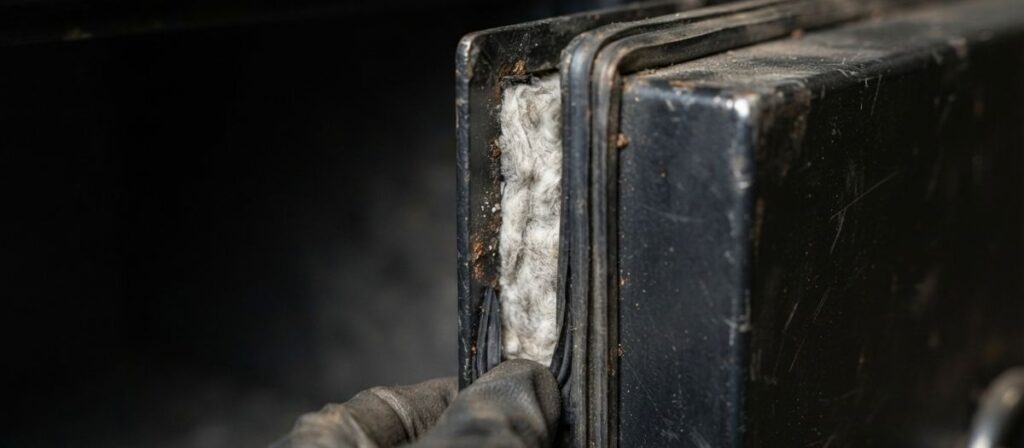
Here’s a detail almost no competitor states plainly, and it matters enormously for anyone buying a fire-rated safe used. A fire safe that has actually survived a real house fire, protecting its contents as designed, keeps a compromised fire rating going forward even if the door still closes properly and shows no obvious warping. The insulation layer inside is a one-time-use material; once it’s absorbed heat during a genuine fire event, it’s already done its job and can’t reliably do it again.
Check for warped metal along the seams, bubbled or discolored paint, or a faint smoke smell inside the compartment, all signs the safe has genuinely been through a fire rather than simply sitting in someone’s home for years. Directly asking the seller whether the safe has ever been in a fire or a break-in is a reasonable question, and a seller who’s done any homework on their own unit will usually know the answer.
Verify the Plate, the Weight, and the Paperwork
A genuine safe carries a manufacturer’s plate or stamp inside the door, typically listing the model number and often a serial number tied to its rated class. No plate, or one that’s been ground off or painted over, means you have no honest way to confirm the burglary rating, the fire rating, or whether that specific model has any known recall or defect history. This isn’t a cosmetic gap worth negotiating around, it’s a reason to walk away, since there’s no legitimate explanation for a manufacturer’s identification disappearing from a safe.
Weight verification is a check no competitor content mentions at all, and it’s genuinely useful. If you can find the stated weight for the safe’s specific model, compare it against what the safe actually weighs, or at minimum how difficult it is to shift. A safe noticeably lighter than its model specification suggests the internal fire-insulation material has degraded, been partially removed, or was never genuine to begin with, a real risk on older or previously modified units.
Ask for proof of ownership, an original receipt, an insurance record listing the safe, or a prior locksmith service invoice. A seller with no paper trail at all, who becomes defensive when asked, is a legitimate reason for caution, particularly for a security safe meant to hold cash or firearms.
Buying Used in a College Town Market
This is a genuinely local scenario no competitor content addresses, and it’s a common one in Champaign County specifically. Safes here frequently change hands through graduating students clearing out apartments near Campustown, estate cleanouts in older homes around Downtown Urbana, or landlord property turnovers between tenants. These sales often happen quickly, sight-unseen through a local marketplace listing, with a seller who has little to no knowledge of the safe’s actual service history, prior owners, or whether it’s ever been serviced at all.
This context makes the lock-cycle test and the paperwork check above even more important than they’d be in a slower, more deliberate transaction. A seller moving out in three days to graduate isn’t necessarily being dishonest, they genuinely may not know the safe’s history any better than you do. Treat every used-safe listing in this market as a safe with an unknown past until you’ve verified it yourself, not because sellers here are less trustworthy, but because turnover this fast rarely comes with documentation.
What Most Used Safe Buying Guides Don't Tell You
A handful of practical realities get skipped or understated across the competitor content we reviewed.
A pre-purchase inspection by a locksmith is worth the cost on anything above a modest price point. For a used safe representing a meaningful purchase, paying a locksmith to inspect it before you finalize the deal, checking the lock cycle, the relocker status where possible, and the overall mechanical condition, is standard due diligence, not an obscure or optional step. This costs meaningfully less than discovering a triggered relocker or a failed lock body after you’ve already paid and moved the safe home.
Ownership verification affects your ability to recover access later. If a used safe still carries its original factory or previous-owner combination, and you ever need manufacturer combination retrieval down the road, that process typically ties back to ownership records the manufacturer holds, records that may still reference the original purchaser rather than you. “Forgot Safe Combination” blog covers what that retrieval process actually requires, and it’s worth understanding this gap now rather than discovering it during a future lockout.
Change the combination the day it arrives, regardless of what the seller tells you. Even if a seller insists the combination has already been reset or that only they know it, there’s no way to independently confirm that. “How to Change the Combination on a Mechanical Safe Lock” blog covers that process in detail, but the practical takeaway here is simple: this single step closes the biggest remaining gap between a used safe and a new one, and it takes far less effort than everything else covered in this article.
Match your inspection standard to what the safe will actually protect. A used document safe with slightly degraded fire insulation is a lower-stakes purchase than a used security safe intended for cash or firearms with an unverifiable lock history. Scale how much scrutiny and professional inspection you invest based on what’s actually going inside.
Frequently Asked Questions
Is it okay to buy a used safe?
Yes, provided you verify the manufacturer’s plate, test the lock cycle multiple times, and check for fire or forced-entry damage. Used safes bought without these checks carry real risk of hidden mechanical or structural problems.
What to look for when buying a safe, new or used?
For a used safe specifically, prioritize confirming the lock opens reliably on repeat testing, checking for a genuine manufacturer’s plate, and inspecting for signs of prior fire exposure or forced entry, since these determine whether the safe’s stated ratings still mean anything.
How do I open an old safe if I already know the combination?
Dial the combination using the opening index exactly as the manufacturer specifies, turning the correct direction for each number in sequence. If the lock sticks or fails to respond despite the correct combination, that points to a mechanical issue rather than an entry error.
Are old safes worth money?
Older safes are sometimes built with thicker steel than modern equivalents, which can make them genuinely valuable if the lock and structure are in good condition. Value depends heavily on verified condition rather than age alone.
Can you sell a used safe later if you decide to upgrade?
Yes, and keeping documentation of any professional inspection, servicing, or combination changes you make will help a future buyer verify the safe’s condition, the same paperwork trail you should be asking a seller for now.
Should I buy a used safe from a private seller or a locksmith or dealer?
A locksmith or dealer selling a used safe typically inspects and services it first, giving you more confidence in its actual condition. A private sale can still be a legitimate option, but it shifts the entire burden of inspection and verification onto you.
How much does a pre-purchase safe inspection cost in Champaign County?
Pricing depends on the safe’s size and lock type, but a locksmith can typically assess a used safe’s mechanical condition for a modest service call fee, well below the cost of discovering a serious problem after purchase.
✅ Key Takeaways
What to look for when buying a used safe comes down to a few checks that matter far more than surface appearance: does it open reliably on repeated testing, does it carry a genuine manufacturer’s plate, and does its weight and condition match what it claims to be. The hidden risks, a triggered relocker, fire insulation that’s already been used once, an unverifiable combination history, don’t show up in a marketplace photo, which is exactly why they catch buyers off guard.
If you’re considering a used safe anywhere in Urbana or Champaign County and want a professional set of eyes on it before you commit, call Locksmith Urbana IL at (217) 288-2915. We can inspect the lock, verify the plate and rating, and change the combination the same day if you move forward with the purchase. Visit our Safe opening Locksmith Services page to see the full range of safe inspection and service work we handle.
- Available Right Now
Dealing With a Lockout Right Now?
Locksmith Urbana IL is available 24 hours a day, every day. Same-day service, upfront pricing, and a local technician who knows the Champaign County area.
Most calls in ZIP 61801 & 61802 see a technician on-site within 35 minutes