
- Safe Lock Guide
How to Change the Combination on a Mechanical Safe Lock
- Locksmith Urbana IL
- 8 min read
- Urbana, IL. 61801 / 61802
“Can I change the combination on my own?” is a question locksmiths hear constantly, and the honest answer is yes, but the process punishes small mistakes in a way most people don’t expect. Get one step wrong and you’re not just stuck with the old combination, you’re potentially looking at disassembling the lock body to fix a mechanism that’s now aligned to nothing at all.
This guide explains exactly how to change the combination on a mechanical safe lock, why the process is riskier than the numbered steps suggest, and when the smarter move is calling a locksmith instead of attempting it yourself.
Why This Isn't a Simple Reset
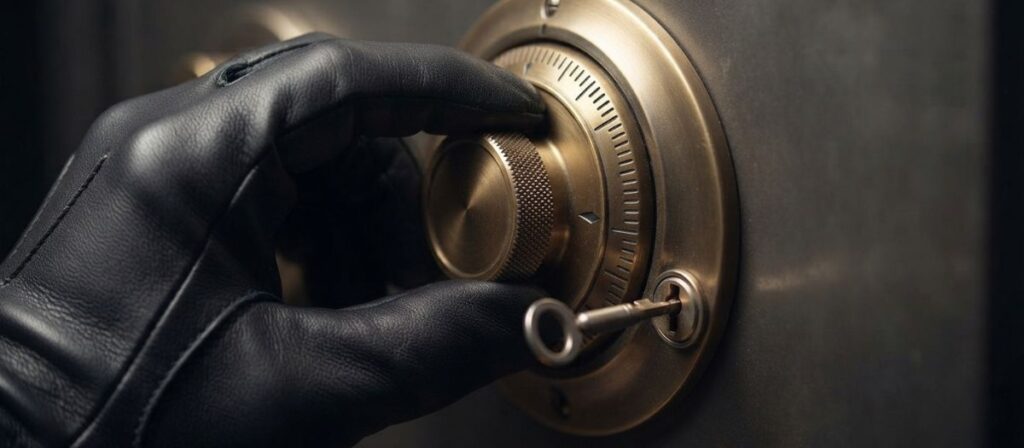
Unlike an electronic keypad, where changing a code is a few button presses, a mechanical dial lock changes its combination through physical realignment of internal components, using a change key inserted directly into the back of the lock body. This requires opening the safe door and accessing the lock mechanism from behind, not just spinning the front dial.
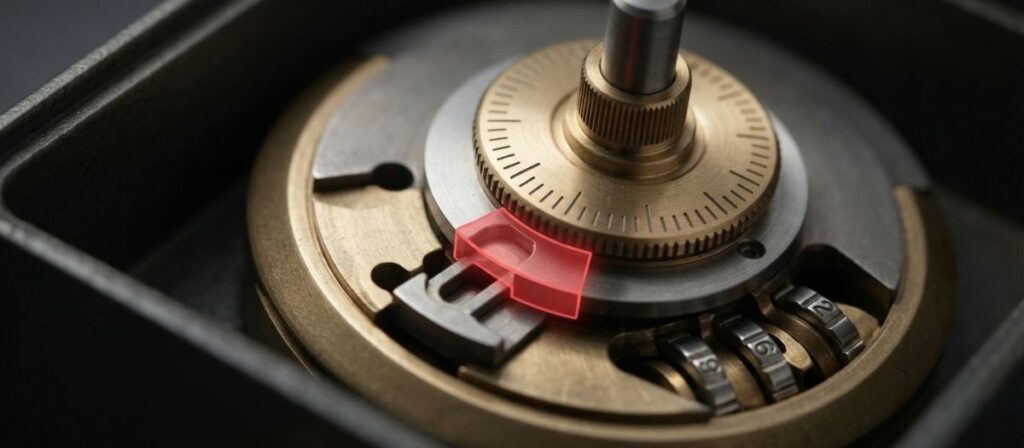
Here’s the detail almost every competitor buries as a warning without actually explaining: the process relies on a second reference point on the dial called the changing index, separate from the opening index you normally use. The changing index temporarily holds the internal wheel pack in a specific alignment state while the change key is engaged, allowing the wheels to be re-set to a new combination.
If that sequence gets interrupted, or a number gets dialed incorrectly while the change key is engaged, the wheel pack can end up in a state that doesn’t correspond to any valid combination, mechanical or accidental. At that point, the only fix is removing the back of the lock body and manually realigning the entire mechanism by hand, a job that goes well beyond what most homeowners have the tools or experience to do safely.
This is the real risk of a DIY combination change, not a vague “be careful” caveat, but a genuine mechanical failure mode built into how these locks work.
The Actual Steps, and Where They Go Wrong
For a Sargent & Greenleaf lock, one of the most common mechanical combination locks used in residential and commercial safes, the general process looks like this. Open the safe using your current combination on the opening index, then swing the door open and throw the bolts by turning the handle with the door still open. Remove the back panel of the safe door to expose the lock body.
Dial your existing combination again, this time using the changing index rather than the opening index, and stop with the third number held precisely on that mark. Insert the change key fully into the keyhole on the back of the lock body and rotate it a quarter turn. With the key engaged, dial your new three-number combination using the changing index, following a specific pattern of passes, for example, turning left until the first number hits the changing index the fourth time, then right until the second number hits it the third time, and so on, the exact sequence varies slightly by manufacturer and model.
Rotate the change key back to its original position and remove it, then test the new combination on the opening index at least three times, rotating the handle each time, before closing and reattaching the back panel.
Every one of these steps depends on precision. Losing count of how many times a number has passed the changing index, removing the change key too early, or dialing a number even slightly imprecisely can produce the alignment failure described above. This is why the process is described consistently across manufacturers as detailed and unforgiving rather than a quick five-minute task.
The Forbidden Zone Isn't Arbitrary
Every manufacturer’s instructions include a restriction on the third number, something like “don’t set it between 5 and 11” or “avoid 90 through 10,” depending on how the lock’s dial spindle is configured. Competitor content states this rule without explaining why it exists, which makes it easy to dismiss as an arbitrary manufacturer quirk.
It isn’t. This forbidden zone corresponds to a mechanical dead spot near where the lock’s internal fence, the arm that drops into the aligned wheel gates to release the bolt, sits relative to the changing index. Setting the third number inside this zone can prevent the bolt-throw mechanism from fully engaging or releasing during normal operation, meaning the lock might not open reliably even with the correct combination entered. This isn’t a theoretical risk manufacturers include out of caution, it’s a documented failure point specific to how these mechanisms are built.
Similarly, the common instruction to keep your three numbers spaced at least five digits apart from each other isn’t arbitrary either. Numbers set too close together create overlapping gate positions on the wheel pack, which does two things: it makes the lock genuinely easier to manipulate, the exact technique covered in “How Locksmiths Open a Safe Without Drilling It” blog, since closely spaced gates give a skilled locksmith less distinct feedback to distinguish between wheels, and it can cause the fence to catch on the wrong gate during ordinary use, producing false lockouts on a combination that should work.
When Changing the Combination Isn't Actually Your Problem
This is a genuinely common point of confusion that no competitor content addresses directly, and it’s worth clarifying before you start.
Changing a combination and recovering a lost or unknown combination are two entirely different situations. If you bought a used safe, inherited one from a family member, or simply can’t remember the current combination, you cannot skip straight to the change process described above, since every step requires successfully opening the safe with the existing combination first. Attempting to jump ahead without that step accomplishes nothing and risks the same alignment failure discussed earlier, applied to a lock you were never able to properly access in the first place.
If you’re in that situation, “Forgot Safe Combination” blog covers the actual escalation sequence, manufacturer retrieval, non-destructive manipulation, and drilling as a last resort, that applies when you don’t have a working combination to start from. Only once the safe is open through one of those methods does changing the combination to something new become the relevant next step.
Real Reasons Champaign County Residents Change a Combination
Most competitor content treats this as routine safe maintenance without naming why someone would actually do it, but the real triggers matter for understanding urgency.
A common scenario involves buying a used safe, sometimes discovered in a home purchased around Downtown Urbana or left behind in a property near Campustown, where the previous owner’s combination is still active.
Another involves a landlord discovering a tenant never changed the factory-set combination on a safe that came with a rental unit, a genuine security gap in a high-turnover rental market. Business owners sometimes need to change a safe combination after a staff departure with prior access, a scenario closely related to the mechanical rekeying process covered in “Rekeying for Commercial Properties After Employee Turnover” blog, though the underlying process differs since a safe combination change works through the changing index rather than re-pinning a cylinder. Family situations, a child who’s discovered the combination, a divorce where shared access is no longer appropriate, are also common, entirely legitimate reasons to make this change promptly rather than putting it off.
What Most Combination-Change Guides Don't Tell You
A handful of practical realities get skipped or understated across the competitor content we reviewed.
Attempting this voids your factory warranty regardless of outcome. Even a successful, correctly executed combination change typically voids whatever manufacturer warranty remains on the lock, since the internal mechanism has been opened and adjusted outside of factory conditions. This is worth weighing against the cost of professional service, particularly on a newer safe still under warranty.
A locksmith needs the correct change key for your specific model. Change keys aren’t universal, they’re specific to the lock manufacturer and often the exact model. If you don’t have the original change key that came with your safe, a locksmith can source the correct one through the manufacturer or a distributor rather than attempting to force a mismatched key into the lock body.
Choose a combination that resists both memory failure and guessing. Avoid birthdays, anniversaries, or any sequence someone with access to your personal information could reasonably guess, while still respecting the spacing and forbidden zone rules covered above. A combination that’s both secure and memorable takes a bit more thought than picking three convenient numbers.
Illinois licensing applies to this work. Under 225 ILCS 447, locksmiths performing safe work in Illinois are expected to hold proper state licensing. Given how easily this specific process can go wrong and require full mechanism disassembly to correct, verifying licensing before letting someone attempt it on your safe is a reasonable precaution.
This is genuinely one of the tasks worth paying a professional for. In practice, most locksmiths will tell you a combination change on a well-documented residential lock is a manageable DIY task for someone comfortable following precise mechanical instructions exactly, but anything involving an unfamiliar lock model, a commercial safe, or any uncertainty about the exact procedure is worth the service call. The cost of professional service is consistently lower than the cost of repairing a mechanism damaged mid-change.
Frequently Asked Questions
How do I change the code on a mechanical lock without a locksmith?
With the correct change key for your specific lock model, you can follow the manufacturer’s exact sequence, dialing your existing combination on the changing index, engaging the change key, and setting a new combination. The process is precise, and any misstep can leave the lock unable to open until the mechanism is realigned.
What is a mechanical combination lock and how is it different from an electronic one?
A mechanical lock uses a rotating dial and an internal wheel pack, requiring physical realignment through a change key to update the combination. An electronic lock stores the combination digitally and typically allows a code change through a keypad sequence without opening the lock body.
How to open a mechanical safe lock if I've forgotten the combination?
You cannot change a combination you can’t currently access. If the existing combination is genuinely unknown, the safe needs to be opened first through manufacturer retrieval, professional manipulation, or drilling before any new combination can be set.
Can I use any change key for my mechanical safe lock?
No. Change keys are specific to the lock manufacturer and often the exact model. Using the wrong key, or forcing an incompatible one, risks damaging the lock mechanism rather than successfully changing the combination.
What happens if I mess up while changing my safe's combination?
Depending on where in the sequence the error occurs, the lock may simply fail to accept the new combination, requiring you to restart the process, or in more serious cases, the internal wheel pack can end up misaligned, requiring the lock body to be opened and manually realigned by a professional.
How much does it cost to have a locksmith change a safe combination in Champaign County?
Cost depends on the lock brand, model, and whether the correct change key is already available or needs to be sourced. A locksmith can give an accurate quote after identifying your specific safe’s lock model.
How often should I change my safe's combination?
There’s no fixed schedule, but changing it after buying a used safe, after any staff or household member with access leaves, or if you suspect the combination has been compromised are all reasonable, immediate triggers rather than waiting for a routine interval.
✅ Key Takeaways
Learning how to change the combination on a mechanical safe lock means understanding that the process is precise mechanical work, not a quick reset, and that the changing index, forbidden zone, and number spacing rules all exist for real mechanical reasons rather than arbitrary caution. Getting it right requires the correct change key, careful attention to the exact sequence, and testing thoroughly before closing the safe back up.
If you’re considering a combination change on a safe anywhere in Urbana or Champaign County, whether it’s a newly purchased used safe, a rental property safe, or simply time for a fresh combination, call Locksmith Urbana IL at (217) 288-2915. We’ll identify your specific lock model and either walk you through what’s involved or handle the change safely on-site. Visit our Safe Opening Services page to see the full range of safe service we provide.
- Available Right Now
Dealing With a Lockout Right Now?
Locksmith Urbana IL is available 24 hours a day, every day. Same-day service, upfront pricing, and a local technician who knows the Champaign County area.
Most calls in ZIP 61801 & 61802 see a technician on-site within 35 minutes