
- Safe Lockout Guide
How a Locksmith Opens a Safe Without Drilling It
- Locksmith Urbana IL
- 8 min read
- Urbana, IL. 61801 / 61802
Movies get this wrong in a specific way. A safecracker presses an ear to the door, eyes closed, and the dial spins to a dramatic click. The real version is slower, less cinematic, and genuinely mechanical, and understanding how locksmiths open a safe without drilling it means understanding what the dial is actually doing, not just that someone is “listening” to it.
This guide explains the actual physics behind non-destructive safe opening, why it doesn’t work on every safe, and where the line between “non-destructive” and “drilling” gets blurrier than most articles admit.
What Manipulation Actually Does Inside the Lock
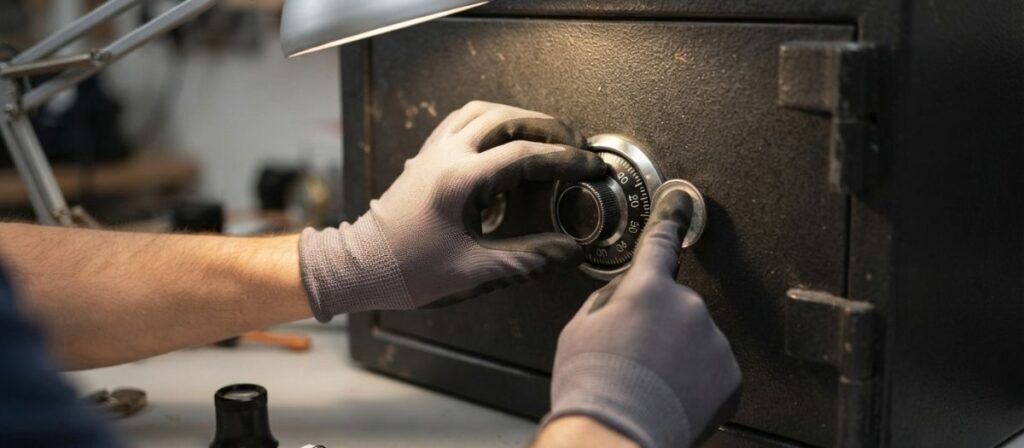
A mechanical combination lock relies on a stack of rotating discs called a wheel pack, each with a notch, called a gate, cut into its edge. When you enter the correct combination, each disc rotates into position so all the gates line up in a single row, creating a channel that allows a metal arm, the fence, to drop into place and let the bolt retract.
Manipulation works by using the dial itself as a diagnostic instrument rather than guessing numbers. A skilled locksmith turns the dial slowly and feels for subtle changes in resistance, each disc’s gate creates a tiny drop or catch in the drag of the dial at a specific point in its rotation. By isolating and identifying where each individual disc’s gate sits, one disc at a time, the locksmith can determine the full combination without ever knowing the number sequence in advance.
This isn’t guesswork dressed up as skill. It’s reading real mechanical feedback the lock is unavoidably producing every time the dial turns, feedback that exists specifically because of how wheel pack locks are physically built. “Forgot Safe Combination” blog covers where manipulation fits into the broader escalation sequence, retrieval first, then manipulation, then drilling as the last resort, if you’re weighing this against other options for a genuinely forgotten combination.
Why Manipulation Doesn't Work on Every Safe
This is the honest caveat almost every competitor glosses over, treating manipulation as a universal skill that succeeds purely based on the locksmith’s talent. It isn’t. Whether manipulation works at all depends heavily on the safe’s actual construction.
A well-made mechanical dial lock produces genuine, readable mechanical feedback because of how precisely its internal components are machined and fitted. A cheap, low-quality combination lock, or certain commercial-grade locks specifically engineered to resist manipulation, may produce little to no usable feedback at all, no matter how skilled the technician is. In practice, most locksmiths can assess fairly quickly, based on the safe’s brand, lock model, and general construction quality, whether manipulation is a realistic path before committing significant time to the attempt.
Modern high-security commercial safes sometimes include a deliberate anti-manipulation feature, internal components specifically designed to prevent a locksmith from reading gate positions through dial feel. Vault doors and certain UL-rated commercial safes fall into this category regularly. Some fire safes also present a unique challenge, since their internal insulation and construction can dampen the mechanical feedback manipulation depends on, even when the lock itself is a standard mechanical dial. None of this reflects poorly on the technician; it reflects a genuine limitation built into how certain safes are designed.
Electronic Safes Need a Completely Different Approach
Most articles blend dial manipulation and electronic safe opening together as if they’re variations of the same skill. They aren’t, and treating them as one blurred category does readers a disservice.
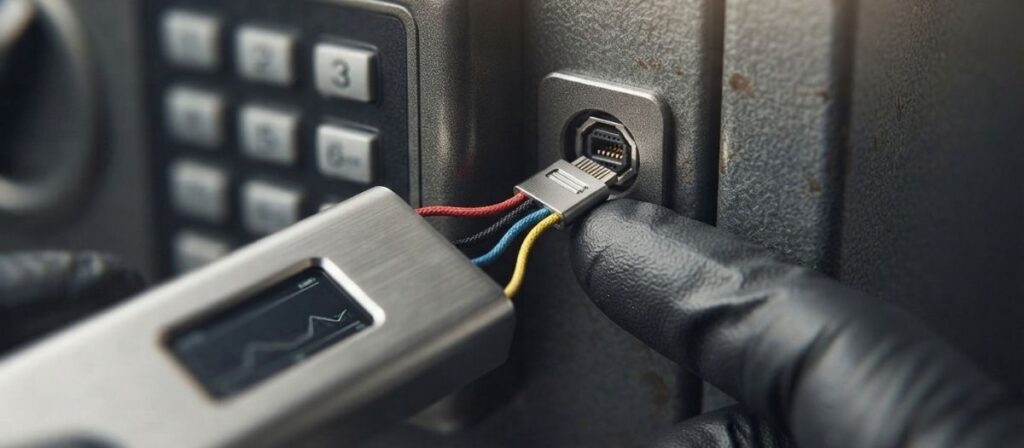
There’s no dial to manipulate on an electronic keypad safe, so there’s no mechanical feedback to read. Instead, non-destructive entry on these safes relies on a completely different set of tools: a manufacturer-issued master override code tied to the safe’s specific model and serial number, specialized electronic bypass tools that interface directly with the lock’s circuit board, or diagnosing and replacing a specific failed component, a dead battery, a worn keypad, or a failed bolt motor, that’s preventing an otherwise functional lock from opening. “Electronic Safe Keypad Not Working” blog covers those specific failure points and diagnostic steps in more depth if that’s closer to your actual situation.
The practical takeaway is that “non-destructive opening” isn’t one skill set. A locksmith experienced with mechanical dial manipulation isn’t automatically equipped for electronic bypass work, and vice versa. If you know your safe uses an electronic keypad rather than a dial, mentioning that upfront when you call helps ensure the technician arrives prepared with the right diagnostic tools rather than the wrong toolkit entirely.
Scoping: The Middle Ground Almost Nobody Explains Clearly
Here’s a genuine nuance nearly every competitor blurs, and it directly affects how you should interpret the phrase “without drilling.”
Scoping technically involves drilling a small, precisely placed hole, often under an eighth of an inch, at a specific point identified through the lock’s technical documentation. But functionally, it behaves nothing like full destructive drilling. That tiny hole exists purely to insert a borescope, a thin camera on a flexible cable, allowing the locksmith to visually observe the wheel pack’s disc positions directly rather than reading them by feel through the dial. Once the combination or gate alignment is determined this way, the technician can manually align the discs and open the safe as if manipulation had succeeded on its own.
Afterward, that small diagnostic hole gets professionally plugged and repaired, typically with a hardened steel pin, restoring the safe’s structural integrity and, on models built for it, preserving the original fire rating. Done correctly, the repair is close to invisible.
This is why “how a locksmith opens a safe without drilling” isn’t always a strict yes-or-no question. Scoping sits in a genuine middle category: technically involving a drill, but functioning as a minimally invasive diagnostic technique rather than the destructive, full-mechanism drilling reserved as a last resort. If a locksmith mentions scoping as part of your service, that’s meaningfully different from being told your safe needs to be drilled open outright, and it’s worth understanding the distinction before assuming the worst.
The Time and Cost Trade-Off Nobody States Plainly
Non-destructive manipulation is skilled, patient work, and it takes meaningfully longer than drilling in most cases. Depending on the lock and the technician’s familiarity with that specific model, manipulation can take anywhere from thirty minutes to well over an hour, compared to a much faster drill-and-repair job on a safe where drilling is appropriate.
This time difference translates to cost. Manipulation typically involves more labor time billed at the technician’s hourly or flat service rate, while drilling, though it requires repairing the access point afterward, often resolves faster. The trade-off is straightforward: manipulation preserves your safe’s original lock mechanism entirely and avoids any repair work, while drilling is faster but requires follow-up repair to restore the safe to full working condition. Neither option is inherently the “cheap” one or the “expensive” one across the board; the actual numbers depend on your specific safe, its lock type, and its condition.
Before committing to either approach, ask your locksmith directly which method they recommend for your specific safe and why, along with a realistic cost range for that approach versus the alternative. A locksmith who can explain that trade-off clearly, rather than defaulting to whichever method is more profitable for them, is one worth trusting with the job.
What Most Non-Destructive Safe Opening Guides Don't Tell You
A few practical realities get skipped or understated across the competitor content we reviewed.
Ownership verification matters more here, not less. Manipulation and scoping both require extended, hands-on access to your safe, sometimes over an hour of a technician working directly with the lock mechanism. A legitimate locksmith should verify proof of ownership before beginning this kind of extended work, just as thoroughly as before a quicker service. “Forgot Safe Combination” blog covers what that documentation typically looks like, particularly for inherited or previously owned safes common in Champaign County’s older housing stock near Downtown Urbana.
Gun safes sometimes complicate manipulation specifically. Reinforced locking bars and, on newer models, layered electronic-mechanical systems can make manipulation more difficult or entirely unsuitable, depending on the exact lock model. If you own a gun safe, common across Central Illinois households, mentioning the specific brand and lock type helps a locksmith assess upfront whether manipulation is realistic or whether you’re looking at a different non-destructive approach, or in rare cases, drilling.
An older safe’s age affects which techniques even apply. A safe that’s decades old, particularly one with a discontinued lock model, may have limited manufacturer support for retrieval or electronic bypass, making mechanical manipulation the more realistic non-destructive path by default. Conversely, some very old or poorly maintained mechanical locks develop internal corrosion or seizing that genuinely defeats manipulation regardless of the technician’s skill, a distinction covered in more depth in the mechanical failure context.
Illinois locksmith licensing applies to this work. Under 225 ILCS 447, locksmiths performing safe-opening work in Illinois are expected to hold proper state licensing. Given how much trust and access non-destructive techniques require, verifying that licensing before letting someone spend an extended period working on your safe is a reasonable precaution, not an unnecessary formality.
Frequently Asked Questions
How do I manually open a safe without a locksmith?
For most mechanical dial and electronic safes, manual opening without professional tools or training isn’t realistically possible without knowing the combination. Attempting to force it yourself risks damaging the lock mechanism and can make a later professional opening more difficult.
Can a magnet open a safe?
No. Modern mechanical and electronic safe locks aren’t affected by external magnets. This is a persistent myth, and attempting it wastes time without addressing the actual lock mechanism.
Can a locksmith open a home safe without drilling it?
In most cases, yes, particularly for residential mechanical dial safes, through manipulation, and for many electronic safes, through manufacturer retrieval or bypass tools. Whether drilling becomes necessary depends on the specific lock’s construction and condition.
What should I do if I lost the key to a key-operated safe?
Check for a spare key first, often stored separately from the primary key for exactly this situation. If no spare exists, a locksmith can typically pick or otherwise non-destructively open a key-operated lock, similar in principle to a standard door lock.
What do I do if my safe won't open even though I'm entering the correct combination?
This usually points to bolt pressure, a low battery on electronic models, or a mechanical fault rather than the wrong combination. A locksmith can diagnose which specific issue is preventing the bolt from retracting before recommending manipulation or another approach.
How do I open an old safe with an unknown or forgotten combination?
Manipulation is often the most realistic non-destructive path for older mechanical dial safes, especially if the model is discontinued and manufacturer retrieval isn’t available. A locksmith can assess your specific safe’s age, brand, and lock type to recommend the right approach.
Is there a master code that opens any safe?
No. Master or override codes, where they exist, are specific to a particular safe’s electronic lock model and are obtained from the manufacturer using that safe’s serial number, not a universal code across brands or models.
✅ Key Takeaways
How locksmiths open a safe without drilling comes down to reading genuine mechanical feedback on dial safes through manipulation, or using manufacturer-specific tools and codes on electronic safes, both requiring real skill and, often, real patience. Not every safe is a candidate for these methods, and even “drilling” sometimes means a nearly invisible diagnostic hole rather than the destructive last resort most people picture.
If you’re facing a locked safe anywhere in Urbana or Champaign County and want to know whether non-destructive opening is realistic for your specific model, call Locksmith Urbana IL at (217) 288-2915. We’ll assess your safe’s brand, lock type, and condition before recommending the right approach, not just the fastest one. Visit our Safe Locksmith Services page to see the full range of safe opening and repair work we handle.
- Available Right Now
Dealing With a Lockout Right Now?
Locksmith Urbana IL is available 24 hours a day, every day. Same-day service, upfront pricing, and a local technician who knows the Champaign County area.
Most calls in ZIP 61801 & 61802 see a technician on-site within 35 minutes