
- Safe Lockout Guide
Electronic Safe Keypad Stopped Working? Causes and What a Locksmith Does
- Locksmith Urbana IL
- 8 min read
- Urbana, IL. 61801 / 61802
The keypad on your safe looks dead, or worse, it lights up and beeps but the door still won’t budge. Either way, an electronic safe keypad not working triggers the same instinct: panic, then reach for a screwdriver. Neither is the right response. There’s a specific diagnostic order a locksmith actually follows, cheapest and most common cause first, and understanding it saves you both time and an unnecessary service call.
This guide walks through that order, explains a genuinely confusing symptom almost every homeowner misreads, and covers what a locksmith actually does once the problem goes beyond a battery swap.
The Diagnostic Order: What to Check First
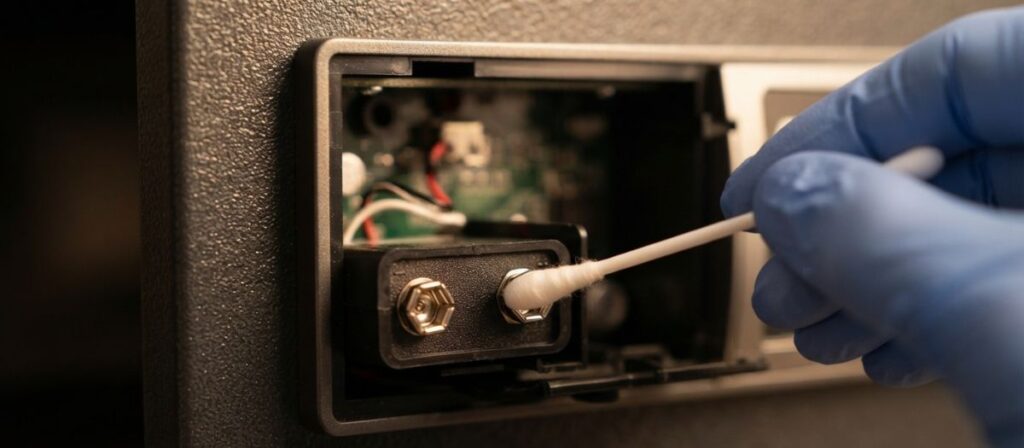
Start with the most common and least expensive cause before assuming the worst. Most electronic safe locks run on a single 9-volt battery, and dead or weak batteries account for the majority of keypad failures locksmiths actually see. Replace the battery with a fresh, name-brand alkaline battery, cheaper generic batteries sometimes don’t deliver consistent enough power even when they test as “good.” If the keypad was completely unresponsive, no lights, no beep, no reaction to any button, a fresh battery resolves this more often than people expect.
If a fresh battery doesn’t fix it, check the battery contacts inside the compartment. Corrosion or a slightly bent contact tab can prevent power from reaching the keypad even with a good battery installed. A quick visual inspection and a gentle cleaning of visible corrosion often restores function without needing anything replaced at all.
If the keypad responds normally, lights up, beeps appropriately, accepts your code, but the door still won’t open, you may be dealing with bolt pressure. Something inside the safe pressing against the door, or the door itself sitting slightly misaligned in the frame, can jam the locking bolt even when the electronics work perfectly. Try gently applying pressure to the handle in the locked direction while re-entering your code; this sometimes relieves enough tension for the bolt to release properly.
The Confusing Symptom: When the Keypad Works But the Safe Doesn't Open
Here’s the detail that trips up more people than a completely dead keypad ever does, and it’s worth understanding clearly before you assume your lock has failed entirely.
A keypad that lights up, produces a normal-sounding beep, and appears to accept your code, yet the safe still doesn’t open, usually means the battery has just enough charge to power the display and electronics, but not enough to drive the internal bolt motor that physically retracts the lock. This is a meaningfully different situation than a battery that’s completely dead, and it’s easy to misread as “the lock itself is broken” when the actual cause is still the battery, just at a more marginal charge level than a fully dead one.
If you’re seeing this specific pattern, responsive keypad, no actual unlock, try a fresh battery again even if the one currently installed seems to have some life left. In practice, most locksmiths confirm this exact scenario is a battery issue more often than homeowners initially assume, precisely because a partially working keypad feels like it should mean the lock is functioning.
Reading the Beeps and Lights Your Safe Is Already Giving You
Most people ignore the specific pattern of beeps and LED flashes their safe produces, treating them as random noise rather than actual diagnostic information. Many electronic locks communicate distinct error states through specific beep and light patterns, and learning to read them, even loosely, narrows down the problem before a locksmith arrives.
A pattern involving a few beeps paired with a slow, intermittent LED flash typically signals a low battery or power issue, the kind of problem a battery swap resolves. A faster, more frequent flash pattern paired with regular beeping over time often signals something more serious, a critical error in the lock’s internal circuitry or a keypad sensor failure that a battery replacement won’t fix.
Exact patterns vary by manufacturer, so check your specific safe’s manual if you have it, but the general principle holds across brands: your safe’s beeps and lights aren’t random. If you’re on the phone with a locksmith trying to describe the problem, being able to say “it beeps three times and the light flashes every few seconds” versus “it flashes rapidly with a constant beep” gives them real diagnostic information before they even arrive.
Penalty Lockout: Why Waiting Is the Actual Fix
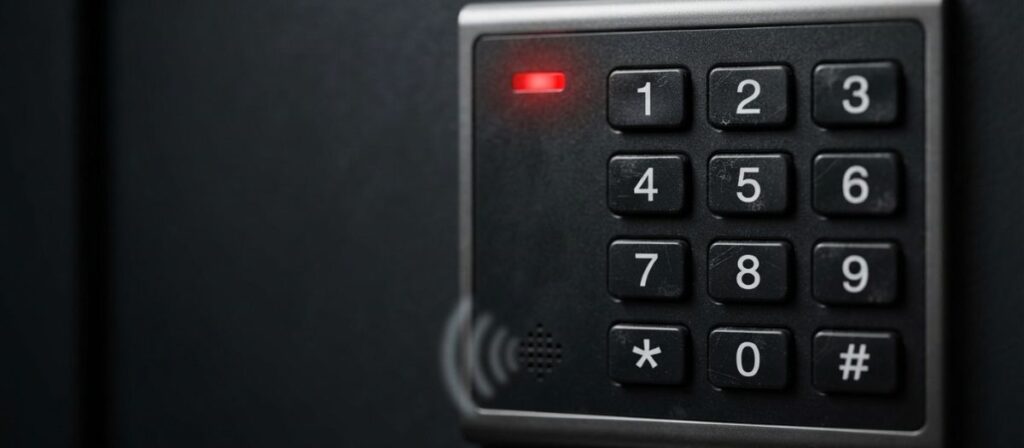
If you’ve entered the wrong code more than a few times in a row, most electronic locks trigger a penalty lockout, a security feature that temporarily disables the keypad, usually for five to twenty minutes depending on the model. This is a deliberate anti-tampering measure, not a malfunction, and it’s frequently mistaken for a broken keypad by frustrated users.
Here’s the detail almost no source explains clearly enough: continuing to press buttons during a penalty lockout can restart the timer on some models. This means someone who keeps trying the code every few minutes, assuming persistence will eventually work, can inadvertently keep their own safe locked out for far longer than the actual penalty period was ever designed to last. The correct response is to stop entering codes entirely, walk away for the full lockout window, and only then re-enter the correct code once, deliberately and without rushing.
If you’re not certain whether you’re in a genuine penalty lockout versus a real hardware failure, waiting the full period before assuming the worst is the least expensive diagnostic step available to you.
Keypad Failure vs Lock Body Failure: A Detail That Should Reassure You
This is a genuinely underexplained technical fact that changes what you should expect from a repair, and almost no source states it plainly.
On most electronic safe locks, your combination is stored in the lock body itself, the mechanical unit behind the door, not in the external keypad you press buttons on. This means that if diagnosis reveals the keypad specifically has failed, its sensors worn out, its membrane degraded from years of daily use, replacing just the keypad faceplate often restores function without requiring your existing combination to be reset or reprogrammed. The new keypad simply communicates with the same lock body that already has your code stored inside it.
This distinction matters because it changes the emotional stakes of a keypad failure. It isn’t automatically “the whole lock is dead and I need a new combination.” Often it’s a specific, replaceable component failing while the core lock mechanism and your existing combination remain completely intact.
What Most Electronic Safe Keypad Guides Don't Tell You
A handful of practical realities get skipped or glossed over across the competitor content we reviewed.
Central Illinois winters genuinely affect these locks. Extreme cold can affect the electronic components inside a safe lock, and a safe stored in an unheated garage, basement, or outbuilding through a Champaign County winter is more likely to experience temporary electronic sluggishness or failure than one kept in a climate-controlled interior room. If your safe lives somewhere unheated and you notice keypad issues specifically during cold snaps, that’s worth mentioning to a locksmith, since it points toward an environmental cause rather than a genuine hardware failure.
Never force or pry at an unresponsive keypad. Attempting to force open an electronic safe yourself, prying at the door or aggressively working the keypad, can trigger built-in anti-tamper features on some models that make the lockout effectively permanent, turning a simple repair into a much more involved professional job. If basic troubleshooting hasn’t worked, stop and call rather than escalating your own attempts.
A DIY keypad replacement carries real risk if your safe holds anything irreplaceable. Some manufacturers sell replacement keypads directly, and a technically confident owner with the right tools can sometimes install one correctly. But wiring connections inside electronic safes are often tight, delicate, and model-specific, and an incorrectly calibrated replacement can lock you out entirely or damage the underlying mechanism. If your safe holds firearms, important documents, or anything you genuinely can’t afford to lose access to, the risk of a failed DIY attempt outweighs the money saved.
Non-destructive opening is almost always possible, even with keypad failure. A licensed locksmith experienced with electronic safes can frequently open the safe without drilling, preserving both the unit and its contents, even when the keypad itself has failed completely. Drilling remains a last resort reserved for cases where the internal mechanism itself has been compromised, not the default response to a non-responsive keypad. “Forgot Safe Combination” blog covers that broader escalation sequence, from retrieval to manipulation to drilling, if you’re dealing with a related but distinct situation where the combination itself, not the keypad hardware, is the actual problem.
Frequently Asked Questions
Can a locksmith open an electronic safe if the keypad has completely failed?
Yes. A locksmith experienced with electronic safes can typically diagnose whether the failure is in the keypad, the wiring, or the lock body itself, and can usually open the safe without drilling in most keypad failure cases.
Why isn't the keypad on my electronic safe working at all?
The most common cause is a dead or weak battery, followed by corroded battery contacts, a triggered penalty lockout from repeated incorrect entries, or in less common cases, a failed keypad sensor or internal wiring issue.
What are the most common problems with electronic safe locks?
Battery-related issues account for the majority of problems, followed by bolt pressure jams from door misalignment, penalty lockouts after incorrect code entries, and less frequently, worn keypad sensors or internal circuitry failures.
What should I do if my digital safe won't open even with the correct code?
First replace the battery, since a partially charged battery can power the display without driving the bolt motor. If that doesn’t resolve it, try relieving bolt pressure by applying gentle pressure to the handle while re-entering the code, then contact a locksmith if the issue persists.
Can a magnet affect or fix an electronic safe lock?
No. Magnets have no meaningful effect on electronic safe locks, and this is a persistent myth. If your keypad isn’t working, the actual causes are almost always battery, mechanical, or electronic component issues rather than anything a magnet could influence.
Do locksmiths actually work on electronic locks, or just mechanical ones?
Yes, most experienced safe locksmiths work on both. Electronic lock diagnosis and repair, including keypad replacement, wiring issues, and non-destructive opening, is a routine part of professional safe service.
What happens if a digital safe runs out of battery completely while it's locked?
A completely dead battery means the keypad won’t respond to any input, but this doesn’t mean you’re permanently locked out. Replacing the battery typically restores function immediately, and most safes retain the stored combination in the lock body regardless of battery status.
✅ Key Takeaways
An electronic safe keypad not working is, in the overwhelming majority of cases, a battery problem, not a sign your safe has failed. Working through the actual diagnostic order, battery, contacts, bolt pressure, penalty lockout, before assuming keypad or lock body failure saves time and often solves the problem without any professional visit at all. When it does go beyond that, a failed keypad usually doesn’t mean losing your combination, since that’s stored in the lock body, not the keypad itself.
If your safe’s keypad in Urbana or anywhere in Champaign County isn’t responding after trying these steps, call Locksmith Urbana IL at (217) 288-2915 rather than forcing or prying at it yourself. We can diagnose whether it’s the keypad, the battery, or the lock body, and open the safe without drilling in most cases. Visit our Safe Opening Services page to see the full range of safe repair and access work we handle.
- Available Right Now
Dealing With a Lockout Right Now?
Locksmith Urbana IL is available 24 hours a day, every day. Same-day service, upfront pricing, and a local technician who knows the Champaign County area.
Most calls in ZIP 61801 & 61802 see a technician on-site within 35 minutes