
- Automotive Lockout Guide
Ignition Repair vs Ignition Replacement: How a Locksmith Decides
- Locksmith Urbana IL
- 8 min read
- Urbana, IL. 61801 / 61802
Your key won’t turn, or it turns but nothing happens, or it’s stuck halfway and won’t come out either direction. The question every driver in that moment asks is the same one that sits in the title of this article: ignition repair vs replacement, and which one actually fixes the problem.
The honest answer is that a locksmith doesn’t guess. There’s a specific diagnostic process that separates a $150 fix from a $400 one, and most articles on this topic either oversimplify it into a symptom list or skip the reasoning entirely. This guide walks through the actual decision points, including a few that Illinois drivers specifically should know before approving any work.
Quick Checks Before You Assume the Ignition Is Broken
Before jumping to ignition repair vs replacement, rule out the causes that have nothing to do with the ignition mechanism itself. These take a minute and can save an unnecessary service call.
Check whether the steering wheel is locked under tension. Most vehicles engage a steering lock pin when the wheel gets turned while the ignition is off, and that pin physically prevents the cylinder from rotating. Gently rock the wheel left and right while applying light pressure on the key. If it suddenly turns, there was nothing wrong with the ignition at all.
Confirm the gear selector is fully seated in Park. Many automatic transmissions won’t release the ignition unless the shifter registers correctly, and a shifter resting between Park and Reverse will block the key even on a perfectly healthy ignition.
Try a spare key if you have one, even an old one you don’t normally carry. If the spare turns smoothly and your regular key doesn’t, the problem is almost certainly the key, not the ignition cylinder. This single test narrows the diagnosis faster than almost anything else you can check yourself.
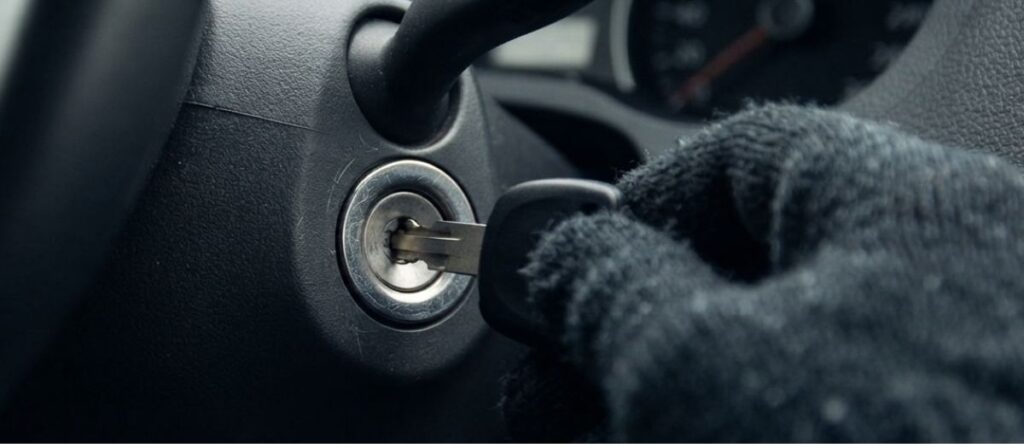
Worn Key or Worn Ignition Cylinder: How a Locksmith Tells the Difference
This distinction changes the entire repair path, and it’s worth understanding before a technician even arrives.
Signs point to the key when the blade shows visible rounding or wear on the cut edges, when a freshly cut or spare key turns without hesitation, or when the trouble started right after a key was cut somewhere else. Worn tumblers / internal wafers aging inside the cylinder are a different story. If a brand-new, correctly cut key still turns with heavy resistance, sticks at the same point every time, or the ignition makes a grinding or clicking sound when the key turns, the cylinder itself is the problem.
There’s a third category competitors tend to blur together: electrical versus mechanical failure. If the key turns with almost no resistance but the engine doesn’t crank, or the dash lights flicker oddly as the key moves, that points toward the ignition switch failure rather than the lock cylinder. These are physically separate components on most vehicles, often housed in the same assembly, and treating an electrical fault as a mechanical one wastes both time and money.
In practice, most locksmiths will test a freshly cut key against the existing cylinder within a few minutes on-site, because that single comparison usually tells the whole story.
When Repair Is the Right Call
Repair makes sense more often than drivers expect. If the cylinder mechanism is intact but dirty from years of dust, road grime, or old lubricant residue, cleaning and relubricating the pins frequently restores smooth operation without replacing anything.
If the pins show only mild wear, rekeying the cylinder to match a fresh, properly cut key resolves the issue. This is meaningfully different from replacing the entire ignition lock cylinder rebuild, and it costs less because the original housing stays in place.
Repair is also the better option when the rest of the ignition system is functioning normally. No history of a broken key stuck inside, no signs of forced entry, and no electrical symptoms. In Urbana, a straightforward cylinder cleaning or rekey typically falls on the lower end of the cost range, often completed in under 30 minutes on-site with no towing required.
When Replacement Is the Right Call
Replacement becomes the sensible choice in a handful of specific situations, and a good locksmith will explain which one applies to your vehicle rather than defaulting to the more expensive option.
A seized ignition cylinder that won’t turn even with a perfectly cut key, wear severe enough that cleaning and adjustment haven’t helped, or a cylinder that spins freely without engaging anything are all signs the mechanical parts are past the point of repair. If a key has previously snapped off inside the cylinder and caused internal binding, replacement is often the more reliable fix. Our Broken Key Extraction blog covers what happens during that specific scenario in more depth.
A failed electrical ignition switch typically can’t be repaired the way a mechanical cylinder can. It’s a different part, and it’s usually swapped rather than serviced. Signs of prior forced entry or attempted theft also point toward replacement, since a compromised cylinder rarely returns to full reliability even after cleaning.
The Reprogramming Cost Trap Most Guides Skip
Here’s the detail that gets glossed over almost everywhere, including by the strongest national guides on this exact topic.
If your vehicle uses a transponder key reprogramming system or a proximity push-to-start setup, a full ignition replacement usually means every key you own needs to be reprogrammed or replaced to match the new unit. That’s a separate cost from the mechanical swap itself, and it’s easy to approve a replacement thinking it’s the safer, more complete fix, only to find out afterward that reprogramming adds a meaningful amount to the final bill.
Before you approve replacement on a transponder-equipped vehicle, ask specifically whether the quote includes reprogramming all your existing keys or just cutting one new one. This is the single question that prevents the most common billing surprise in ignition work. For more on how these chips function, see our “What Is a Transponder Key” page.
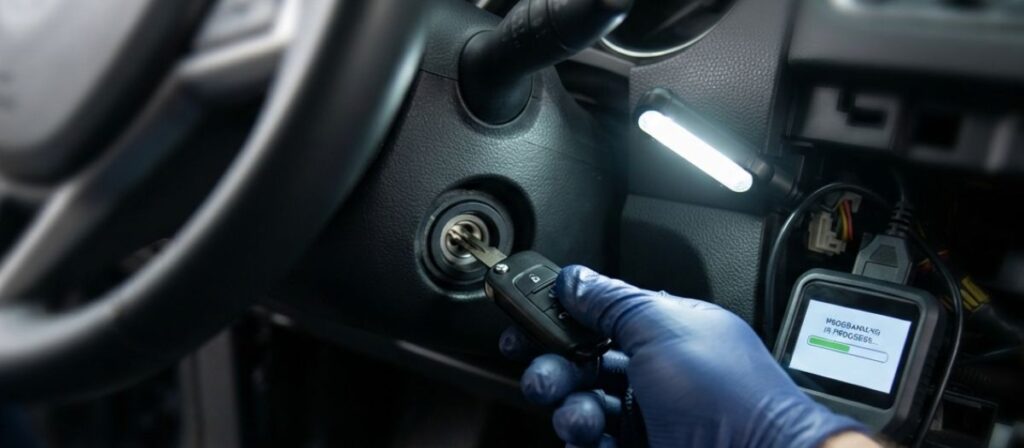
Mistakes Urbana Residents Make With Ignition Repair vs Replacement
A few things trip up local drivers specifically, and most competitor guides don’t mention any of them.
Skipping the recall check. GM trucks and SUVs from the mid-2000s through the 2010s carry a well-documented GM ignition switch recall tied to the switch slipping out of the Run position. Central Illinois has a high number of these vehicles on the road, and if your vehicle falls in that range, checking for an open recall before paying out of pocket can eliminate the repair cost entirely. A quick VIN lookup through the manufacturer or NHTSA’s recall database takes a few minutes and should happen before any paid diagnosis.
Ignoring what winter does to a marginal ignition. A cylinder with early-stage wear can function acceptably through most of the year and then fail outright during a Central Illinois cold snap. Metal contracts in low temperatures, tightening clearances between the key blade and the pin stack, which means a component that was limping along in October can seize completely by January. If your ignition has felt stiff heading into fall, that’s the window to address it, not wait through winter.
Not verifying the locksmith’s licensing. Under 225 ILCS 447, locksmiths performing ignition work in Illinois are required to hold state licensing. Ignition repair and replacement involves working near steering column components and, on newer vehicles, airbag wiring. Confirming licensing before letting someone open your column isn’t just paperwork, it protects you if something goes wrong during the job.
Assuming replacement is always the safer choice. It isn’t. A cylinder with only mild wear that gets replaced unnecessarily is money spent solving a problem cleaning or rekeying would have fixed. The reverse mistake, repairing a cylinder that’s already too far gone, just means paying for the same job twice within a few months.
What the Diagnostic Process Actually Involves
Nearly every locksmith website promises to diagnose before quoting a price. Few explain what that actually means, which makes it hard to tell a real diagnosis from a guess.
A proper diagnosis starts with a phone or on-site description of the symptoms: does the key turn at all, is there resistance, noise, or intermittent behavior. The technician then tests the existing key against the cylinder and tries a freshly cut key if wear is suspected, since that comparison isolates the key from the cylinder immediately.
Next comes a physical inspection of the cylinder and surrounding steering column for looseness, damage, or signs of prior tampering. On most vehicles, reaching the cylinder requires partially disassembling the steering column shroud, which is routine work for an experienced mobile locksmith but takes longer than a simple lockout. If the symptoms suggest an electrical fault rather than a mechanical one, an OBD-II diagnostic scan checks for immobilizer or ignition-related fault codes that a purely mechanical inspection would miss.
Only after this sequence does a locksmith recommend repair or replacement, and a straight answer at that point should come with a clear explanation of which specific finding led to it.
Cost Factors: Repair vs Replacement Pricing
Ignition repair cost range vs replacement cost range depends on more than just the labor. A handful of factors move the number in either direction.
Repair generally costs less because it works with the existing cylinder rather than sourcing and installing new parts. Replacement costs more due to the part itself plus the added labor of removing the old assembly and reinstalling a new one correctly.
Vehicle make and model matters too. Some ignition assemblies are simple and widely stocked, while certain European or luxury models require specific parts that cost more and take longer to source. Whether new keys need to be cut or programmed adds to either total, and this is where the reprogramming detail above becomes relevant again.
A mobile locksmith on-site diagnosis in Urbana or across Champaign County typically means no towing cost either, since most ignition work happens at the steering column rather than requiring the vehicle to move. Always get the specific cause explained before agreeing to a price, since a locksmith who names the actual finding, whether it’s a worn key, a seized cylinder, or a failed switch, is giving you a real diagnosis rather than a default recommendation.
Frequently Asked Questions
Can a locksmith fix an ignition key that won't turn?
Often, yes. If the key itself is worn, a fresh cut usually solves it. If the cylinder is dirty or mildly worn, cleaning and rekeying frequently restores smooth turning without full replacement.
Do I need a new key if I replace the ignition switch?
It depends on the vehicle. Some replacements can be matched to your existing key, while others, especially on transponder or push-to-start systems, require a new key cut and programmed to the new assembly.
What is an ignition replacement lock?
It refers to installing an entirely new ignition cylinder or switch assembly in place of the old one, rather than repairing the internal components of the existing unit. It’s the appropriate fix when wear or damage goes beyond what cleaning or rekeying can resolve.
How do I know if my ignition switch needs to be changed?
If the key turns with little resistance but the engine won’t crank, or the dashboard behaves inconsistently when the key moves, the electrical switch is the likely cause rather than the mechanical cylinder. A diagnostic scan confirms this.
How do I fix an ignition switch without replacing it?
Minor mechanical issues, like a sticking or dirty cylinder, can often be cleaned and relubricated. A failed electrical switch, however, typically can’t be repaired the way a mechanical cylinder can and is usually swapped instead.
How do I tell if the ignition or the starter is bad?
Try a spare key first. If a different key turns and starts the car normally, the ignition cylinder or key was the issue. If no key turns the engine over at all despite the ignition accepting the key, the starter or battery is worth checking separately.
Is ignition repair or replacement more expensive in Urbana IL?
Repair typically costs less since it works with your existing cylinder. Replacement costs more due to parts and labor, and rises further if your vehicle needs new keys programmed to match. A locksmith should quote the price after diagnosis, not before.
✅ Key Takeaways
Most ignition problems start as small mechanical wear, and the difference between ignition repair vs replacement usually comes down to whether the cylinder itself, the key, or the electrical switch failed. A locksmith who diagnoses properly, tests a fresh key, checks for recall eligibility, and inspects for prior damage, gives you an accurate answer instead of a default recommendation.
Before approving any ignition work in Champaign County, ask what specifically was found during diagnosis and whether reprogramming is included in the quote if your vehicle uses a transponder key. If your ignition has been sticking, grinding, or resisting the key, call Locksmith Urbana IL at (217) 288-2915, or visit our Automotive Locksmith Services page to see how we handle diagnosis, repair, and replacement in a single visit.
- Available Right Now
Dealing With a Lockout Right Now?
Locksmith Urbana IL is available 24 hours a day, every day. Same-day service, upfront pricing, and a local technician who knows the Champaign County area.
Most calls in ZIP 61801 & 61802 see a technician on-site within 35 minutes