
- Smart Locks Guide
Best Smart Lock Brands for Illinois Weather and Temperature Fluctuations
- Locksmith Urbana IL
- 8 min read
- Urbana, IL. 61801 / 61802
Most people shop for a smart lock by brand, then learn on the first sub-zero morning that the brand was the least important part of the decision. The number that predicts whether a lock keeps working in Central Illinois is buried in the spec sheet, and the model number matters more than the logo on the front.
Choosing among the best smart locks for cold weather means planning for more than one January cold snap. A Champaign County door goes from freezing rain to a humid July heat wave, and the door itself swells and shrinks with every season. This guide covers how to read a temperature rating, what the major brands actually list, why battery choice is trickier than most guides admit, and the year-round factors competitors skip.
How to Read a Smart Lock's Temperature Rating
Every smart lock lists an operating temperature range, and that single line predicts winter performance better than any brand reputation. It is a lab-tested air temperature range, though, not a promise about a wind-driven, ice-glazed door on a bad night.
Published ranges vary widely, even inside one brand. The Yale Assure Lock 2 is listed at -22°F to 140°F. One review reports Schlage’s documentation for the Encode Plus at -35°C, about -31°F. Level lists a minimum of -4°F (-20°C). Some other models from well-known names, including certain August and Yale units according to one lock retailer’s comparison, list a minimum of 32°F.
For an exterior door in Urbana, treat a 32°F minimum as a disqualifier. That is a mild-climate or indoor product no matter how polished the app looks. Look for a rated minimum of -20°F or lower, since a hard winter brings a few nights below zero and a -4°F rating leaves almost no margin.
Check the upper number too. A 140°F ceiling matters more than it sounds on a south- or west-facing door baking in July sun. Always confirm current specs on the manufacturer’s page for your exact model, since brands revise them.
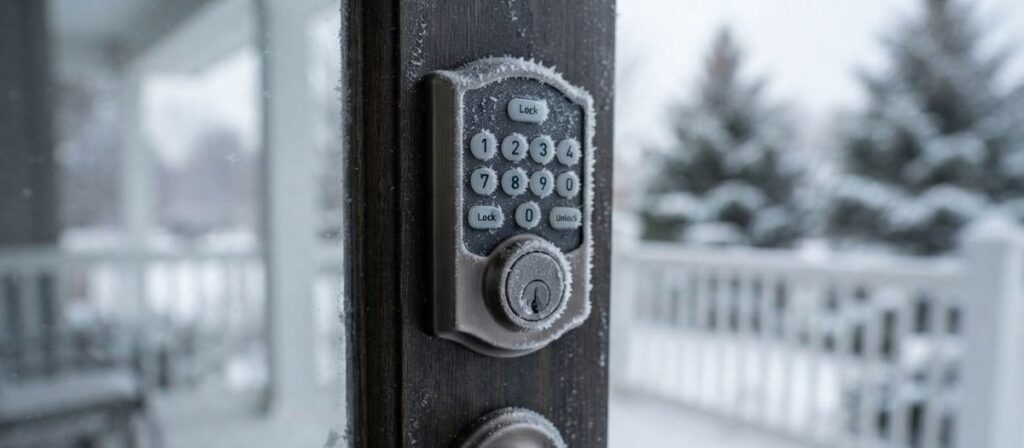
The Major Brands, Compared on What Matters Here
Here is a short read on the names Champaign County homeowners ask about most, based on published specs rather than marketing.
- Schlage Encode Plus: ANSI/BHMA Grade 1 deadbolt with built-in Wi-Fi, four AA batteries, Apple Home Key support, and a reported -35°C rating. Schlage’s battery estimates run roughly six to twelve months, and cold shortens that. It carries a three-year electronics warranty and a limited lifetime mechanical warranty, with list pricing starting around $329.
- Yale Assure Lock 2: Listed at -22°F to 140°F. Yale’s Assure line lists glove-friendly touchscreens, 9V emergency terminals for a one-time jump, and about 18 months from four AA batteries under average conditions. One reviewer found the keypad hard to read in direct sunlight, which matters on a sunny entry.
- Level: Lists a -4°F minimum, workable for most Illinois winters but thin during a deep freeze.
- Kwikset: Several smart lines with different specs. Check the sheet for the exact model instead of assuming the brand answers the question.
- August: Same caution. Specs vary by model, and some units have been listed with a 32°F minimum.
The pattern is the point. Even inside one brand, the spec depends on the model, so buy the model number, not the name.
Lithium vs Alkaline: The Cost Math Nobody Shows
Cold slows the chemical reactions inside a battery, which drops voltage right when the lock’s motor needs a burst of power. Alkaline cells can lose up to half their capacity near 0°F, while lithium cells keep working down to about -40°F.
A comparison cited by one lock retailer from a Chicago winter is the closest Illinois data point available. A Schlage lock on alkaline batteries sent its first low-battery alert after 8 months, while an identical lock on lithium ran 18 months. Treat it as one household’s experience rather than a lab result, though it matches how the chemistry works.
Here is the math most guides skip. Lithium AA sets cost roughly three to five times as much as alkaline. If they last 18 months instead of 8, that is about 2.25 times longer, so lithium costs roughly 1.3 to 2.2 times as much per month of use.
Lithium is not the cheaper option. You are paying for reliability on the coldest morning, when a dead lock is least convenient and most expensive.
Two cautions apply. Many lock manuals specify a battery type, so check yours before switching. Lithium cells also hold steady voltage and then drop off quickly, which can shorten the low-battery warning window on some locks.
The habit that beats either chemistry is simple: replace batteries every October, before the first hard freeze, whatever the app says.
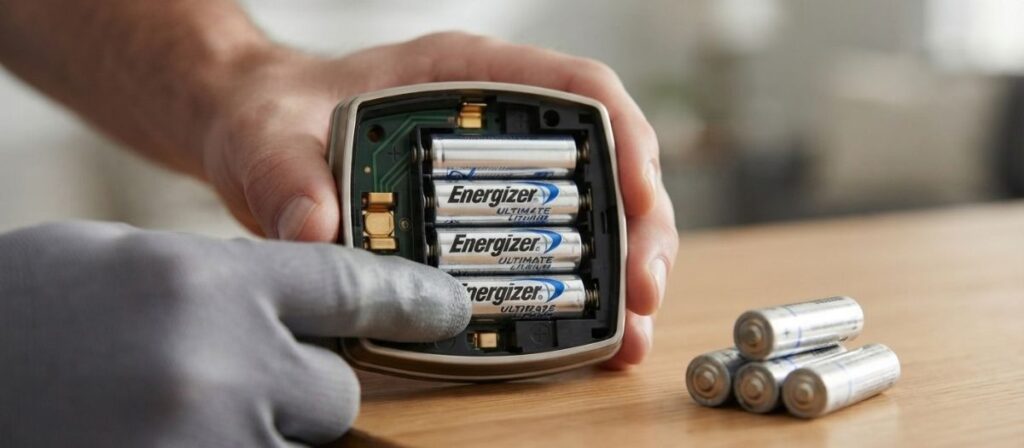
Battery Location and Wi-Fi vs Bluetooth: Two Criteria Nobody Lists
Battery location is a checkable feature. Some designs keep the battery pack on the interior half of the lock, inside the heated house, instead of exposing it to outside air. Confirm where the batteries sit before you buy.
Connection type matters too. Wi-Fi locks are convenient, but they drain batteries faster than Bluetooth locks paired with a hub, and cold makes that drain worse. If you never need to unlock the door from another state, Bluetooth can stretch battery life through winter.
Wi-Fi also depends on your router, which goes down in storm outages. Keypad and Bluetooth entry usually keep working when the internet does not, so confirm your lock has a local fallback.
Central Illinois Isn't Only Cold: The Year-Round Problem
Every competitor’s guide stops in winter. Champaign County runs from sub-zero snaps to hot, humid summers, and both extremes stress a smart lock.
Water that seeps into a housing during a thaw refreezes overnight, which can weaken seals and invite corrosion over a few winters. Freezing rain adds a glaze of ice over keypads and keyways. The lubricant inside the mechanism also thickens in the cold, adding resistance the motor has to overcome.
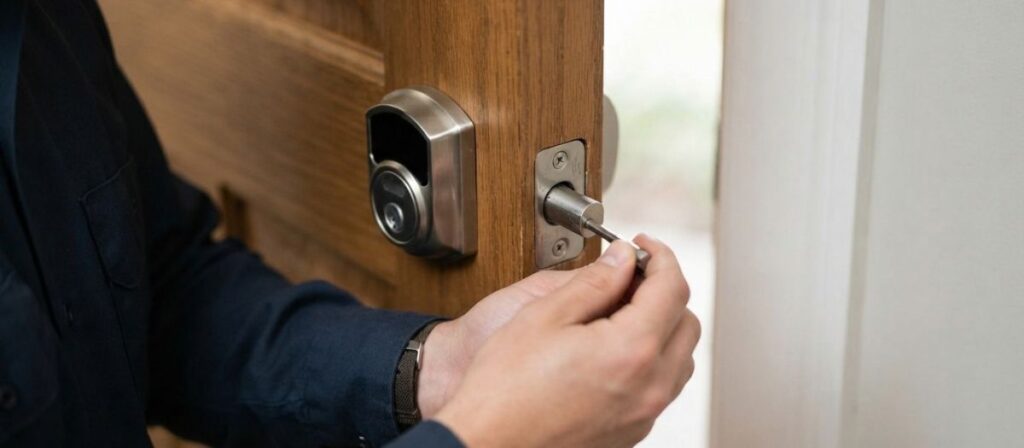
The bigger, quieter problem is the door. Wood and frames swell in humid summers and contract in dry winters. Even a small shift makes the deadbolt drag against the strike, and the motor burns extra battery fighting it.
Yale’s own support page notes a misaligned door can look like a lock that drains batteries too fast. A simple test: operate the lock with the door open. If it moves freely open but struggles when closed, the lock is fine and the door is the problem.
Check the strike plate every spring and fall, and use the longest screws that fit the opening. Manufacturer battery-life claims assume a properly aligned door, which is a big reason identical locks last very different lengths of time.
Keypad or Fingerprint for an Illinois Winter
Gloves settle this faster than any spec. Fingerprint sensors struggle with dry or wet skin, both common in winter, and nobody wants to pull off a glove at 10°F.
A backlit keypad or touchscreen that works with gloves is the safer exterior choice, with fingerprint as a bonus rather than the only method.
What Most Smart Lock Guides Don't Tell You
Many top guides are written by lock makers citing their own specs. A locksmith with nothing to sell can tell you to read the spec sheet, not the marketing line, and to verify any number against the manufacturer’s page for your exact model.
A low-battery alert on the coldest morning may be temperature, not dead cells. Cold drops battery voltage, so batteries can look depleted while still holding some charge. If the warning clears by afternoon, treat it as your cue to replace them anyway, not proof that everything is fine.
Your backup plan has to survive ice. Freezing rain can seal a keyway or coat a keypad. Keep a 9V battery inside if your lock has emergency terminals, leave a spare key with someone you trust instead of only in the car, and use a lock de-icer on a frozen keyway, not hot water poured over the electronics.
Rentals add a responsibility question. Smart Locks in Urbana Rentals blog covers who handles battery upkeep and winter lockouts, which matters for landlords and tenants near Campustown.
The same cold logic applies to electronic safes stored in unheated garages, a point “Electronic Safe Keypad Not Working” blog covers for safes specifically.
Confirm your door can take the lock. A smart deadbolt swap on standard door prep is straightforward, but a warped or nonstandard door is not. “How Access Control Systems Work With Existing Locks” blog explains the door prep question in more depth.
Professional Installation and Illinois Licensing
A good installer checks alignment, adjusts the strike, and tests the lock with the door closed before leaving. That single visit prevents most of the battery-drain complaints owners blame on the lock.
Under 225 ILCS 447, locksmiths performing lock work in Illinois are expected to hold state licensing. Verify it before letting anyone drill into your front door.
Frequently Asked Questions
What smart lock is best for cold climates like Central Illinois?
Look for a rated minimum of -20°F or lower, batteries on the interior side, and a glove-friendly keypad. The Yale Assure Lock 2 is listed at -22°F, and one review reports the Schlage Encode Plus at -35°C. Confirm current specs for your exact model.
Which brand of smart lock is the most reliable?
No brand wins on every model. Schlage was named America’s Most Trusted lock brand in a 2025 consumer survey, but trust scores do not measure motor performance at 5°F. Reliability depends on the model’s temperature spec, a well-aligned door, and fresh batteries.
Is Schlage or Kwikset better for cold weather?
It depends on the specific model. Compare rated minimum temperature, battery location, and warranty on each spec sheet. Kwikset’s specs vary across its smart lines, so check the exact model instead of the brand.
What are the disadvantages of smart locks in cold weather?
Batteries drain faster, motors work harder against a shifting door, keypads and keyways can ice over, and Wi-Fi models depend on your router. Choosing a cold-rated model, keeping the door aligned, and having a backup plan solves most of these.
Are lithium batteries worth the extra cost in a smart lock?
They cost roughly 1.3 to 2.2 times as much per month of use, but they keep working in the deep cold. You are paying for reliability on the coldest morning, not for savings. Check your lock’s manual before switching.
What does weather-resistant mean on a smart lock?
It usually refers to an IP rating, which measures dust and water ingress, not temperature. A truly cold-ready lock needs both a suitable IP rating and a low enough operating temperature minimum.
How much do cold-rated smart locks cost in Urbana, and is professional installation worth it?
Popular Wi-Fi models list around $260 to $330 for the Yale Assure Lock 2 touchscreen and Schlage Encode Plus, though prices change. Professional installation adds cost but includes alignment and strike adjustment, which protects battery life.
✅ Key Takeaways
The best smart locks for cold weather are chosen by the spec sheet for a specific model, not by brand reputation. A rated minimum of -20°F or lower, batteries kept indoors, a glove-friendly keypad, and a well-aligned door matter more than any logo. Lithium batteries cost more per month but buy reliability when it counts.
Your practical next step is to find the operating temperature range for your exact model number, replace the batteries in October, and check the strike plate in spring and fall.
If you’re choosing or installing a smart lock anywhere in Urbana or Champaign County, call Locksmith Urbana IL at (217) 288-2915. We’ll check your door’s alignment, recommend a model that fits Illinois weather, and install it properly.
- Available Right Now
Dealing With a Lockout Right Now?
Locksmith Urbana IL is available 24 hours a day, every day. Same-day service, upfront pricing, and a local technician who knows the Champaign County area.
Most calls in ZIP 61801 & 61802 see a technician on-site within 35 minutes