
- Access Lockout System
Keypad vs Key Fob vs Biometric: Choosing the Right Access Control for Your Business
- Locksmith Urbana IL
- 8 min read
- Urbana, IL. 61801 / 61802
Most articles comparing keypad vs key fob vs access control end with a features table and a vague “it depends on your needs.” That’s technically true and practically useless. The better question isn’t which single credential type wins, it’s which method fits which door, and what nobody tells Illinois business owners: biometric access control here carries a legal obligation most vendors never mention.
This guide breaks down what genuinely separates these three methods, where each one actually makes sense, and the Illinois-specific detail that changes the biometric conversation entirely.
How Each Credential Type Actually Works
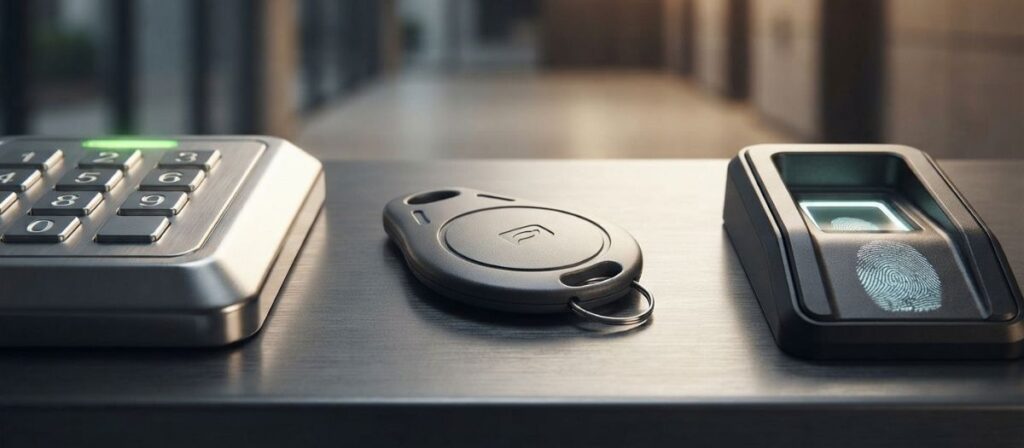
A keypad system requires entering a numeric PIN code to release the door. No physical token to carry, no card to lose, just a code someone remembers. Codes can be changed easily, which sounds like a security feature until you consider what actually happens with shared codes in practice.
A key fob uses RFID or NFC technology, a small device tapped or held near a reader that transmits a unique identifier. Fobs are compact, fast, and can be individually deactivated the moment someone loses one or leaves the company, without touching the underlying lock hardware. “What Is an Access Control System” blog covers the broader mechanics of how a credential communicates with the door’s controller and lock hardware if you’re unfamiliar with that process.
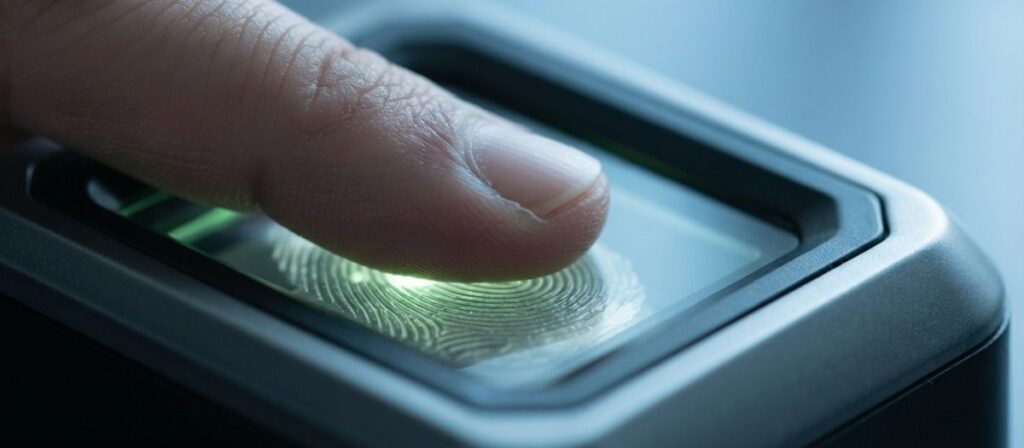
Biometric systems verify a physical trait, a fingerprint, facial scan, or iris pattern, rather than something a person carries or remembers. Because the credential is the person themselves, biometric access can’t be lost, loaned, or forgotten, which is its core security advantage over the other two methods.
The Shared Code Problem Nobody Explains Clearly
Every competitor mentions that keypad codes “can be shared” as a passing concern. What almost none of them explain is the actual consequence, and it undercuts one of the main reasons a business installs access control in the first place.
If your keypad uses one shared code for an entire department or shift, the system’s audit trail becomes meaningless the moment someone other than the intended person uses that code. You’ll know the door opened at 7:42 AM, but not who actually opened it, since the code itself carries no individual identity. This defeats the accountability that access control is supposed to provide over a physical key.
The fix, assigning a unique PIN to each individual user rather than one shared code per group, solves this, but it requires more administrative discipline to maintain, especially in a business with frequent staff changes. If you’re installing a keypad system specifically for individual accountability, confirm upfront that your system supports and is actually configured for unique per-user codes, not a single shared entry code that defeats the purpose.
The Illinois Law Almost No Competitor Mentions
Here’s the single biggest gap in every national and out-of-state competitor article on this topic, and it matters directly for any Champaign County business considering biometric access control.
Illinois operates under the Biometric Information Privacy Act (BIPA), one of the strictest biometric privacy laws in the country. Before a business can collect an employee’s fingerprint, facial scan, or other biometric identifier, even for something as routine as a fingerprint-based door lock, Illinois law generally requires written notice to the employee about what’s being collected and why, written consent from the employee before collection, and a publicly available retention and destruction policy describing how long the biometric data will be kept and when it will be deleted.
This isn’t a minor compliance footnote. BIPA has produced significant litigation and settlements against businesses that skipped proper consent procedures, regardless of company size. If you’re a Champaign County business considering biometric access control, this legal obligation exists independent of the security decision, and it’s worth a conversation with legal counsel before installation, not something to assume your access control vendor will handle for you by default.
Comparing Real-World Risk, Not Just Security Ratings
Competitor content tends to rank these three methods on an abstract security scale, biometric highest, keypad lowest, without explaining what that ranking actually means when something goes wrong. The more useful comparison looks at the exposure window each method creates.
A lost or stolen fob creates a security gap that lasts exactly as long as it takes someone to notice it’s missing and report it. In practice, most locksmiths find this window is usually short, hours to a day or two, but it’s a real gap during which the fob still works for anyone holding it.
A shared or compromised PIN code creates a less visible gap, since there’s often no clear moment when a shared code is “lost.” It can circulate informally among staff for months without anyone flagging it as a security concern, making the exposure window effectively invisible until an incident forces a review.
Biometric credentials largely eliminate this exposure category, since a fingerprint or facial pattern can’t be handed off, borrowed, or left in a coat pocket. The trade-off is the higher upfront cost and, in Illinois specifically, the compliance obligation described above.
Cost Per Door: What to Actually Budget For
Competitor content that mentions pricing does so nationally, with no framing for how that scales across an actual Champaign County commercial property. Rough industry ranges put keypad installations around $500 to $2,500 per door, card or fob systems around $1,500 to $3,500 per door, and biometric systems typically running higher than either due to the sensor hardware and enrollment process involved.
This is where the smarter approach isn’t picking one method for your entire building, it’s matching the credential type to what each specific door actually protects. A general staff entrance sees the most daily traffic and benefits from a fast, low-cost method like a fob. A server room, a records room, or a pharmacy storage area protecting sensitive material justifies the higher cost and stronger accountability of biometric or a card-plus-PIN multi-factor setup. Spending a biometric-level budget uniformly across every door in a small office, including a supply closet, is money that would be better allocated toward the doors that actually carry meaningful risk.
What Most Access Control Comparisons Don't Tell You
A handful of practical points get skipped or glossed over across the competitor content we reviewed.
High-turnover businesses near UIUC face a real administrative burden with fobs and keypads. Both require active upkeep, issuing new fobs, retiring old ones, updating PIN codes, every time staff changes. For a business near Campustown relying on student employees with constant seasonal turnover, mobile credentials tied to a smartphone can be issued and revoked instantly through software, without a physical token ever changing hands. This is a genuinely stronger fit for that specific turnover pattern than either keypad or fob alone. Commercial Rekeying After Employee Turnover blog covers the mechanical-key equivalent of this same administrative burden if you’re weighing electronic credentials against traditional keys.
Throughput matters more than most businesses initially consider. Biometric verification takes measurably longer per person than a fob tap, which is rarely an issue at a low-traffic interior door but becomes a real bottleneck at a busy main entrance during shift changes. Reserve biometric verification for lower-traffic, higher-sensitivity doors rather than a building’s primary entrance if speed during peak hours matters to your operation.
Weatherproofing matters for exterior-mounted readers in Central Illinois. Any credential reader mounted outside, whether keypad, fob reader, or biometric scanner, needs to handle genuine seasonal temperature swings and moisture exposure. A reader rated for indoor use that ends up installed on an exterior door is a common installation mistake that shows up as reliability problems well before the underlying credential technology itself is the issue.
A hybrid approach is usually the right answer, not a compromise. Rather than treating this as a single choice for the whole building, use fobs or keypads for general access doors, and reserve biometric or multi-factor authentication for doors protecting your most sensitive areas. This is the practical answer competitors mention as an aside but rarely commit to as the actual recommendation.
Frequently Asked Questions
What is the best access control system for a small Champaign County business?
There’s no single best option across the board. Key fob systems generally offer the best balance of cost, speed, and individual accountability for small businesses with moderate security needs, while biometric makes sense specifically for doors protecting sensitive data or valuables.
What are the disadvantages of biometric access control?
Higher upfront cost per door, slower verification speed at high-traffic entrances, and in Illinois specifically, a legal obligation under BIPA requiring written consent and a data retention policy before collecting employee biometric information.
What are the disadvantages of keyless entry systems in general?
Keypad codes can be shared or forgotten, fobs can be lost or stolen, and all electronic systems depend on power and network reliability, meaning a backup plan for outages matters regardless of which credential type you choose.
How do I choose between a keypad, key fob, and biometric system for my business?
Match the method to what each door protects rather than picking one for the entire building. General access doors are usually well served by fobs, while doors protecting sensitive data, records, or valuables justify the added cost and accountability of biometric or multi-factor verification.
Is biometric access control legal for Illinois businesses?
Yes, but Illinois’s Biometric Information Privacy Act requires written notice and consent from employees before collecting fingerprints or facial scans, along with a public retention and destruction policy. Consulting legal counsel before installation is strongly advised.
How much does it cost to install access control per door in Champaign County?
Keypad systems generally run lower per door than fob or biometric systems, with biometric typically the most expensive due to sensor hardware and enrollment requirements. A locksmith or installer can give an accurate quote after assessing your specific doors and credential needs.
Can I use different access control methods on different doors in the same building?
Yes, and this hybrid approach is often the most practical solution. Using fobs for general entry and reserving biometric or card-plus-PIN verification for high-sensitivity areas balances cost and security more effectively than a single uniform system.
✅ Key Takeaways
Choosing between keypad vs key fob vs biometric access control isn’t really about picking one winner, it’s about matching each credential type to what a specific door actually needs to protect, while accounting for Illinois’s specific legal requirements if biometric data collection is on the table. A shared keypad code, an unreported lost fob, and a biometric scanner each carry different real-world exposure windows worth weighing against your business’s actual turnover and risk profile.
If you’re deciding which access control method fits your Urbana or Champaign County business, call Locksmith Urbana IL at (217) 288-2915. We’ll assess your doors, your turnover pattern, and your budget before recommending a system, including whether a hybrid approach makes more sense than a single method throughout. Visit our Access Control Locksmith Services page to see the full range of access control work we handle.
- Available Right Now
Dealing With a Lockout Right Now?
Locksmith Urbana IL is available 24 hours a day, every day. Same-day service, upfront pricing, and a local technician who knows the Champaign County area.
Most calls in ZIP 61801 & 61802 see a technician on-site within 35 minutes