
- Residential Lockout Guide
How to Childproof Doors and Locks Without Losing Security
- Locksmith Urbana IL
- 8 min read
- Urbana, IL. 61801 / 61802
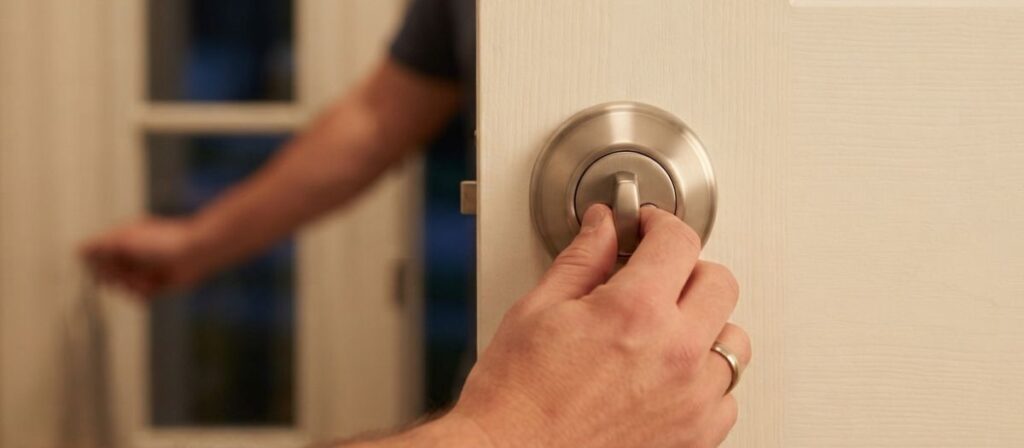
Every parent hits the same wall eventually: your toddler figures out door handles before you’ve figured out how to stop them. The instinct is to grab whatever childproofing product shows up first in a search, snap it on, and move on. The problem is that most of those products were never designed with a second question in mind, one that matters just as much as keeping a toddler contained: can an adult, or an older child, get that door open in three seconds during an emergency?
Learning how to childproof doors and locks the right way means solving both problems at once, not trading one risk for another. This guide walks through exactly that, including two pieces almost no article on this topic covers: the difference between a childproofing product that is simply annoying to use and one that could actually violate fire-safe egress requirements, and what modifying a lock can quietly do to your door’s warranty or your home’s insurance compliance.
Why Childproofing and Security Pull in Different Directions
A childproof lock and a security lock solve opposite problems. A childproof lock needs to stop a determined three-year-old who has all the time in the world and no fear of failure. A security lock needs to stop an adult intruder working quickly under pressure. Products built for one job often perform badly at the other.
In practice, most locksmiths will tell you the common mistake is treating every door in the house the same way. A pantry door and a front entry door do not carry the same risk profile, and they should not get the same childproofing solution. The pantry can tolerate a magnetic lock or a knob cover. The front entry door, the one your fire escape plan depends on, cannot.
Start With a Door-by-Door Safety Check
Before installing anything, walk the house door by door and ask three questions for each one: What is behind this door? Could a child reach or manipulate the handle from where they typically play? And critically, is this door part of your home’s fire escape route?
Crouch down to a toddler’s eye level at each door. What looks unreachable from adult height is often within easy reach of a climbing two-year-old standing on a nearby chair or toy bin. This single habit catches more real risk than any single product recommendation.
Sort every door into one of three categories: interior doors with no egress function (bathrooms, closets, playrooms), interior doors that lead to a hazard (basement stairs, garage access), and exterior or egress doors that must stay quickly openable from the inside at all times.
The Egress Problem Nobody Talks About
This is the gap in nearly every childproofing article available online, and it matters more in a two-story or basement-level Urbana home than almost anywhere else. Illinois residential code, under IRC Section R310, requires that egress doors and windows be operable from the inside without a key, a tool, or specialized knowledge. That requirement exists for exactly one reason: so a family can get out fast during a fire, and so firefighters can get in.
A high-mounted keyed deadbolt installed purely to keep a toddler from wandering outside can quietly violate that principle if the key is not immediately accessible from the inside, or if a caregiver unfamiliar with the house cannot locate it under stress. The same goes for double-cylinder deadbolts that require a key on both sides. They are effective against toddlers and effective against burglars, but during a house fire at 2 a.m., a groggy adult fumbling for a key in the dark is losing time nobody has.
The fix is not to skip locking egress doors higher. It is to choose hardware that stays quickly releasable from the inside no matter who is operating it. A high-mounted thumb-turn deadbolt, rather than a keyed one, keeps a toddler out while staying a single motion for any adult or older child to open in the dark. This is one of the most important decisions in this entire guide, and it is the one competitor content consistently skips.
Secure Solutions for Exterior and Egress Doors
For front doors, back doors, and any door leading directly outside, prioritize hardware that raises the bar for a toddler’s height and coordination without adding a second step for adults.
High-mounted thumb-turn deadbolts placed above a child’s reach, roughly 54 to 60 inches from the floor, work well because they still open with a single hand motion from the inside. No key, no combination, no delay. Having a locksmith reposition an existing deadbolt to this height typically runs in the range of a standard service call plus a short labor charge, well below the cost of replacing the door hardware entirely.
Smart locks with scheduled or caregiver-specific access offer another layer for busy households. A code that only works for a babysitter during scheduled hours, paired with keyless entry for adults, keeps the door secure without anyone needing to manage a separate childproofing device at all. Smart lock installation generally costs more upfront than a basic deadbolt reposition, but it replaces several separate childproofing products at once.
Sliding patio and garden doors deserve their own attention, since their low-mounted latches sit at exactly toddler height and are often the easiest door in the house for a child to operate. A secondary track-mounted pin lock, placed higher on the frame, blocks the slide without needing a key and without interfering with the primary lock. This is an inexpensive add-on, usually well under the cost of a full lock replacement.
Avoid double-keyed deadbolts on any door that forms part of your fire escape plan. If a home already has one installed, the safer fix is swapping it for a single-cylinder, thumb-turn model rather than layering a childproofing product on top of it.

Interior Doors: Where You Have More Room to Improvise
Interior doors that are not part of an egress path give you far more flexibility, since a slower release time is an inconvenience rather than a hazard.
Door knob covers work well on bathrooms, home offices, and utility closets, keeping small hands from getting enough grip to turn the knob, while an adult applies a firm squeeze-and-turn motion. They typically cost very little and install in minutes, but should be treated as a short-term measure rather than a lasting fix, since older toddlers often figure out the trick within a few months.
Magnetic or sliding bolt locks suit spaces like a laundry room or a cabinet holding cleaning supplies. Magnetic versions require a separate key-shaped magnet to release, kept out of a child’s reach, which makes them harder for a toddler to defeat than a simple cover. Sliding bolts mounted high on the door frame work the same way without needing a separate key at all.
Pressure-release privacy knobs solve a specific and often ignored danger: a child accidentally locking themselves inside a bathroom or bedroom. Standard privacy locks that only release with a small pin from the outside can turn into a genuine panic situation for both the child and the parent. Swapping to a knob with a quick pressure-release mechanism, one that pops open with light pressure and a thin tool rather than requiring the exact pin, removes that risk without weakening the door’s everyday privacy function.

Basement and Stairway Doors
Basement doors deserve a category of their own in an Urbana home, particularly in older housing near Downtown Urbana where basement stairs are often steep and narrow. A door at the top of basement stairs should be treated the same as a hazard door, meaning a lock mounted well above a toddler’s reach, ideally paired with a door that self-closes rather than one a child could prop open and forget.
Unlike an egress door, a basement stairway door is not something an adult needs to open in under three seconds during an emergency, so a slightly more deliberate lock, such as a hook-and-eye latch mounted high, is appropriate here in a way it would not be on a front door.
Warranty and Insurance: The Detail Competitor Guides Skip
This is genuinely thin ground across almost every childproofing article available, including the more detailed UK guides on this topic, which mention warranty risk only in passing and never touch insurance at all.
Modifying a factory-installed lock, drilling a new deadbolt into a door slab, or removing hardware that came standard with a new door can void the manufacturer’s warranty on that door. This matters more than most homeowners realize, since a warranty claim on a defective door years later can be denied outright if the original lock hardware was altered without documentation.
The safer approach in most cases is to add supplementary hardware rather than replace what came with the door. A secondary sliding bolt, a track pin, or a high-mounted deadbolt installed alongside the original lock, rather than instead of it, preserves the factory warranty while still solving the childproofing problem.
Insurance compliance is the other side of this. Some homeowners’ policies specify a minimum lock grade on exterior doors, and swapping a security-rated deadbolt for a childproofing-only product, rather than adding to it, can quietly drop a door below that requirement. If a locksmith repositions or replaces hardware on an exterior door, ask for an itemized description of the work and the grade of the replacement lock. That documentation is worth keeping with your homeowners or renters policy, not just for childproofing purposes but in case you ever need to reference it after an unrelated claim.
What Most Childproofing Guides Get Wrong
A few things consistently get glossed over or skipped entirely in the childproofing content currently available.
Nearly every guide recommends a product without asking how fast an adult can undo it under stress, in the dark, or with a child in their arms. Pair every childproofing decision in this guide with that question before installing it, especially on any door tied to your escape plan.
Products marketed as “no-drill” or adhesive-mounted get treated as a rental-friendly afterthought rather than a genuine solution. For renters near UIUC and Campustown, where a lease often prohibits drilling into original hardware, magnetic locks, pressure-fit gates, and adhesive knob covers are frequently the only options that do not risk a security deposit, and they deserve to be presented as a primary recommendation, not a footnote. This overlaps with lease-related questions covered in more depth elsewhere on this site, so we’ll keep it brief here.
Finally, almost no guide accounts for growth. A toddler who cannot reach a door handle at 18 months will likely reach it by age three, and a lock that relies purely on height will eventually fail on its own. Building in a periodic recheck, roughly every six months, catches this before it becomes a problem rather than after a child has already gotten through. Central Illinois humidity is also worth checking for, since adhesive-mounted locks can loosen faster during Urbana’s more humid summer stretches than the packaging usually accounts for.

When to Bring in a Professional Locksmith
Some of what is covered here is a genuine weekend DIY project. Door knob covers, adhesive locks, and sliding bolts install in minutes with a screwdriver. Others are not, and getting them wrong on the wrong door creates real risk.
Repositioning a deadbolt to a higher mounting height, swapping a double-cylinder lock for a single-cylinder one, or wiring a smart lock into an existing security system are all jobs where a mistake can either weaken the door’s security or, worse, compromise its function as an emergency exit. A licensed locksmith can confirm the finished setup still meets a reasonable security standard, stays warranty and insurance compliant, and keeps every egress door quickly operable from the inside.
Frequently Asked Questions
How do I stop my toddler from being able to unlock a door without making it hard for adults?
Choose locks that raise the physical challenge, like a high-mounted thumb-turn deadbolt or a magnetic lock requiring a separate key, rather than locks that add extra steps for adults, like a keyed deadbolt. Height and coordination are usually enough of a barrier on their own.
How do I maintain childproof door locks so they keep working?
Check childproofing hardware every few months for wear, and reassess whether your child has grown tall enough or strong enough to defeat it. Adhesive locks in particular should be checked for a loosening bond, especially during humid Central Illinois summers.
Why does my toddler keep obsessively opening and closing doors?
This is a common developmental stage tied to cause-and-effect learning and a growing sense of independence. It is not a sign anything is wrong, but it is a good cue to double check that every hazard door in the house, especially basement and exterior doors, is properly secured during this phase.
Is it safe to put a rubber band on a doorknob to keep a toddler from turning it?
This is a common DIY trick for lever-style handles, but it is not reliable on a knob a toddler could eventually work loose, and it should never be used on an egress door where an adult needs instant, unobstructed access in an emergency. Use a proper knob cover or a raised handle instead on any door tied to your escape plan.
How much does it cost to have a locksmith reposition or upgrade locks for childproofing in the Urbana area?
Repositioning an existing deadbolt typically costs less than installing new hardware entirely, usually a standard service call plus a modest labor charge. A full swap to a smart lock with scheduled access runs higher but replaces several separate childproofing products at once. A locksmith can give an exact quote based on your specific doors and existing hardware.
Will childproofing my locks affect my door's warranty or my home insurance?
It can, if the original manufacturer hardware is removed or modified without documentation. Adding supplementary locks rather than replacing factory hardware, and keeping an itemized record of any locksmith work, protects both the door’s warranty and your insurance compliance.
Can I childproof my doors without drilling, since I rent near campus?
Yes. Magnetic locks, pressure-fit door gates, and adhesive-backed knob covers all avoid drilling into the original hardware, which matters for lease compliance. These are generally the safest starting point for a rental unit near UIUC.
What is the safest way to childproof a bathroom door so my child can't get accidentally locked in?
Replace or retrofit the privacy lock with a pressure-release mechanism that opens with light pressure from the outside using a thin tool, rather than a standard pin-release lock that can jam or be hard for a panicked child to release from the inside.
✅ Key Takeaways
Childproofing works best when every decision gets checked against two questions, not one: does this keep a toddler out, and can an adult still get through this door in seconds if there’s an emergency. Egress doors need height and coordination as the barrier, not a key or a tool. Interior, non-egress doors give you far more flexibility to prioritize convenience and reversibility, and adding hardware rather than replacing it protects both warranty and insurance standing.
If your Urbana home has doors where you are not sure which category they fall into, or you want existing deadbolts repositioned without losing fire-safe access, a quick walkthrough with a locksmith settles it in one visit. Call (217) 288-2915 or visit our residential locksmith services page to schedule a childproofing and security assessment.
- Available Right Now
Dealing With a Lockout Right Now?
Locksmith Urbana IL is available 24 hours a day, every day. Same-day service, upfront pricing, and a local technician who knows the Champaign County area.
Most calls in ZIP 61801 & 61802 see a technician on-site within 35 minutes