
- Residential Lockout Guide
Locksmith Security Audit After a Break-In: Urbana Guide
- Locksmith Urbana IL
- 8 min read
- Urbana, IL. 61801 / 61802
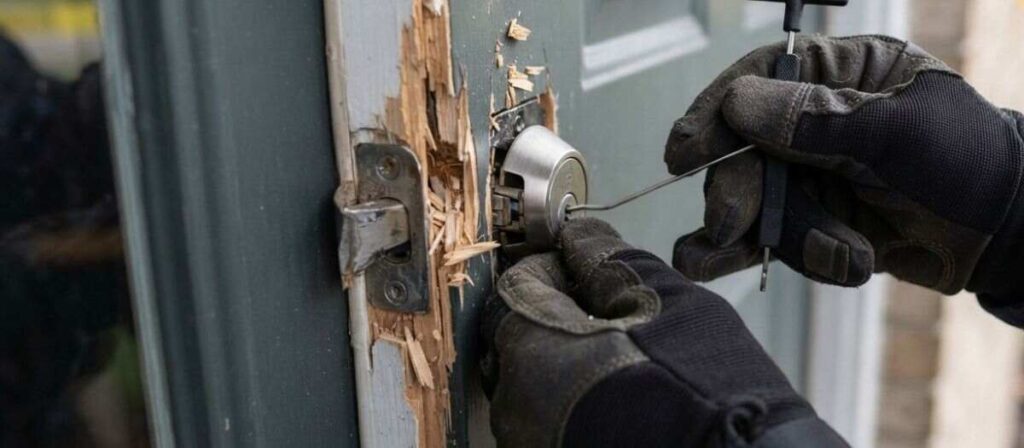
Most homeowners assume a locksmith’s job after a break-in is simple: show up, put a new lock on the door, leave. That is only the visible part of the work. A proper locksmith security audit after a break-in is a structured walkthrough of the entire property, not a single-point repair, and skipping steps in that walkthrough is exactly how a second break-in happens weeks later.
This guide walks through what that audit actually involves for a home in Urbana or Champaign County, step by step, including the parts most articles skip entirely: how the audit fits around the police response, how a locksmith decides between rekeying and full replacement, and what documentation you need for an insurance claim.
Why a Post-Break-In Security Audit Is Different From a Lock Change
Replacing a damaged lock addresses the door the burglar actually used. It does nothing for the other three or four entry points on the property that were never touched but might be just as weak. In practice, most locksmiths will tell you the door that got hit is rarely the only door with a problem.
A locksmith security audit after a break-in treats the incident as a signal, not an isolated event. If one entry point failed, the same age, wear pattern, or installation shortcut is often present on the back door, the garage service door, or a first-floor window that nobody has checked in years. The audit exists to find those before someone else does.
The First 24 Hours: Sequencing the Police Report and the Locksmith Visit
One thing almost no local guide explains clearly is the order of operations. Calling a locksmith before the police have documented the scene can actually work against you.
Call 911 or Champaign County non-emergency dispatch first. If the intruder may still be inside, get everyone to safety and call 911 immediately. If the property is already clear, contact the appropriate police department (Urbana Police or the Champaign County Sheriff, depending on jurisdiction) and get a case or report number.
Wait for officers to process the scene before touching damaged hardware. Photographing a splintered door frame or a drilled-out cylinder is fine. Replacing it before officers have looked at it can complicate both the police report and your insurance claim.
Call the locksmith once the scene is released. This is when the actual audit starts. A same-day or emergency response is standard for a compromised home, and most Urbana-area locksmiths can secure the property the same day even if full repairs take longer.
Keep the report number. You will need it twice: once for your insurance claim, and again if any follow-up police contact happens during the investigation.
First 24 Hours Checklist
- Confirm the property is physically safe before re-entering
- Call police and get a report number
- Photograph all visible damage before anything is repaired
- Call a licensed locksmith for a full audit, not just the damaged door
- Start a written list of anything missing, including spare keys
What a Locksmith Actually Checks During the Audit
A full audit covers far more ground than the point of entry. Here is what gets inspected on a typical residential visit in the Urbana area.
| Area | What's Checked | Why It Matters |
|---|---|---|
|
Point of entry
|
Lock alignment, drilling, snapping, picking marks
|
Confirms how entry was gained and whether the hardware can be salvaged |
|
Door frame and jamb
|
Splintering, strike plate condition, screw length
|
Kick-in damage often destroys the frame even when the lock itself survives |
|
All other exterior doors
|
Wear, alignment, lock grade
|
Matching weaknesses on untouched doors are common in homes of the same age
|
|
Garage and service doors
|
Lock condition, whether the door connects to the house
|
A frequently overlooked secondary entry point |
|
Windows and patio doors
|
Sash locks, sliding track latches, glass condition
|
Covers door hardware, but window and patio checks happen in the same visit
|
|
Key control
|
Who holds keys, whether any are unaccounted for
|
Determines whether rekeying alone is enough
|
|
Alarm or camera integration
|
Whether existing systems were bypassed or ignored
|
Flags gaps a burglar may have already identified
|
Every item on that list gets a pass or fail, and the locksmith should be able to explain the reasoning behind each one, not just hand over a list of recommended upgrades.
Rekey or Replace: How the Audit Actually Decides
This is the part most competitor content oversimplifies into a generic rule of thumb. The real decision during an audit comes down to three questions.
Is the lock body itself damaged? Drilling, snapping, or a forced strike almost always means replacement, since the internal mechanism is compromised even if the door still closes.
Could a key exist outside your control? If keys were stolen, lost during the break-in, or previously handed out to a contractor, cleaner, or past tenant without being tracked, rekeying is the minimum step, and a full lock change is often the safer call.
Does the existing hardware meet a reasonable security grade? A builder-grade lock that was already due for an upgrade is a good candidate for replacement to an ANSI Grade 1 deadbolt (Schlage and Kwikset both offer Grade 1 residential options), rather than rekeying the same lower-grade cylinder.
For homeowners who want tighter long-term control over duplication, a restricted keyway system is worth discussing during the audit. These use a patented key blank that cannot be cut at a standard hardware store, which matters more after a break-in than at almost any other time, since you cannot be certain how many untracked keys existed before the incident.
Windows, Patios, and Garages: The Entry Points Homeowners Forget
Door hardware gets most of the attention, but a meaningful share of break-ins in Champaign County involve a window, patio door, or garage service door rather than the front entry. The audit should cover all three even if none of them were involved in the actual incident.
Sliding patio doors are frequently secured by nothing more than the factory latch, which can be lifted off its track from outside with minimal effort. A secondary track pin or a floor-mounted security bar closes that gap for very little cost.
Garage service doors, the smaller walk-in door beside the main garage door, are commonly forgotten because homeowners focus on the big door and its opener. If that service door connects directly into the house, it deserves the same lock quality as the front door, not a leftover builder-grade knob.
First-floor windows near Crystal Lake Park and the older housing stock around Downtown Urbana often still carry original sash locks with no secondary reinforcement. A locksmith performing the audit should flag these even when the break-in happened somewhere else entirely.

What Most Post-Break-In Guides Don't Tell You
Most articles on this topic, including the handful of national guides available online, describe the audit as if it always happens in a single neat visit with a fixed script. Real audits are messier, and a few things rarely get mentioned.
The audit should include a key control review, not just a lock inspection. If you have lived in the home for years, handed out keys to a dog walker, a former roommate, or a contractor, and never tracked who has them, that is a bigger long-term risk than the actual break-in damage. Most homeowners never think to ask their locksmith to walk through this.
Master key exposure matters even in single-family homes, not just multi-unit rentals. If any lock on the property shares a keyway with another property, a storage unit, or a shared garage, that connection should come up during the audit.
Insurance adjusters sometimes ask for more documentation than homeowners expect, including the make and model of the locks that were replaced, not just a repair invoice total. Asking your locksmith for an itemized breakdown at the time of service saves a frustrating follow-up call later.
Not every audit finding needs to be acted on immediately. A good locksmith will separate urgent fixes, like a compromised lock or a splintered frame, from longer-term recommendations, like adding cameras or upgrading every exterior door to Grade 1 hardware, so you are not pressured into an all-at-once spending decision during an already stressful week.
Documenting the Audit for Your Insurance Claim
Homeowners insurance in Illinois typically covers break-in damage, but the payout process moves faster with the right paperwork. The audit itself becomes part of that documentation.
Keep the police report number, dated photos of all damage taken before repairs began, and an itemized invoice from the locksmith listing exactly what was inspected, repaired, or replaced. If the audit recommends upgrades beyond simple repair, such as moving from a standard cylinder to an anti-drill, high-security deadbolt, note that this was a professional recommendation rather than a personal preference. Some policies weigh security upgrades differently than like-for-like replacement.
If You're a Landlord Near UIUC: What Changes
Rental properties near campus and Campustown add one extra layer to the audit that homeowners in single-family homes do not deal with: shared or historical key access across multiple tenants. If a unit near UIUC has changed hands between renters without a rekey each time, the audit needs to account for how many past occupants could still hold a working key. That single question often matters more than the physical lock grade itself. This overlaps with tenant rights and habitability standards covered in more depth on our renter-focused page, so we will keep this brief here.
How to Verify Your Locksmith Is Actually Licensed
A break-in leaves people anxious to get a lock changed immediately, and that urgency is exactly what unlicensed operators rely on. Illinois locksmiths are regulated under the Private Detective, Private Alarm, Private Security, Fingerprint Vendor, and Locksmith Act of 2004 (225 ILCS 447). Before letting anyone touch your locks after an incident, it is reasonable to ask for a license number and confirm the technician arrives in a marked vehicle with identifiable company information, not an unmarked car and a generic invoice.
Frequently Asked Questions
What does a locksmith normally do during a post-break-in visit?
A locksmith inspects the damaged entry point, checks every other exterior door, window, and garage access, advises on rekeying versus replacement, and provides documentation useful for an insurance claim.
Does an emergency locksmith break the lock to get in?
No. A licensed locksmith uses non-destructive entry methods whenever the lock allows it. Forcing or breaking hardware is only necessary when the lock itself is already damaged beyond safe manipulation.
Can a key be fixed if it snapped off inside the lock?
Often yes. A broken key can usually be extracted with specialized tools, and in most cases the lock cylinder remains functional afterward without needing full replacement.
How do locksmiths know it's actually my house before doing any work?
A licensed locksmith will ask for proof of residency or ownership, such as an ID matching the address or other documentation, before performing entry or lock changes. This is standard practice, not an inconvenience.
What is the hardest type of door lock to break into?
High-security, ANSI Grade 1 deadbolts with anti-drill and anti-snap features, paired with a reinforced strike plate and a solid door frame, offer the strongest resistance to forced entry among standard residential options.
How much does a full post-break-in security audit cost in the Urbana area?
Costs vary by scope. A basic audit paired with a single lock replacement typically runs lower than a full multi-door rekey and upgrade package. Most locksmiths can give an exact quote after seeing the property, and the audit itself is often included with the initial service call.
Should I rekey or replace my locks after a break-in if the door itself wasn't damaged?
If the lock is undamaged but any keys were lost, stolen, or unaccounted for, rekeying is the minimum step. If the hardware was already outdated, this is also a reasonable time to upgrade rather than rekey the same lower-grade lock.
✅ Key Takeaways
A locksmith security audit after a break-in is not the same service as a single lock replacement. It covers every entry point on the property, not just the one that was used, and it should end with a clear rekey-or-replace decision backed by reasoning you understand.
Sequencing matters. Let police process the scene first, keep your report number, and bring in a locksmith once the property is released, so the audit and your insurance documentation line up correctly.
If your Urbana home has recently experienced a break-in, a full audit is the fastest way to know exactly where you stand, not just what got damaged. Call (217) 288-2915 or visit our residential locksmith services page to schedule a same-day security audit.
- Available Right Now
Dealing With a Lockout Right Now?
Locksmith Urbana IL is available 24 hours a day, every day. Same-day service, upfront pricing, and a local technician who knows the Champaign County area.
Most calls in ZIP 61801 & 61802 see a technician on-site within 35 minutes