
- Emergency Lockout Guide
Locksmith Destructive Entry: What Happens to Your Door and Who Pays
- Locksmith Urbana IL
- 8 min read
- Urbana, IL. 61801 / 61802
You call a locksmith, they show up, and instead of picking your lock, they reach for a drill. Ten minutes later, your cylinder is destroyed, there is metal dust on your doorstep, and you are holding a bill that is double what the dispatcher quoted. If you live near UIUC or anywhere in Champaign County, this scenario is not rare. Understanding what destructive entry actually is, when it is legally justified, and what your rights are afterward can save you significant money and frustration.
What Destructive Entry Actually Means
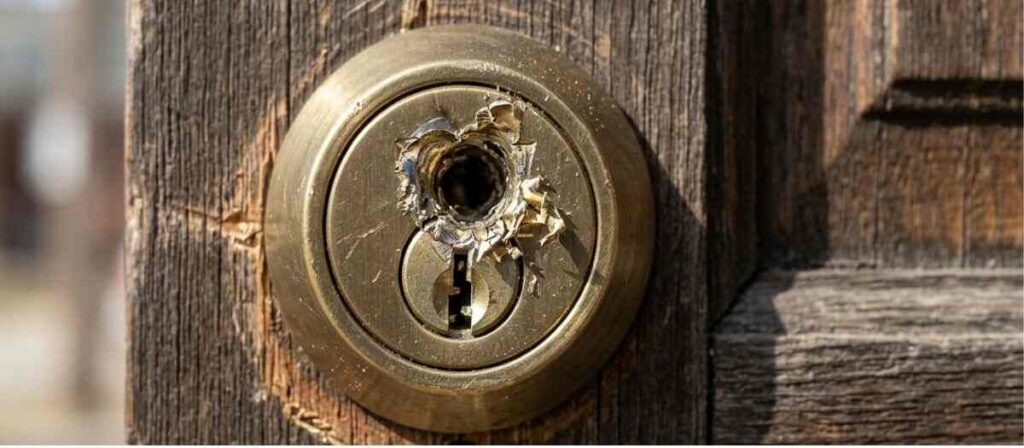
Destructive entry is any method a locksmith uses to gain access that permanently damages the lock, door, or door frame. The most common form is lock drilling, where the technician uses a power drill to destroy the internal pin tumbler mechanism inside the lock cylinder. Once drilled, the cylinder is useless. You will need a replacement before your door can lock again.
Other forms include snapping the cylinder with a snap tool, forcibly punching the lock, or in the worst cases, damaging the door frame itself. All of these fall under destructive entry because they leave behind hardware that must be replaced.
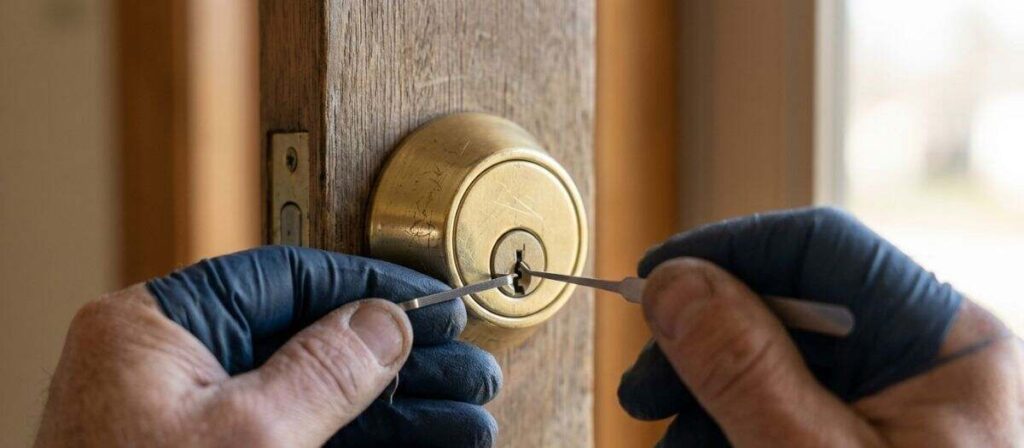
The opposite is non-destructive entry (NDE), the industry standard that every licensed, competent locksmith should attempt first. NDE methods include lock picking, impressioning, decoding, and using bypass tools. A skilled technician can open most residential deadbolts, including common brands like Schlage B60N and Kwikset 980, without touching a drill.
When Drilling Is Actually Justified
There are situations where destructive entry is the correct call. A lock that has seized due to a broken key fragment lodged in the cylinder, significant internal corrosion from Central Illinois winter humidity, or a failed locking mechanism on a high-security Medeco or Mul-T-Lock cylinder can all make non-destructive methods impractical. If a lock has been deliberately tampered with during a prior break-in attempt, the internal pins may be so damaged that picking is impossible.
In practice, those situations are less common than predatory locksmiths would have you believe. Most standard residential lockouts, including apartment lockouts common around the UIUC campus rental corridor, involve perfectly functional locks that should open with a tension wrench and pick in under five minutes.
Red Flag
If a technician reaches for a drill before attempting to pick your lock, or claims your standard Kwikset or Schlage deadbolt is “too high-security to pick,” that is a serious warning sign. Ask them to document in writing why non-destructive methods failed before authorizing any drilling.
Who Pays for the Door and Lock Damage?
This is the question most locksmith guides skip entirely, so here is a clear answer: it depends on whether the damage was necessary and whether the locksmith is properly insured.
When the Locksmith’s Insurance Covers It
Under Illinois law (225 ILCS 447 / the Locksmith Act of 2004), every licensed locksmith operating in Illinois must carry general liability insurance. The Illinois Department of Financial and Professional Regulation (IDFPR) requires proof of insurance before issuing a locksmith license. If a licensed locksmith damages your door frame or causes unnecessary damage during a job, their property damage claim coverage should apply. The standard policy minimum is $1,000,000 per occurrence.
In practice, you should request the technician’s IDFPR license number on the spot. You can verify it in minutes at idfpr.illinois.gov. If they cannot produce one, you are dealing with an unlicensed operator whose insurance coverage, if they have any, is unverifiable.
When You End Up Paying
If you authorized the drilling, received a written quote that included a lock replacement line item, and the technician performed the work as described, the cost is yours. This is not necessarily wrong. Sometimes drilling and replacing a lock is the right outcome. The problem arises when drilling was never necessary, or when the final bill includes charges that were not in the original quote.
| Scenario | Typical Cost in Champaign County | Who Pays? |
|---|---|---|
|
Non-destructive lockout (pick/bypass)
|
$75 – $150 |
You (standard service fee) |
|
Necessary drilling + lock replacement (deadbolt)
|
$150 – $300 |
You (if authorized in writing) |
|
Unnecessary drilling by licensed, insured locksmith
|
Varies |
Locksmith’s liability insurance
|
|
Door frame damage by licensed locksmith
|
$100 – $400 repair cost |
Locksmith’s liability insurance
|
|
Damage by unlicensed operator |
Varies |
You, recovery through small claims court |
Your Rights as a Property Owner or Tenant in Illinois
Illinois is one of approximately 15 states that require locksmiths to be licensed. That matters because it gives you enforceable rights under state law. Rights that most locksmith articles never spell out:
- You have the right to request a written quote before any work begins. A legitimate technician will provide one. If they refuse, you can refuse service.
- You have the right to see the technician’s IDFPR license. Under 225 ILCS 447, a locksmith must carry it and produce it on request.
- You have the right to dispute any charges that exceed the written quote. If you paid by credit card, you can file a chargeback. If you paid in cash, you can file a consumer protection complaint with the Illinois Attorney General’s office.
- Tenants near UIUC: if your landlord-provided lock is damaged by a locksmith you called for a lockout, document the damage with photos immediately and notify your property manager in writing. Your lease may specify who is responsible.
- If the locksmith was unlicensed and caused damage, file a complaint with IDFPR and pursue recovery through Champaign County small claims court for amounts up to $10,000.
What Most Destructive Entry Guides Don't Tell You
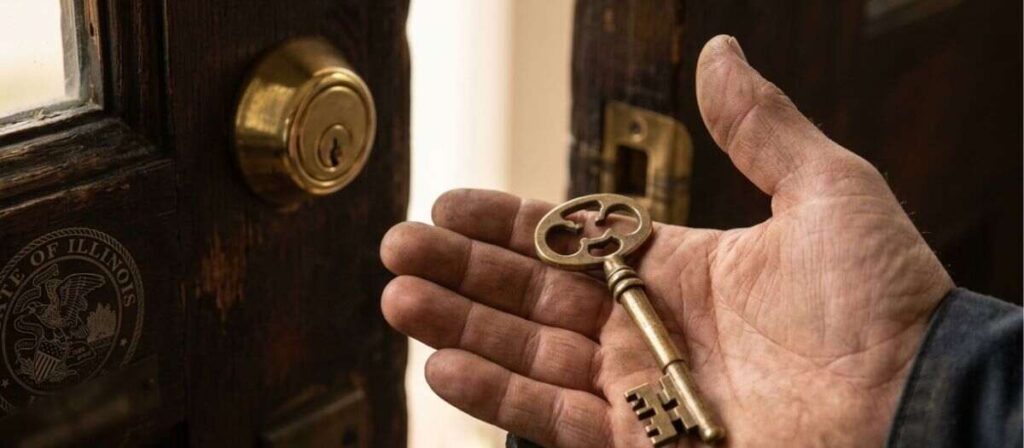
Most articles on this topic stop at “drilling is a last resort.” Here are the details that actually matter for someone in Urbana or Champaign who ends up in this situation.
Scam Locksmiths Specifically Target Late-Night Calls
If you are locked out at midnight near Campustown or after leaving the Canopy Club, you are in the highest-risk window for bait-and-switch pricing. Fraudulent operations know you are tired, stressed, and unlikely to research credentials at that hour. They advertise via Google PPC with an extremely low ETA and a $29 service fee, numbers designed to get a technician to your door before you think to ask questions. Once there, the “high-security lock” claim comes out, followed by the drill, followed by a $400 invoice payable only in cash.
The dispatch number you call is often a national call center with no physical Illinois presence, routing work to whoever happens to be nearby. That technician may not be licensed in Illinois at all.
The Itemized Invoice Is Your Most Important Document
Under Illinois law, a licensed locksmith is required to maintain work order records for two years. Request a detailed, itemized invoice that separately lists the service call fee, labor, and any parts. If a technician refuses to provide one or hands you a handwritten receipt with no company name, license number, or physical address, do not pay until they do. That document is your primary evidence if you need to file a dispute or insurance claim later.
A Drilled Lock Is Not Always a Security Downgrade
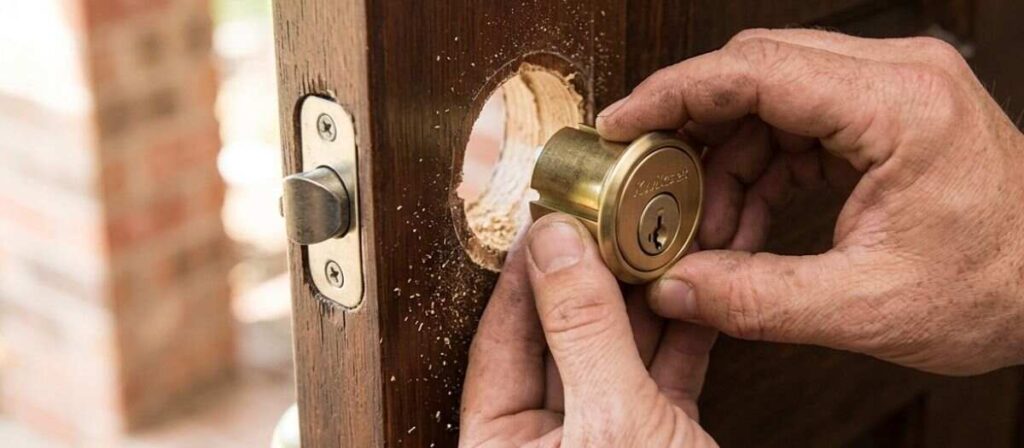
One thing many homeowners do not realize: if a legitimate locksmith drills your existing Kwikset 660 and installs a Schlage B60N deadbolt as a replacement, your door security may actually improve. The question is not just whether drilling happened, but what was installed afterward. An ANSI Grade 1 replacement deadbolt on a reinforced door frame is meaningfully better than the builder-grade hardware many Champaign County homes and UIUC-area rentals were built with.
How to Protect Yourself Before a Locksmith Arrives
The best defense against unnecessary destructive entry happens before the technician shows up. These steps take less than five minutes and apply whether you are locked out of a house on Philo Road or an apartment off Lincoln Avenue near campus.
First, verify the IDFPR license number before dispatching anyone. You can search idfpr.illinois.gov in about 60 seconds. Any locksmith operating in Illinois without a valid license is breaking state law and you have no recourse if they damage your property.
Second, ask for a written or texted quote before they arrive. Get confirmation of the service call fee, estimated labor, and parts range. If they refuse to give a number until they see the lock in person, that is acceptable. But get the quote in writing the moment they assess the door and before any tools come out.
Third, watch the approach. A legitimate locksmith who arrives at your Champaign County home will try to pick or bypass the lock first. If they assess the door for thirty seconds and immediately unpack a drill, say stop. Ask specifically what non-destructive methods they have attempted and why those failed. A licensed professional will be able to answer that clearly. A scammer will not.
Finally, look for an ALOA membership or certification. The Associated Locksmiths of America is the largest professional organization in the industry, and membership requires background checks and credentialing. It does not replace the IDFPR license check, but it is an additional trust signal.
Frequently Asked Questions
Will a locksmith destroy the lock to get me back into my house?
Not if they are doing their job properly. A licensed locksmith will always attempt non-destructive methods first; picking, decoding, or bypass tools. Drilling the lock (destructive entry) is a last resort used only when the lock mechanism has genuinely failed, a key is broken inside, or the lock is designed to resist picking. If a locksmith in Urbana or Champaign moves straight to a drill without attempting to pick your lock first, ask them to justify it in writing before authorizing the work.
How do I know if my lock has been tampered with or drilled without permission?
Look for metal shavings or dust around the keyhole, visible scratches on the face of the cylinder, a keyhole that spins freely with no resistance, or a cylinder that has been replaced with one that does not match your door hardware. If a locksmith drilled your lock without explaining the reason or getting your approval, photograph the damage immediately, request an itemized invoice, and file a complaint with the Illinois Attorney General’s consumer protection division if needed.
Can I dispute a locksmith bill in Illinois if they overcharged me?
Yes. If the final bill is significantly higher than the written quote you received, you have several options. If you paid by credit card, file a chargeback with your card issuer. If you paid cash, file a consumer protection complaint with the Illinois Attorney General’s office (illinoisattorneygeneral.gov) and report the company to the Illinois Department of Financial and Professional Regulation (IDFPR) if the locksmith was licensed, or report them for operating without a license if they were not. Champaign County small claims court handles disputes up to $10,000 without requiring an attorney.
What kind of lock can a locksmith not open without drilling?
High-security locks engineered to resist picking, such as certain Medeco Biaxial, Abloy Protec2, and Mul-T-Lock MT5+ cylinders, are significantly harder to open non-destructively and may require drilling even for a skilled technician. These locks feature anti-drill plates, hardened steel inserts, and tight tolerances specifically designed to slow down forced entry. Most residential locks found in Champaign County homes and UIUC-area rental properties (Kwikset, Schlage, and similar ANSI Grade 2 or Grade 3 hardware) can be opened without drilling by a competent locksmith.
How do I avoid getting scammed by a locksmith in Urbana or Champaign?
Before calling anyone, verify their Illinois IDFPR license at idfpr.illinois.gov. Ask for a written quote over text or email before they arrive. When the technician shows up, check for a marked vehicle, a company ID, and proof of license. Do not let anyone drill your lock without first attempting non-destructive entry. Refuse to pay in cash only. Any legitimate locksmith accepts credit cards. If a technician claims your standard deadbolt must be drilled without trying to pick it first, send them away and call a licensed local locksmith.
What is the toughest lock for a locksmith to break into?
Among residential locks widely available in the US, the Medeco Biaxial and Abloy Protec2 are considered among the most pick-resistant due to their rotating pin and disc-detainer designs respectively. For padlocks, the Abloy PL362 and Abus Granit Plus 37/80 are extremely drill and pick resistant. That said, no lock is completely impervious to a determined, skilled technician with the right tools and enough time. The goal of a high-security lock is to make unauthorized entry slow and noisy enough to deter most attackers.
Why do some people put a rubber band on a doorknob when they are home alone?
The rubber band trick is a safety measure that prevents a spring latch (the angled bolt on a doorknob) from fully latching when you close the door. By looping a rubber band around both interior and exterior knobs so it crosses the latch face, the latch cannot retract into the strike plate. This means the door will not lock itself if it closes behind you, which reduces the chance of an accidental lockout. It does not replace a deadbolt and provides no actual security against anyone trying to enter. It is a convenience and lockout-prevention measure only.
✅ Key Takeaways
- Destructive entry (drilling) should always be a last resort after non-destructive methods fail, not a first move.
- Illinois law (225 ILCS 447) requires every locksmith to be IDFPR-licensed and carry liability insurance. Verify before anyone touches your lock.
- If a licensed locksmith causes unnecessary damage, their general liability insurance covers it. Get the claim in writing and photograph the damage immediately.
- Always get a written or texted quote before authorizing any work, and request an itemized invoice the moment the job is done.
- Available Right Now
Dealing With a Lockout Right Now?
Locksmith Urbana IL is available 24 hours a day, every day. Same-day service, upfront pricing, and a local technician who knows the Champaign County area.
Most calls in ZIP 61801 & 61802 see a technician on-site within 35 minutes