
- Emergency Lockout Guide
Lockout vs Break-In Locksmith: How They Tell the Difference When They Arrive
- Locksmith Urbana IL
- 8 min read
- Urbana, IL. 61801 / 61802
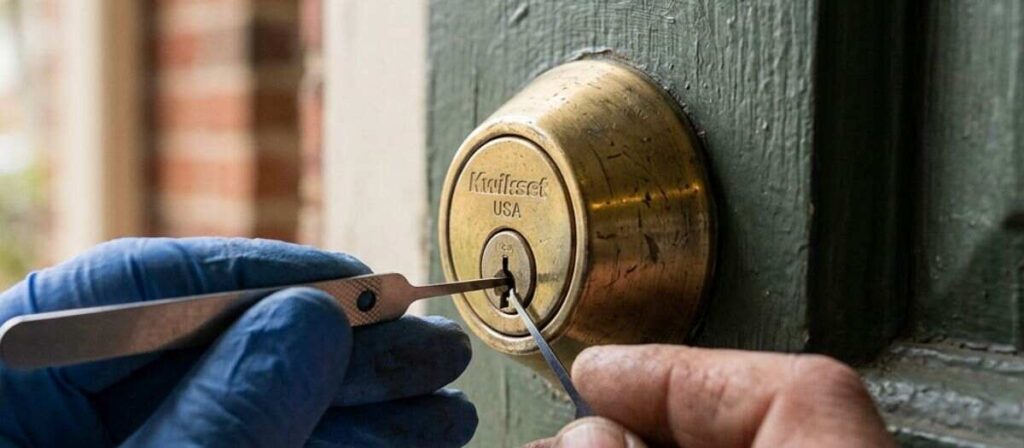
You get home to find your door won’t open. Your first thought is that you locked yourself out again. Your second thought, the uneasy one, is whether someone else has been at your door before you got there.
A locksmith answering a call near Campustown or Downtown Urbana faces this exact question multiple times a month. The good news is that telling a lockout vs break-in apart is not guesswork. There are specific, physical signs a trained technician checks before touching the lock.
What a Locksmith Checks First When They Arrive
Before a locksmith ever attempts to open your door, they walk the perimeter. This step gets skipped in most online guides, but it is the actual starting point of every call.
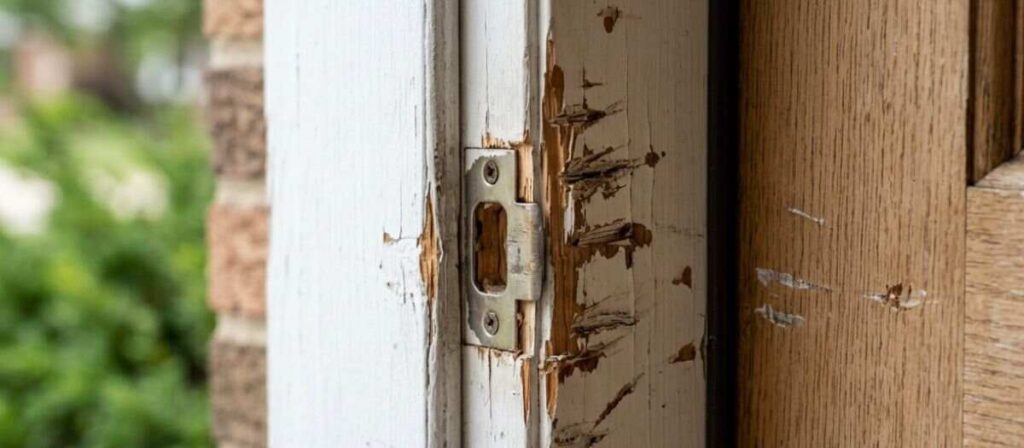
A technician looks at the door from the outside first, scanning for forced entry indicators: splintered wood near the frame, a bent strike plate, or scratches that look fresh rather than weathered. In Urbana’s older Downtown buildings and the wood-frame rentals near Green Street, this distinction matters because older wood shows tool marks more clearly than newer composite doors.
Next comes the lock itself. A locksmith checks whether the lock cylinder turns freely, sticks, or spins without engaging. A cylinder that spins loosely often means someone attempted destructive entry and failed, not that you simply misplaced your key.
Signs of a Genuine Lockout (Nothing to Worry About)
Most calls are exactly what they appear to be. Here is what a standard lockout actually looks like up close.
The door frame is intact. No splintering, no gouges, no pry marks. The deadbolt throws and retracts smoothly when worked with a pick, which tells the locksmith the mechanism itself was never damaged or tampered with.
The key simply isn’t available, whether it’s locked inside, lost, or snapped off in the lock from age or cold weather. Broken key extraction is common during Central Illinois winters, when cold metal becomes brittle and keys shear more easily inside older Kwikset or Schlage cylinders. This is a mechanical failure, not evidence of anyone else’s involvement.
Quick Fact
In practice, a clean lockout takes a locksmith five to ten minutes to resolve with non-destructive picking, and the conversation ends with a working door and a peace-of-mind explanation of what happened.
Signs That Point to a Break-In Attempt
This is where a trained eye matters more than most homeowners realize.
Pry Marks and Frame Damage
Pry marks look like compressed gouges in the wood or metal near the strike plate, usually horizontal and clustered close to the lock. They happen when someone wedges a flat tool, like a crowbar or large screwdriver, between the door and frame to force the latch open. If the door frame damage is fresh, with light-colored wood exposed under paint or stain, that is a strong indicator of an attempted forced entry rather than ordinary wear.
Drill Marks and Cylinder Damage
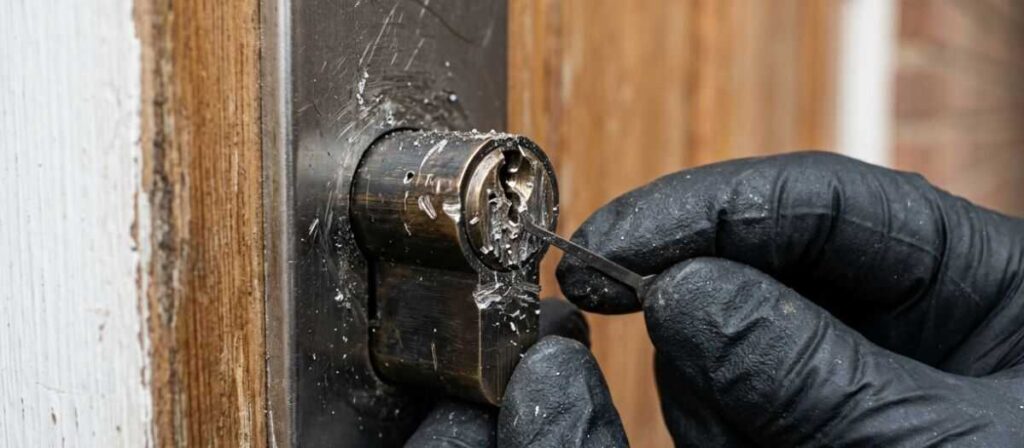
Drill marks around the keyhole, metal shavings on the ground, or a cylinder that has clearly been bored out point to someone attempting destructive entry without locksmith tools. This differs from a professional drill job, which is clean, centered, and minimally invasive. An amateur attempt usually leaves a ragged hole off-center from the original keyway.
Signs of Lock Bumping or Picking
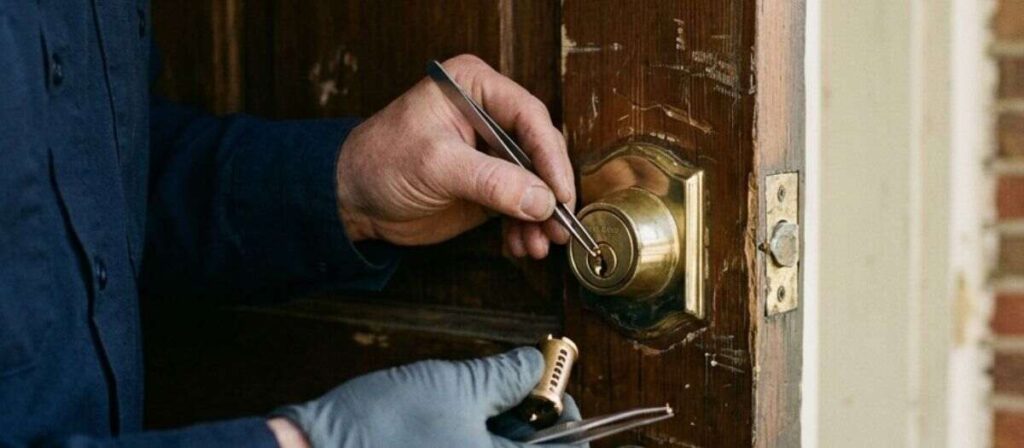
Lock bumping and lock picking signs are subtler and easy to miss without experience. Bumping can leave faint scratches inside the keyway and sometimes bends the driver pins, which a locksmith identifies by removing the cylinder and inspecting the pin stack. Scratches around the keyhole opening, especially fresh ones inconsistent with normal key wear, suggest someone attempted manipulation.
A misaligned door that no longer sits flush in the frame, combined with a damaged latch mechanism that won’t fully engage, often means force was applied even if the lock itself wasn’t breached.
| What's Checked | Lockout Signs | Break-In Signs |
|---|---|---|
|
Door Frame |
CLEAN,
No splintering or gouges, finish intact
|
DAMAGED,
Pry marks, splintered wood, fresh exposed grain |
|
Lock Cylinder |
CLEAN,
Turns smoothly with a pick, no resistance |
DAMAGED,
Spins freely, drill marks, off-center keyhole
|
|
Keyway / Scratches |
NORMAL,
Wear consistent with daily key use
|
SUSPICIOUS,
Fresh scratches, bent driver pins (bumping/picking)
|
|
Door Alignment |
NORMAL,
Sits flush, latch engages fully |
MISALIGNED
Frame shifted, latch won’t catch properly |
|
Cause |
MECHANICAL,
Lost key, key locked inside, snapped key |
FORCED,
Tool marks consistent with prying or drilling |
The Illinois Law Detail Most Homeowners Don't Know
Here is something competitors consistently leave out, and it changes how a Champaign County resident should think about a damage-free lockout.
⚖️ Illinois Law Note
Under Illinois law (720 ILCS 5/19-1), burglary does not require physical damage to prove unauthorized entry. A person who walks through an unlocked door without permission, with intent to commit theft or another felony, has still committed burglary under the statute, even if nothing was forced or broken.
This matters because a clean, undamaged lock does not automatically rule out a break-in. If you live in a rental near UIUC and notice anything missing, moved, or disturbed despite an intact lock, that is still worth documenting and reporting. A locksmith inspecting a clean lock isn’t telling you nothing happened; they’re telling you there’s no mechanical evidence either way.
What Most Lockout vs Break-In Guides Don't Tell You
- A “clean” lock can still mean a break-in. Most articles treat an undamaged lock as proof nothing happened. As covered above, Illinois law doesn’t require forced damage for a burglary charge to apply. A locksmith who only checks for physical damage and declares everything fine is giving you half the picture. If anything inside feels off, the locksmith’s job is to flag it, not dismiss it.
- Insurance claims need documentation before repair. If there is any chance you’ll file an insurance claim, photograph the door, frame, and lock before any repair work begins. Illinois insurers may deny burglary claims that lack evidence of forced entry, and once a locksmith rekeys or replaces the hardware, that evidence is gone. A locksmith who repairs first and explains later is doing you a disservice, even if it’s well-intentioned.
- Cold weather mimics forced entry symptoms. In Central Illinois, freezing temperatures cause metal contraction that can make a deadbolt stick or a cylinder feel “tampered with” even when nothing happened. A locksmith experienced with the local climate near the Philo Road corridor and surrounding rural properties knows to rule out cold-weather stiffness before assuming forced entry, something locksmiths in milder climates rarely have to consider.
What Happens After the Assessment
Once a locksmith determines what they’re dealing with, the next steps differ sharply.
For a standard lockout, the locksmith picks the lock, confirms the mechanism is undamaged, and you’re back inside in minutes. No further action needed beyond the service fee, typically $60 to $120 during business hours in Champaign County.
For signs of attempted or successful forced entry, the recommended order changes. A licensed locksmith will typically advise documenting the damage with photos first, then contacting police to file a report, and only after that proceeding with repair or rekeying. This sequence protects your ability to file an insurance claim and gives police something concrete to work with if they choose to investigate.
A forensic locksmith with specialized training can go further, identifying microscopic tool marks invisible to the naked eye, useful in higher-stakes commercial cases or when an insurance company disputes a claim. Most residential calls don’t need this level of investigation, but it exists for cases where the evidence matters legally.
Frequently Asked Questions
How does a locksmith know if it's a lockout or a break-in?
A locksmith inspects the door frame, strike plate, and lock cylinder for physical evidence like pry marks, drill marks, or scratches around the keyway. A clean, undamaged door with a smoothly functioning lock points to a simple lockout. Splintered wood, a misaligned frame, or a damaged cylinder suggest forced entry was attempted or succeeded.
What do pry marks on a door look like?
Pry marks typically appear as compressed, horizontal gouges in the wood or metal frame near the strike plate. They often show exposed lighter-colored material underneath paint or finish, since the damage is usually recent rather than weathered.
Should I call the police before a locksmith?
If you see any signs of forced entry, damaged locks, broken windows, or items disturbed inside, call the police first and avoid entering the property. Once it’s safe, a licensed locksmith can assess the lock damage and advise on repair, but documentation for any police report or insurance claim should happen before repairs begin.
Can a locksmith tell if someone tried to pick my lock?
Often, yes. Lock picking and bumping can leave faint scratches inside the keyway or bend internal pins, both of which a trained locksmith identifies by removing and inspecting the cylinder. These signs are subtle and easy for an untrained eye to miss entirely.
How much does it cost if a locksmith finds damage from a break-in attempt?
A standard lockout in Champaign County runs $60 to $120 during business hours. If the lock or frame was damaged from a forced entry attempt, expect $80 to $150 for cylinder replacement, with additional cost if the door frame or strike plate needs repair. After-hours calls typically add $30 to $60.
Does a locksmith have to report signs of a break-in to the police?
No. A locksmith is not a law enforcement reporting authority and won’t contact police on your behalf. The decision to file a report rests with you, though a reputable technician will strongly recommend it if they find signs of forced entry.
Will rekeying my lock after a break-in attempt actually improve security?
Yes, especially if the attempt damaged the cylinder or if you’re unsure whether someone gained a copy of your key beforehand. Rekeying replaces the internal pins so any existing key, copied or original, no longer works. This costs $20 to $50 per cylinder and is often done in the same visit as a lockout or repair call.
✅ Key Takeaways
A locksmith determines lockout versus break-in by physically inspecting the frame, strike plate, and lock cylinder for damage, not by guessing based on your story alone.
An undamaged lock doesn’t automatically rule out a break-in under Illinois law, since burglary doesn’t require forced entry to be charged.
If you suspect anything beyond a simple lockout, photograph everything before repairs begin and consider a police report before the locksmith starts work.
- Available Right Now
Dealing With a Lockout Right Now?
Locksmith Urbana IL is available 24 hours a day, every day. Same-day service, upfront pricing, and a local technician who knows the Champaign County area.
Most calls in ZIP 61801 & 61802 see a technician on-site within 35 minutes