
- Emergency Lockout Guide
How to Secure Sliding Glass Doors in an Urbana IL Rental Property
- Locksmith Urbana IL
- 8 min read
- Urbana, IL. 61801 / 61802

About 22 percent of residential break-ins enter through a back or patio door, and sliding glass doors are the most common entry point in that category. The standard factory latch on most sliding doors is a thin metal hook that can be pried open with a flathead screwdriver in under a minute. The door can also be lifted off its track entirely without touching the latch at all.
In Urbana IL, this problem is compounded by the rental housing stock near UIUC. Many first-floor apartments in the Campustown and Downtown Urbana corridors were built in the 1970s and 1980s with aluminum-frame sliding doors that have never had security hardware upgrades. These doors face shared courtyards, back alleys, or parking lots; locations that provide cover for an intruder that a street-facing front door does not.
This guide covers every hardware fix and sensor layer that secures a sliding glass door, organized by what works for renters without drilling and what requires a landlord’s involvement under Illinois law.
Why Sliding Glass Doors in Urbana Rentals Are a Specific Problem
Most sliding glass door security guides are written for homeowners in single-family homes. Urbana IL rental properties near UIUC present a different set of conditions that make the standard advice incomplete.
Aluminum frame doors from the 1970s and 1980s are more vulnerable than newer doors. The track clearance on older aluminum frames is greater than on modern fiberglass or vinyl doors, which means the lift-and-slide attack, lifting the door panel off its track, works more easily. The factory latches on these doors are also more worn and offer less resistance to prying. If your apartment has a sliding door with a narrow aluminum frame and a latch that wobbles slightly when you push on it, you have the most common vulnerable configuration in the Urbana rental market.
Ground-floor units facing shared spaces are the highest-risk configuration. A door facing a shared courtyard in a Campustown apartment building, a back alley in Downtown Urbana, or a shared parking lot near the Philo Road corridor offers an intruder privacy that a street-facing door does not. Vivint’s security research data shows that 36 percent of break-ins use an unlocked or unsecured door rather than forced entry. A sliding door that is technically locked but can be bypassed in seconds with a screwdriver is functionally the same as an unlocked door.
Tenant turnover at UIUC-adjacent properties is high, which means past tenants and their contacts may have keys, access codes, or knowledge of entry points. A sliding glass door with a standard latch is a known vulnerability that is not changed or upgraded during tenant transitions the way a keyed lock is.
The Four Ways a Burglar Gets Through a Sliding Glass Door; and What Stops Each One
Every fix addresses a specific attack method. Using the right fix for the right attack is more effective than buying the most expensive hardware without understanding what it prevents.
Attack 1: Lifting the Panel Off the Track
A sliding door panel rides on rollers in a track. On older doors, there is enough clearance above the panel that a person can push the door up and out of the frame entirely, bypassing the latch and any bar in the track. This is the attack most homeowners do not know exists.
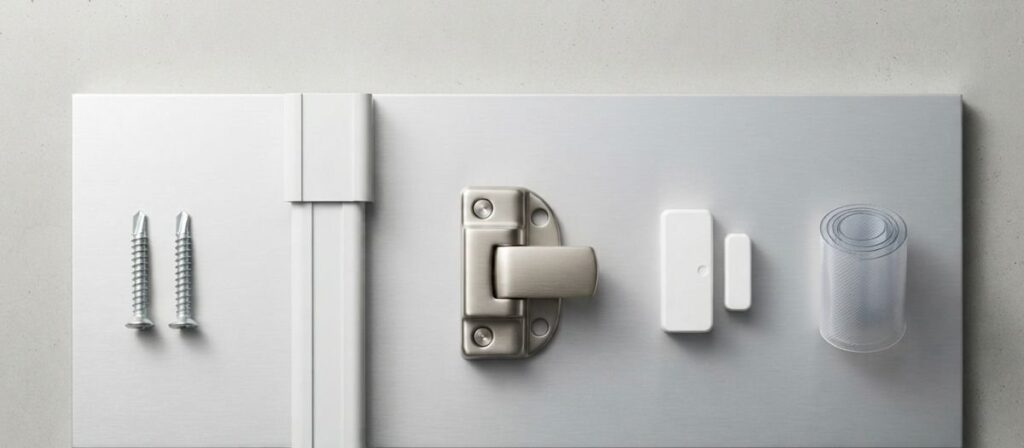
The fix: Anti-lift screws in the upper track. Drive two or three 2-inch metal screws partway into the upper track above the panel’s travel path, leaving just enough clearance for the door to slide smoothly. The panel can no longer be lifted more than a few millimeters. This is the single most underused fix for sliding doors in the Urbana rental market.
Cost: Under $5 in hardware. Takes 10 minutes. Does not damage the door or frame permanently. Renter-friendly when done correctly.
How to do it: Open the door fully. Look at the top track, just above where the sliding panel sits. Drive a 2-inch metal screw partway into the track at three points: near each end of the panel’s travel path and one in the middle. Leave a gap of approximately 10 millimeters between the screw head and the top of the panel so the door still slides normally. Test by trying to lift the panel, it should stop immediately.
Attack 2: Prying the Latch
The standard sliding glass door latch is a hook that catches a small notch in the door frame. It holds the door closed against casual pressure but fails under a crowbar or even a flathead screwdriver applied with moderate force. This is not a lock in any meaningful security sense.
The fix: A secondary auxiliary lock (specifically a foot lock, a keyed patio bolt, or a loop lock) adds a second locking point that the latch alone does not provide. A foot lock sits at the base of the door and is engaged by stepping on it. A keyed patio bolt drops a pin through the door panel into the track frame. Both require the failure of two separate mechanisms rather than one.
A Charley bar or clamp-style lock that spans across the interior of the door adds significant resistance because it distributes force across the door and frame rather than concentrating it at the latch hook. Note from the Ajax Systems guide: a simple wooden dowel in the track, while better than nothing, can be jiggled out with sufficient shaking. A purpose-built steel security bar that locks in place is more reliable than a wooden dowel.
Cost: Foot lock or keyed patio bolt: $10 to $50. Security bar: $20 to $60. No drilling required for most models, renter-friendly.
Attack 3: Breaking or Smashing the Glass
Older single-pane glass shatters with one kick. Even tempered glass can be defeated with a sharp impact tool. Once the glass breaks, a burglar reaches through, flips the latch from the inside, and slides the door open.
The fix: Security window film applied to the inside of the glass panel. A clear polymer film bonded to the glass holds the panel together when it shatters, so the glass cracks but does not fall away. An intruder who breaks the glass still cannot reach through easily because the film holds the broken pieces in place. This buys time, makes noise, and frequently causes an intruder to give up.
Look for film rated for security purposes, not just sun control. 3M Safety Series film or equivalent multi-layer products are rated to resist penetration for 60 seconds or more under repeated impact. Cost runs $5 to $20 per square foot installed. A standard sliding door panel of approximately 30 square feet runs $150 to $600 for professional installation.
Renter note: Security window film is removable. It is a renter-friendly modification in most cases, but confirm with your landlord before applying. The film does not permanently damage the glass.
Attack 4: Walking Through an Unlocked Door
Vivint’s research cites 36 percent of break-ins use an unlocked entry point. Sliding glass doors are the entry point most likely to be forgotten unlocked because most people do not use them as a primary entry point, they walk through the front door and never verify that the sliding door was latched after the last patio use.
The fix: A door contact sensor is a two-piece magnetic device that mounts adhesively on the door and frame. When the door slides open, the magnetic connection breaks and an alert goes to your phone. For renters, adhesive-mount sensors require no drilling and run on long-life batteries. This does not prevent an intruder from entering, but it alerts you the moment it happens rather than letting an unlocked door go unnoticed for hours.
Cost: $20 to $100 per sensor depending on smart home integration. Fully renter-friendly with adhesive mount models.

Renter vs Landlord: Who Pays for Sliding Door Security Upgrades in Urbana IL
This is the section no competitor article addresses, and it is the most practically important question for UIUC renters and Urbana property managers.
Under the Illinois Residential Landlord and Tenant Act (765 ILCS 720) and the Urbana Landlord-Tenant Ordinance (Chapter 12.5), landlords are required to maintain rental units in a habitable condition. Illinois courts have interpreted this habitability standard to include adequate security hardware on exterior entry points.
A first-floor sliding glass door with a worn factory latch and no anti-lift protection may be legally inadequate under the Urbana ordinance, particularly if the door faces a shared space and there is documented evidence of inadequate security. This is not a commonly litigated issue, but it is a real landlord obligation that most Urbana property managers are not aware of in the context of sliding door hardware specifically.
What tenants can request: Under the Urbana Landlord-Tenant Ordinance, tenants can request security hardware improvements in writing. A landlord’s failure to respond to a written habitability request within a reasonable timeframe may entitle the tenant to remedies under the ordinance.
What tenants can install without permission: Anti-lift screws, a security bar, a foot lock, and adhesive door sensors are all reversible modifications that most lease agreements permit without landlord authorization. These do not damage the door, frame, or glass and can be removed on move-out.
What requires landlord authorization: Security window film, a drilled anti-lift bracket, or a surface-mounted deadbolt requires confirmation with the landlord before installation. In most cases, a written request citing the security concern and the specific modification is the correct approach. Most landlords in the Urbana market will authorize non-destructive security upgrades.
Track Maintenance: The Security Step Everyone Skips
This section appears in no competitor article, and it directly affects whether any other security measure works.
A sliding door with a debris-filled or damaged track does not slide or close cleanly. A door that does not close fully cannot latch. A door that does not latch is, by definition, unsecured regardless of what hardware you have installed.
In Urbana IL’s climate, track debris accumulates from sand and grit in the summer and salt residue in the winter from tracked-in ice melt. Older aluminum track on 1970s–1980s rental stock can also warp or accumulate corrosion that prevents the door from closing flush.
Track maintenance as a security practice:
Clean the track with a vacuum and a stiff brush monthly. Lubricate the rollers and track with a silicone-based lubricant, not WD-40, which leaves a residue that attracts more debris. If the door drags, sticks, or does not close completely in one motion, the track or rollers need professional attention before any security hardware is installed.
A security bar placed in a dirty or debris-filled track may not sit flat. A foot lock on a door that does not close flush will not engage fully. Anti-lift screws installed on a door that already struggles to slide will make the problem worse. Track condition is the foundation that every other security measure depends on.
When to involve a licensed locksmith: If the sliding door latch is worn or damaged beyond what hardware additions can compensate for, a licensed locksmith can assess whether the latch mechanism should be replaced entirely. A worn latch on a 1980s aluminum door may not accept a foot lock or patio bolt without modification. Assessment by an IDFPR licensed locksmith runs $60 to $120 for a standard consultation in ZIP codes 61801 and 61802.
The Complete Security Setup: What to Install in What Order
Based on the burglar tactics and fixes covered above, here is the correct installation sequence for a sliding glass door in an Urbana IL rental property, starting with the highest-impact, lowest-cost items.
Step 1: Anti-lift screws in the upper track ($5, 10 minutes, no drilling in the door itself). Stops the lift-and-slide attack. Do this first because it takes the least effort and addresses the attack most people have never considered.
Step 2: Security bar in the bottom track ($20–$60, no drilling, renter-friendly). Stops the door from sliding open even if the latch is pried. Use a steel bar, not a wooden dowel.
Step 3: Foot lock or keyed patio bolt ($10–$50, no drilling for most models). Adds a second locking point that defeats latch-prying. Foot locks are especially practical for ground-floor units because they engage automatically as you walk past.
Step 4: Adhesive door contact sensor ($20–$100, no drilling, fully renter-friendly). Alerts you when the door opens unexpectedly. Works regardless of whether all the physical hardware failed.
Step 5: Security window film ($150–$600 professionally installed, confirm with landlord). Addresses the glass-break attack and is the only fix that slows a determined intruder who bypasses every other measure.
This five-step setup addresses all four attack methods covered earlier and costs between $250 and $825 total depending on whether film is included; less than the cost of one night’s hotel after being displaced by a break-in.
Frequently Asked Questions
Are sliding glass doors easy to break into in an Urbana IL rental?
Yes, particularly older aluminum-frame doors from the 1970s and 1980s that are common in the Urbana rental stock near UIUC. The standard factory latch can be pried in under a minute, and many older doors can be lifted off their track without touching the latch. The good news is that three renter-friendly fixes (anti-lift screws, a security bar, a foot lock) address the most common attack methods without any drilling and cost under $100 total.
What is the cheapest way to secure a sliding glass door in a rental?
A purpose-built steel security bar in the bottom track ($20–$60) and anti-lift screws in the upper track ($5) together address the two most common forced entry methods. Total hardware cost under $70. Both are renter-friendly and reversible.
Can a sliding glass door be lifted off its frame?
Yes, particularly older doors with aluminum frames. A strong upward lift pops the panel free of the track and out of the door frame entirely. Anti-lift screws driven partway into the upper track prevent this by limiting the upward movement of the panel to a few millimeters. This is one of the most important and least-known fixes for older sliding doors.
As a tenant in Urbana IL, can I install security hardware on my sliding glass door without asking my landlord?
Anti-lift screws, a security bar, a foot lock, and adhesive door sensors are all reversible modifications that do not permanently alter the door or frame. Most Urbana lease agreements permit these without authorization. Security window film and any modification requiring drilling into the door frame should be confirmed with your landlord in writing before installation.
Does my landlord have to secure my sliding glass door in Urbana IL?
Under the Illinois Residential Landlord and Tenant Act and the Urbana Landlord-Tenant Ordinance (Chapter 12.5), landlords must maintain rental units in a habitable condition, which courts have interpreted to include adequate security hardware on exterior entry points. A worn or inadequate sliding door latch on a first-floor unit facing a shared space may fall below the habitability standard. A written request to the landlord documenting the security concern is the correct first step.
Do security bars on sliding glass doors actually work?
Yes, for stopping the sliding attack. A steel security bar wedged between the door and the wall frame stops the door from sliding open even if the latch is picked, pried, or broken. The bar does not, however, stop the lift-and-slide attack or a glass-break attack. Pair the bar with anti-lift screws and security film for a complete setup that addresses all three attack methods.
How do I know if my sliding door track is secure?
Open and close the door several times. If it sticks, drags, does not close completely flush, or the latch does not engage on the first try, the track or rollers need maintenance before any security hardware can function correctly. Clean debris from the track, lubricate with silicone spray, and confirm the door closes cleanly. If problems persist, a licensed locksmith can assess the latch mechanism and track hardware during a standard service visit.
✅ Key Takeaways
First, anti-lift screws in the upper track are the most overlooked and most important fix for older sliding glass doors in Urbana rentals. They cost $5, take 10 minutes, require no drilling in the door itself, and stop the attack that bypasses every other security measure.
Second, a security bar in the track and a foot lock together cost under $100, require no drilling, and are renter-friendly by any standard lease agreement. Installing both before you need them costs less and takes less time than dealing with a break-in after the fact.
Third, if your sliding door does not close completely flush or the latch requires multiple attempts to engage, no hardware addition will compensate for that. Track maintenance is the foundation every other fix depends on.
If you want a sliding door security assessment for your Urbana IL rental or want a licensed locksmith to evaluate the latch mechanism on an older door, call Locksmith Urbana IL at (217) 288-2915. Describe the door’s age, frame type, and any closing issues, and you will get a specific hardware recommendation and price before anyone arrives.
- Available Right Now
Dealing With a Lockout Right Now?
Locksmith Urbana IL is available 24 hours a day, every day. Same-day service, upfront pricing, and a local technician who knows the Champaign County area.
Most calls in ZIP 61801 & 61802 see a technician on-site within 35 minutes