
- Residential Lockout Guide
How Many Keys to Cut When Moving Into a New Home in Urbana IL
- Locksmith Urbana IL
- 8 min read
- Urbana, IL. 61801 / 61802
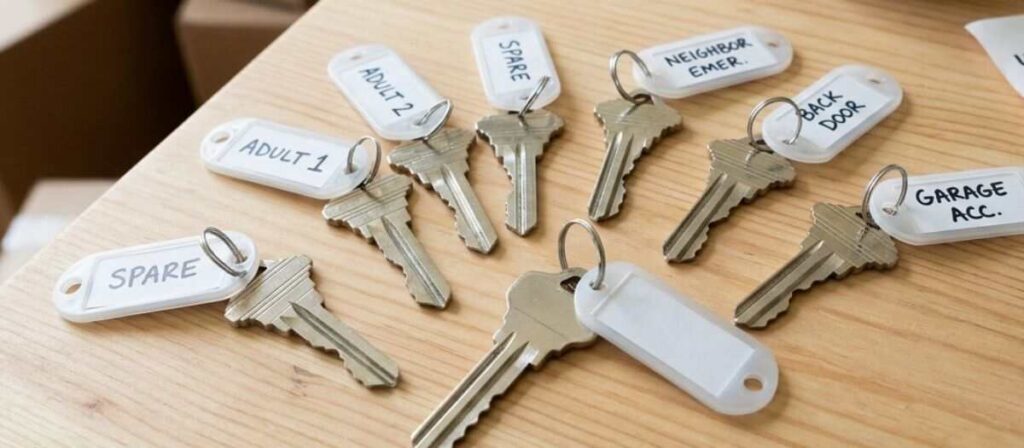
Every guide on moving into a new home tells you to change the locks. None of them tell you how many keys to cut once you do. That gap leaves new homeowners and renters guessing, and guessing wrong in either direction causes real problems: too few keys and you’re locked out at midnight, too many and you’ve lost control of who can access your home.
This guide gives you a specific, practical answer to how many keys to cut when moving, broken down by household type, entry point, and situation.
The Baseline Number: Start Here
The answer depends on three variables; how many people regularly need access, how many entry points your home has, and whether you are renting or buying. Here is the baseline calculation most locksmiths use in practice.
For each regular occupant of the home: cut two keys. One for daily carry, one kept at home as a backup. A household of two adults needs four working keys minimum before you account for spares. A household of three needs six. This sounds like more than you need until the first time someone’s key goes missing on a Wednesday night.
For each keyed entry point: plan one spare key stored at home, separate from anyone’s daily carry set. If your Urbana home has a front door, rear door, and a garage access door, that is three additional spares in a secure location inside the property.
For trusted external contacts: one key for a neighbor, trusted family member, or emergency contact who can access your home when you cannot. This is the key that prevents a $90 locksmith call when you are traveling and need someone to check on a package or a pet.
Add those together for a standard two-adult home with three exterior doors: four daily-carry keys, three spare keys stored on-site, and one emergency key with a trusted contact. That is eight keys total from a single rekey visit. A licensed locksmith cutting all eight at the same appointment costs $3 to $6 per additional key after the first, making the full set under $50 in additional cutting cost.
Key Count by Household Type and Situation
Single Occupant
Two keys minimum. One on your person at all times, one stored inside the home. Add one key with a trusted neighbor or family member in Champaign County. Three keys total is the practical minimum for a single person, and the third key is entirely about preventing a 2 AM locksmith call.
Two Adults, No Children
Four daily-carry keys, two home spares, one emergency key. Seven keys total. If both adults have independent schedules and separate vehicles, this number is not excessive. It is the setup that prevents a lockout from becoming a household conflict.
Family With Children
Add one key per child who is old enough to be responsible for one and who regularly comes home independently. Do not cut keys for children “just in case”, cut them when the child demonstrates they need independent access. For most families in Urbana IL with school-age children, the total runs eight to twelve keys once you include daily-carry sets, home spares, a school schedule spare, and an emergency key.
UIUC Off-Campus Renters
The UIUC August and September move-in window is the highest-demand period for key duplication in Champaign-Urbana. Roommate households of three to four people in off-campus apartments near Campustown commonly need six to eight keys for daily use alone, plus one additional key for the property manager as required by most lease agreements. Confirm with your lease whether a landlord key copy is required and whether you are responsible for providing it after rekeying.
Under the Urbana Landlord-Tenant Ordinance (Chapter 12.5), tenants who rekey during their tenancy must provide the landlord with a copy of the new key within a specified timeframe. Check your lease for the exact requirement before your rekeying appointment.

Where to Get Keys Cut and Why It Matters
Not all key cutting is equal, and this distinction matters most when you are cutting multiple copies from a key that has already seen use.
Self-service kiosks (KeyHero, MinuteKey) at big-box stores produce keys from a digital scan of your original. These machines work adequately when the original key is in perfect condition. When the original shows wear, which is common for keys that came with a previously-owned home, the kiosk reads the worn cuts and reproduces them, including the wear. The result is a copy that may operate the lock inconsistently, especially in cold weather when Champaign County temperatures cause metal contraction and require a more precise cut to engage properly.
A licensed locksmith with a calibrated duplicating machine reads the key mechanically and can compensate for wear, producing a clean copy from worn originals. For a move-in cutting session where you are producing six to eight copies, the difference in per-key accuracy compounds. One bad copy out of eight creates exactly the lockout scenario you were trying to prevent.
The cost difference is small. Kiosk keys typically run $3 to $6 per copy. A locksmith-cut key runs $4 to $8 per copy. For a full move-in set of eight keys, the total difference is under $20. The accuracy difference is not proportional.
During August and September in Urbana, kiosk demand at hardware stores spikes due to UIUC move-in volume. Wait times increase and machines that are not regularly recalibrated by store staff produce measurably less consistent cuts. A locally-based locksmith during this period is the more reliable option, and can cut your full set in a single visit while also rekeying the cylinders.
When to Cut Fewer Keys (and Use a Smart Lock Instead)
For some households, the answer to how many keys to cut when moving is: fewer than you think, or none at all.
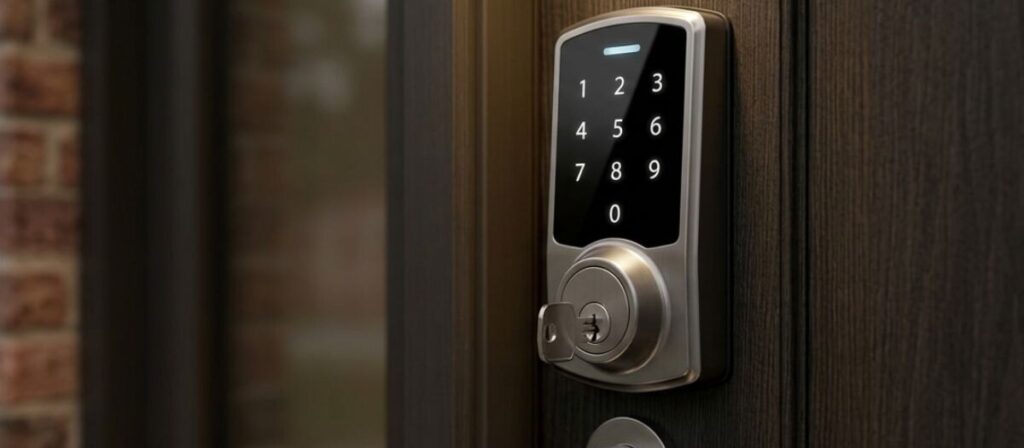
A smart lock or keypad on the primary entry door eliminates the need to cut physical keys for regular occupants. Each person gets a unique access code, which can be deactivated individually if a roommate moves out, a relationship ends, or a housekeeper’s access needs to change. No key cutting required, no key collection required, and no lockout risk for someone who forgets their key.
Smart locks do not eliminate physical key needs entirely. Most models include a mechanical key override, and that override cylinder should still be rekeyed on move-in. The override key should be treated as an emergency backup rather than a daily-carry item, and one copy should be kept with a trusted external contact.
For UIUC rentals with four roommates and frequent turnover, a smart lock pays for itself in the first lease cycle. Rekeying between tenants requires no locksmith visit when access codes change at the landlord’s discretion. For landlords managing multiple units near the Philo Road corridor or Downtown Urbana, smart locks eliminate the August scheduling pressure for rekeying appointments entirely.
What Most Moving Key Guides Don't Tell You
Restricted Keys Cannot Be Duplicated at a Hardware Store
If the home you are moving into has high-security hardware with a restricted keyway, such as a Medeco, Mul-T-Lock, or Schlage Primus cylinder, the keys are legally protected from duplication without authorization from the registered owner. A hardware store kiosk will refuse to copy them. A standard locksmith without the matching key blank cannot cut them either.
If you inherit restricted-keyway locks and need additional copies, contact the original lock manufacturer with proof of ownership to obtain authorized duplicates, or work with a licensed locksmith who holds the appropriate key blank authorization. This is not a common scenario in standard Champaign County residential properties, but it appears more frequently in newer construction with upgraded security hardware or homes previously owned by security-conscious buyers.
The Key You Were Handed at Closing Is Not the Only Copy in Existence
The US News article says it directly: a housekeeper or dog walker may have a key the previous owners forgot about. This is not a theoretical risk. Previous owners distributed keys over years of occupancy; contractors, housekeepers, pet sitters, family members. The keys handed at closing represent what the sellers remembered to collect, not the full population of copies ever made.
This is why rekeying on move-in precedes key cutting in the correct sequence. First rekey the cylinders, then cut your new set from the new key. Cutting copies from the key handed at closing distributes copies of a key that the previous owners’ contacts may also hold.
A Lockbox Is Not a Spare Key Strategy, It Is an Emergency Protocol
Many guides recommend leaving a spare key with a neighbor or in a lockbox. Both are valid, but they serve different purposes. A neighbor key is for access when you are traveling or when your daily-carry key fails. A lockbox attached to the property is for emergency access only and should use a code unknown to anyone who might use it casually.
Leaving a key under a mat, in a fake rock, or in any predictable exterior location is not a spare key strategy. It is an open invitation with plausible deniability. A coded lockbox bolted to a non-obvious exterior location is the correct implementation.

Frequently Asked Questions
Should you change the locks when you move into a new house in Urbana IL?
Yes, before cutting any new keys. Rekeying the existing cylinders first ensures that every key cut from the new configuration is the only working key. Cutting copies from the key handed at closing means you may be distributing duplicates of a key the previous owners’ contacts still hold.
How many keys should a house have in total?
For a standard two-adult household in Urbana IL, eight keys is a reasonable total: two daily-carry keys per occupant, one spare per keyed entry point stored at home, and one emergency key with a trusted contact outside the household. Larger families and roommate households scale up from there.
Do landlords have to change the keys every time a new tenant comes in Illinois?
Yes. Illinois law (765 ILCS 735/1) requires landlords to rekey or change locks before a new tenant takes possession. The Urbana Landlord-Tenant Ordinance (Chapter 12.5) adds local liability for non-compliance. After rekeying, the landlord is entitled to a copy of the new key, which the tenant must provide within the timeframe specified in the lease.
What happens when you get the keys to your new house? What should you do first?
Rekey the locks before unpacking or distributing any keys to family or contacts. Once the cylinders have new pins, cut your full set from the new key in a single locksmith visit. Rekeying first, then cutting, ensures complete key control from day one.
How much does it cost to cut a full set of keys for a new home in Champaign County?
A single rekeying visit with a licensed locksmith in ZIP codes 61801 and 61802 runs $120 to $250 for a typical three to five door home. Additional key copies cut during the same visit run $4 to $8 each from a professional locksmith. Cutting eight copies adds $32 to $64 to the rekeying cost, making the full move-in key setup typically $150 to $320 total depending on the number of cylinders and copies needed.
Is it better to cut keys at a hardware store kiosk or use a locksmith when moving in?
A locksmith with a calibrated machine produces more accurate cuts, particularly from worn original keys. The cost difference per key is $1 to $3. For a full move-in set of six to eight copies, the total price difference is under $20. During August and September in Champaign-Urbana, when UIUC move-in demand spikes, kiosk usage and maintenance may be inconsistent, a locally-based locksmith is the more reliable choice.
How should I handle key cutting if I am moving into a UIUC off-campus rental?
Confirm with your lease whether a landlord key copy is required after rekeying. Cut a key for each roommate plus one home spare per entry point. Consider a smart lock for the primary entry to eliminate ongoing key management as roommates change. Have all keys cut from the new cylinder in a single visit rather than making copies of copies over time, which degrades accuracy with each generation.
✅ Three Things to Remember
First, rekey before you cut. Every key cut from the key handed at closing is a copy of a key the previous owners’ contacts may still hold. Rekeying creates a clean starting point, and your new set should be cut from the new configuration only.
Second, the total key count for most Urbana IL households runs six to ten keys when you account for daily-carry sets, home spares, and an emergency key with a trusted contact. That number sounds high until the first time it prevents a lockout or a security incident.
Third, if your household has frequent occupant changes, a smart lock on the primary entry eliminates the need to cut and collect physical keys with every transition. The override cylinder still needs rekeying on move-in, but daily access management becomes code-based rather than key-based.
If you are moving into a home in Urbana IL or anywhere in Champaign County and want to rekey and cut your full set in a single visit, call Locksmith Urbana IL at (217) 288-2915. Tell them how many entry points you have and how many occupants need daily access, and you will get a specific key count recommendation and total price before anyone arrives.
- Available Right Now
Dealing With a Lockout Right Now?
Locksmith Urbana IL is available 24 hours a day, every day. Same-day service, upfront pricing, and a local technician who knows the Champaign County area.
Most calls in ZIP 61801 & 61802 see a technician on-site within 35 minutes