
- Automotive Lockout Guide
How Car Key Programming Works and Why It Requires Professional Equipment
- Locksmith Urbana IL
- 8 min read
- Urbana, IL. 61801 / 61802
If your car was built after the mid-1990s, cutting a new key is only half the job. The other half is convincing your vehicle’s computer to actually recognize that key, and that step is where how car key programming works becomes a genuinely technical process rather than something you can pick up with a YouTube tutorial and a spare afternoon.
This guide walks through what’s actually happening inside your vehicle during programming, the real equipment involved, why the DIY tricks that worked a decade ago don’t work anymore, and a few details Urbana IL drivers specifically should know before paying for this service.
What Car Key Programming Actually Does
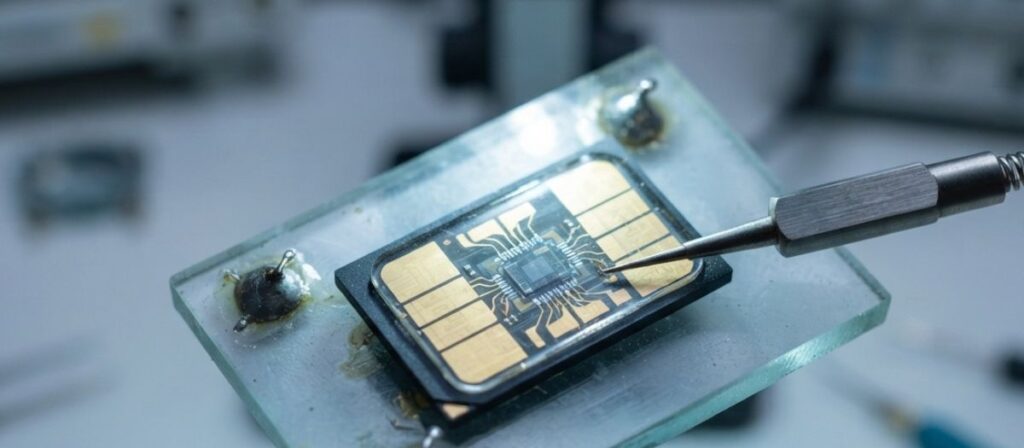
Every modern key with a plastic head contains a small embedded chip called a transponder. It has no battery of its own. Instead, your ignition barrel or start button houses a small antenna that emits an electromagnetic field the moment you insert or hold the key nearby, and that field powers the chip just long enough for it to transmit its code back.
Your vehicle’s immobilizer system communication happens in that split second. The onboard computer compares the code it just received against a stored list of authorized transponders. If the code matches, the immobilizer disengages and the engine is allowed to start. If it doesn’t match, or if there’s no key present at all, the car won’t crank no matter how good your spare metal blade is.
Programming, in plain terms, means adding your new key’s unique code to that authorized list stored in the vehicle’s computer. Without that step, a freshly cut key with the correct physical shape still won’t start the car, because the mechanical cut and the electronic authorization are two completely separate systems that both have to check out.
Not All Transponder Codes Work the Same Way
This is a detail almost no competitor explains clearly, and it directly affects why some programming jobs take fifteen minutes while others take an hour.
Older vehicles, generally built before 2000, often used fixed code transponders that return the same identifier every single time. These are the least secure and, notably, the easiest to clone, which is part of why manufacturers moved away from them.
Most vehicles from the 2000s through roughly the mid-2010s use encrypted code transponders, where the signal is scrambled using an algorithm specific to that manufacturer. Cracking or matching this code requires the actual encryption key, not just a copy of the chip’s ID.
Current vehicles almost universally use rolling code systems, where the transponder’s signal changes with every single use, synchronized between the key and the vehicle. This is nearly impossible to intercept or replicate without direct, authorized access to the vehicle’s system, which is exactly why programming today requires manufacturer-specific tools and protocols rather than a universal trick.
Adding a Spare vs Programming After All Keys Are Lost
Most competitor pages describe car key programming as a single, undifferentiated service. In practice, it splits into two genuinely different procedures with different time and cost implications, and understanding which one applies to your situation sets realistic expectations.
Adding a spare key is the more straightforward version. Since a working key already exists, the technician connects a diagnostic tool to the vehicle’s OBD-II port, puts the system into a learning mode, and has it recognize the new key’s chip alongside the ones already authorized. This typically takes 15 to 25 minutes.
All-keys-lost programming is a different job entirely. With no working key to reference, the technician first has to extract the vehicle’s security access code directly from the onboard computer, sometimes through the OBD port and sometimes, on older vehicles, through a mechanical reading of the lock itself. Every previously authorized key then gets erased from memory for security reasons, since a lost key remains capable of starting the car until that erasure happens. Only then does the new key get programmed as the vehicle’s sole authorized key. This process commonly runs 30 to 45 minutes, and can extend to an hour on vehicles that require checking in with a manufacturer’s online authorization server before allowing new programming at all.
Lost Car Key Replacement blog covers what this looks like from a driver’s perspective. This section covers the technical process behind it.
The Equipment That Makes Professional Programming Necessary
Every locksmith website says some version of “we use advanced equipment.” Almost none say what that equipment actually is, which makes it hard to tell real capability from marketing language.
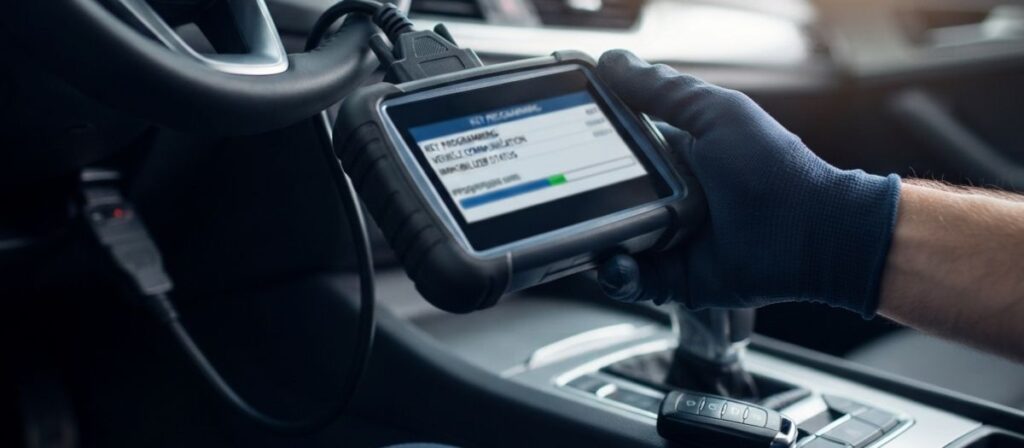
A J2534 pass-thru programming device is the industry-standard hardware that allows a technician’s laptop to communicate directly with a vehicle’s ECU using the manufacturer’s own programming protocol, the same access dealerships use. Paired with this is dealer-level diagnostic software, licensed per manufacturer, that walks the technician through the correct programming sequence for that specific make, model, and year.
This isn’t inexpensive equipment. A full professional programming setup covering multiple manufacturers commonly runs into several thousand dollars, with premium tools and the ongoing software subscriptions needed to stay current running considerably higher. That cost is part of why not every locksmith offers programming, and why a shop that does invest in it charges accordingly, though usually still well below dealership pricing.
On certain premium vehicles, particularly German and other European makes, programming requires the technician’s tool to establish an internet connection and authenticate through the manufacturer’s secure online server before any new key can be added. This step exists specifically to prevent unauthorized programming, and it’s one more reason a generic key-cutting shop without the right credentials and software access simply can’t complete the job.
Why You Can't Program a Key Yourself
The honest answer is that, for the overwhelming majority of vehicles on the road today, you can’t, and it isn’t simply a matter of following the right steps.
Manufacturer protection is built into the process deliberately. Programming protocols are locked behind security PIN codes, digital certificates, or authenticated online access that isn’t available to the general public, precisely to prevent car theft. The specialized tools capable of bypassing this protection legitimately cost thousands of dollars and require regular software updates to stay compatible with new vehicle models.
There’s also a real lockout risk that competitor pages tend to understate. A programming attempt gone wrong, using the wrong tool, interrupting the process partway, or misreading the vehicle’s requirements, can render the ignition system completely unresponsive, sometimes bricking the vehicle’s computer entirely. Repairing that mistake costs far more than paying for professional programming in the first place would have.
A small number of older vehicles, generally those built before 2005, do support a self-learning procedure using an existing master key without special tools. These cases are increasingly rare in the current vehicle fleet, and most Champaign County drivers with newer vehicles won’t have this option available to them.
Why This Also Protects You From Theft
Here’s a connection almost no competitor draws, even though it directly relates to why professional programming matters.
The same encrypted, rolling-code system that makes DIY programming impractical is also what protects your vehicle from a relay attack, where thieves use a signal booster to trick a car into thinking its legitimate key fob is nearby when it’s actually sitting on a counter inside your house. Properly programmed keys operating on current encryption standards make this attack significantly harder to pull off successfully than older, simpler RF-based systems.
This cuts the other way too. A poorly sourced aftermarket key fob, or one programmed incorrectly by someone without the right credentials, can create a weaker link in that security chain than a properly matched OEM-compatible key programmed with manufacturer-authorized tools. If you’re choosing between a cheaper aftermarket fob and a slightly pricier OEM-compatible one, ask your locksmith directly which option maintains your vehicle’s full security posture rather than assuming price is the only difference.
Mistakes Urbana Residents Make With Car Key Programming
A few misunderstandings come up often enough locally that they’re worth addressing directly.
Assuming a dead fob means you need reprogramming. In practice, most locksmiths will tell you a fob that suddenly stops responding is far more often a dead or weak battery than a programming failure, and this is especially common heading into a Central Illinois winter, since cold temperatures accelerate battery drain in small coin-cell fobs. Try a fresh battery before assuming you need a full programming visit.
Assuming any locksmith can do this. Cutting a key and programming a key are two different skill sets requiring different equipment. A locksmith offering basic lockout and duplication services may not carry the manufacturer-specific diagnostic tools needed for programming, particularly on newer or premium vehicles.
Not asking about identity verification. A reputable locksmith should check your vehicle registration and ID before programming a key in an all-keys-lost scenario, since this step protects against vehicle theft. Under 225 ILCS 447, Illinois locksmiths performing this kind of automotive work are expected to hold proper state licensing, and verifying that licensing before letting someone connect diagnostic equipment to your vehicle’s computer is a reasonable precaution.
Assuming a dealership is your only option. Dealership programming uses the same underlying manufacturer protocols a properly equipped mobile locksmith uses. The meaningful difference is usually convenience and cost, not capability, and a mobile technician can typically complete the job at your home or workplace across Urbana or Champaign County without a tow.
How Long Programming Actually Takes
Timing depends heavily on the scenario and, on some vehicles, on whether an online manufacturer server needs to be contacted.
Adding a spare key with an existing working key present generally takes 15 to 25 minutes. Replacement after loss, when the security PIN is known or retrievable directly from the vehicle, typically runs 20 to 35 minutes. A full all-keys-lost scenario, requiring code extraction and erasure of old keys before programming a new master, commonly takes 30 to 45 minutes. Vehicles requiring online manufacturer authentication add the most time, sometimes reaching an hour depending on server response and the specific model involved.
A mobile automotive locksmith completing this work at your location eliminates the need for towing or a dealership appointment, which matters if you’re stranded near Crystal Lake Park, Downtown Urbana, or anywhere without easy access to a shop.
Frequently Asked Questions
Can anyone program a car key?
No. Most modern vehicles use encrypted or rolling-code transponder systems that require manufacturer-specific diagnostic software and security access most people, and even many general locksmiths, don’t have.
Is programming a car key hard?
The physical steps are straightforward for a trained technician with the right tools, but the process requires manufacturer-specific equipment, security code retrieval, and knowledge of each vehicle’s particular quirks, which is why it isn’t a casual DIY task.
Is it possible to program a car key myself?
For the vast majority of vehicles built after the mid-2000s, no. A small number of older vehicles support a self-learning procedure with an existing master key, but this option is increasingly rare in the current vehicle fleet.
Can a key be programmed by VIN number?
The VIN is used to identify your vehicle’s specific transponder system and pull the correct programming protocol, but the actual programming still requires physical or diagnostic access to the vehicle itself, not the VIN alone.
Can a key be programmed without the car present?
No. Programming requires direct communication between the programming tool and the vehicle’s onboard computer, typically through the OBD-II port, so the vehicle must be physically present for the process to work.
Will a non-programmed key start a car?
No, not on any vehicle with an immobilizer system, which covers nearly every car built since the late 1990s. The key may turn on the ignition mechanically, but the engine won’t start until the immobilizer recognizes the key’s transponder code.
Can I program a key fob myself without the original?
In an all-keys-lost situation, self-programming generally isn’t possible on modern vehicles, since the process requires extracting a security code directly from the vehicle’s computer, something aftermarket consumer tools typically can’t do.
✅ Key Takeaways
Car key programming is fundamentally about pairing a key’s electronic code with your vehicle’s immobilizer system, not just cutting the right metal shape. The equipment required, from OBD diagnostic tools to manufacturer-specific software, is expensive and tightly controlled for good reason, since the same protections that stop a locksmith from freelancing a fix also help protect your car from theft.
If your key fob has stopped responding or you’re facing an all-keys-lost situation in Urbana or Champaign County, start by checking the battery before assuming you need full reprogramming. When you do need programming, call Locksmith Urbana IL at (217) 288-2915, or visit our Automotive Locksmith Services page to see how we handle key programming alongside replacement, ignition work, and extraction in a single mobile visit.
- Available Right Now
Dealing With a Lockout Right Now?
Locksmith Urbana IL is available 24 hours a day, every day. Same-day service, upfront pricing, and a local technician who knows the Champaign County area.
Most calls in ZIP 61801 & 61802 see a technician on-site within 35 minutes