
- Emergency Lockout Guide
Can a Locksmith Open Any Lock? What They Can and Cannot Do
- Locksmith Urbana IL
- 7 min read
- Urbana, IL. 61801 / 61802
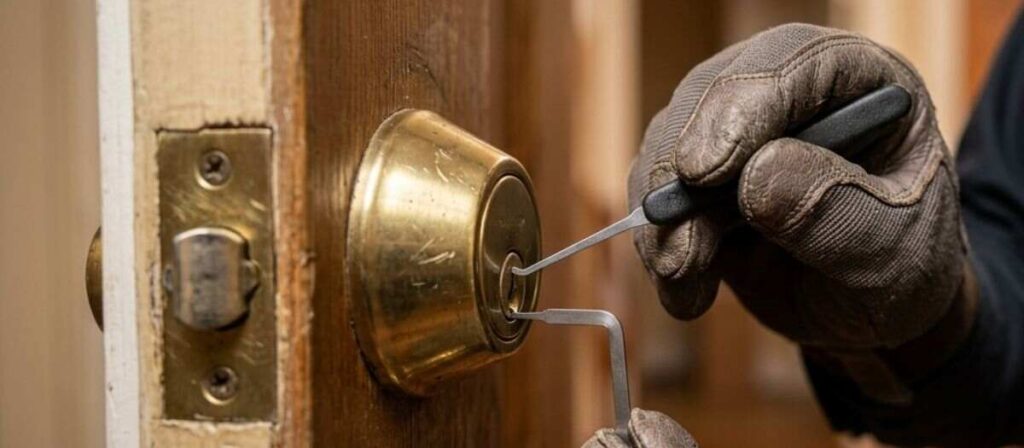
The short answer is: most locks, yes. Every lock, no. But the full answer matters more than the short one, especially if you are standing locked out of your apartment near UIUC at midnight or facing a jammed safe at a Downtown Urbana business.
A licensed locksmith brings training, tools, and legal authority to open locks in ways that protect both the property and the property owner. What they can actually do depends on the lock type, the situation, and in Illinois, the law.
What a Locksmith Can Open (and How They Do It)
Most residential and commercial lockouts are resolved without any damage to the lock or door. Here is what the average licensed locksmith handles routinely:
Pin tumbler locks are the most common lock type in Champaign County homes and rental units. They use a series of spring-loaded pins inside a cylinder. A skilled locksmith can open these using lock picking techniques in under two minutes on standard Kwikset or Schlage hardware.
Deadbolt locks, including single and double-cylinder models, are picked or shimmed depending on the mechanism. ANSI Grade 1 deadbolts take longer and require more precision, but they are openable without drilling in most cases.
Mortise locks, common in older Downtown Urbana commercial buildings and vintage apartment blocks, have more internal components. An experienced locksmith disassembles the cylinder or uses a bypass tool to gain entry without replacing the hardware.
Padlocks on storage units, sheds, or gates can usually be shimmed, picked, or cut depending on the shackle material. A hardened boron alloy shackle on a high-grade padlock requires bolt cutters or an angle grinder rather than picks.
Automotive locks are a category of their own. Modern vehicles use encrypted transponder keys and proximity fobs, not just mechanical tumblers. A locksmith with automotive programming equipment can handle most car lockouts and key replacements without a dealer visit.
Locks That Are Genuinely Difficult or Impossible to Pick
Not every lock yields to standard lock picking techniques. Some are engineered specifically to resist them.
High-Security Locks
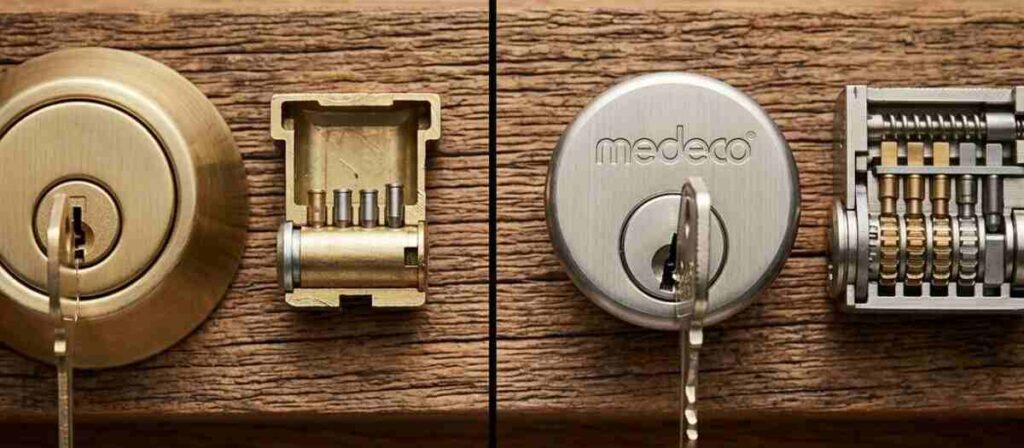
Brands like Medeco and Mul-T-Lock are built with rotating pins, sidebar mechanisms, and patented keyways that defeat most pick sets. Even experienced locksmiths will tell you these take significantly longer and sometimes cannot be opened non-destructively. If you have Medeco hardware installed on a Campustown commercial property and lose your keys, plan for a longer service call and the possibility of drilling.
Smart Locks
Smart locks do not have a traditional keyway in many models, which immediately makes standard picking tools useless. Opening a malfunctioning smart lock requires either manufacturer override codes, a backup keyhole (if the model includes one), or direct access to the electronic control board. Not every locksmith carries the equipment or software for every brand. If you are using a smart lock on a rental unit near the Philo Road corridor, confirm your locksmith handles that specific brand before they arrive.
Biometric Locks
Biometric locks that rely on fingerprint or retina data to authenticate entry have no mechanical fallback in many models. If the sensor fails or the battery dies, the locksmith may need to contact the manufacturer or use destructive entry as a last resort.
Combination Locks and Safes
Safe cracking is a specialty skill. A locksmith who handles residential lockouts is not automatically qualified to open a combination lock on a fire-rated safe or a commercial vault. Safe opening requires acoustic tools, borescopes, or drilling, and the knowledge of where to drill without destroying the locking bolt or the contents.
Illinois Law and What a Locksmith Is Actually Allowed to Do
This is the part most locksmith articles completely skip, and it matters if you live in Illinois.
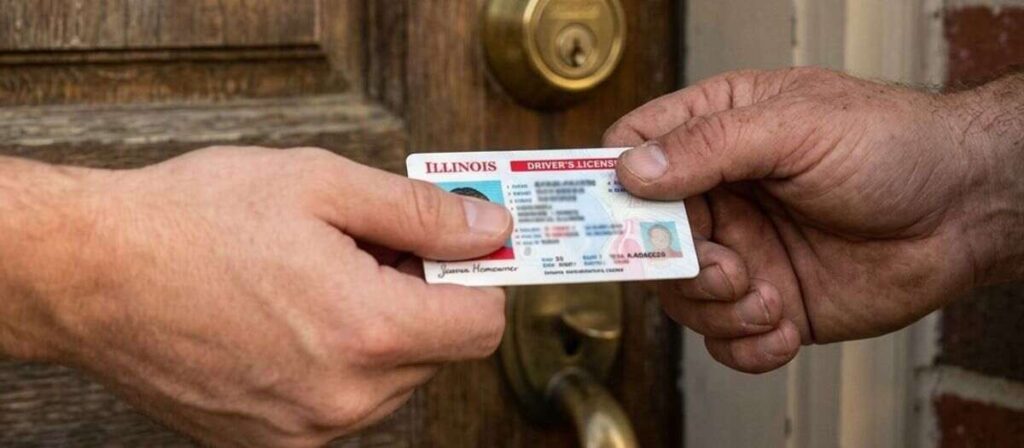
Licensed locksmiths in Illinois are regulated by the IDFPR (Illinois Department of Financial and Professional Regulation) under the Private Detective, Private Alarm, Private Security, Fingerprint Vendor, and Locksmith Act of 2004. Before opening any lock, a compliant locksmith is required to verify the caller’s proof of ownership or identity, typically a government-issued ID matching the property address, or documentation showing your right to access the vehicle or unit.
This is not optional and it is not a formality
A locksmith who opens a lock without verifying identity is exposing themselves to criminal liability. If you call for a lockout service and the technician does not ask for ID, that is a red flag, not a convenience.
For students near UIUC living in off-campus apartments, this means having your lease or student ID handy when you call. For business owners, having your business registration or a utility bill in your name speeds up the process significantly.
What Happens When a Lock Cannot Be Picked
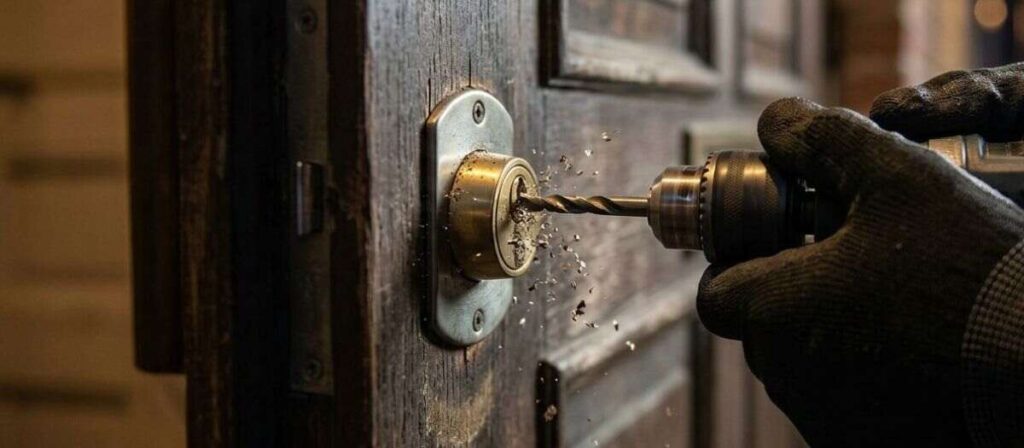
When non-destructive entry fails, a locksmith moves to destructive entry. This means drilling the lock cylinder at a precise point to release the locking mechanism. Done correctly, only the cylinder is damaged, not the door or frame.
After drilling, the cylinder must be replaced. In Urbana IL, expect to pay $80 to $150 for a basic lock replacement after destructive entry on a residential door, with higher costs for commercial-grade hardware. After-hours calls in Champaign County typically add $30 to $60 to the base service fee.
One thing most guides do not mention:
The drilling location matters. An amateur attempting destructive entry in the wrong spot can damage the door frame, the bolt mechanism, or surrounding wood turning a $100 service call into a $400 door repair. A licensed locksmith knows the exact drill point for each lock type, which protects the door and your security deposit if you are renting.
What Most Locksmith Guides Don't Tell You
- The lock brand often matters more than the lock type. A Schlage B60N deadbolt and a Medeco M3 are both called deadbolts, but their resistance to picking, bumping, and drilling is in completely different categories. The Schlage opens in seconds for most locksmiths. The Medeco may require a specialist. If you are a landlord managing rental units near Carle Foundation Hospital or the Crystal Lake Park area, installing Grade 1 Schlage hardware gives you solid security without making your units unmaintainable if tenants get locked out.
- Illinois’ dense rental market creates a specific problem. Champaign-Urbana has one of the highest rental property densities in Central Illinois due to UIUC. That means a high volume of lockout calls from students who do not have their lease on them and are calling at 2 a.m. on a Friday. A compliant locksmith must still follow IDFPR identity verification rules. Keep a photo of your lease on your phone. It makes a midnight lockout on Green Street go from 45 minutes to 15.
- Bump keys are legal to own but complicated to use. Bump keys get a lot of attention online as a way anyone can open locks. In practice, bump key technique requires skill and the right force, and it does not work on security pins or sidebar locks. Illinois law also specifies that possessing lock picking tools with intent to commit burglary is a Class 4 felony. Locksmiths carry these tools under their licensed authority.
Quick Tip
Save a local locksmith’s number in your phone before you ever need one. At midnight in a parking lot near Carle Foundation Hospital, searching for a licensed technician while stressed leads to rushed decisions. Ten seconds of prep now prevents that entirely.
Frequently Asked Questions
What locks can locksmiths not open?
Most locksmiths cannot reliably open high-security locks like Medeco or Mul-T-Lock without specialized tools, and many are not equipped to open biometric locks or certain smart locks that lack a mechanical override. Combination safes and vaults typically require a certified safe technician, not a general locksmith.
Can locksmiths open all locks?
No. A locksmith can open the vast majority of residential and commercial locks using picking, bypass, or destructive entry. But some high-security and electronic locks require manufacturer intervention or special equipment that not every locksmith carries.
Can a locksmith open a safe?
Some can. Safe opening is a specialty service. Not every licensed locksmith is trained in safe cracking. If you need a safe opened in Urbana IL, ask specifically whether the locksmith handles safe work before booking, and describe the safe brand and type when you call.
Can a locksmith open a smart lock?
It depends on the brand and model. Some smart locks have a backup keyhole; others rely entirely on electronic access. A locksmith may be able to use a manufacturer override code or bypass the electronic board, but this is not guaranteed. Ask your locksmith if they service your specific smart lock model.
Do locksmiths need proof of ownership before opening a lock in Illinois?
Yes. Under IDFPR regulations, Illinois locksmiths must verify your identity and right to access the property before opening any lock. Have a government-issued ID with your address or a copy of your lease ready when you call.
How much does it cost to open a lock in Urbana IL, and does it cost more if the lock has to be drilled?
Standard residential lockouts in Champaign County typically run $60 to $120 during business hours. After-hours calls add $30 to $60. If destructive entry is required, add $80 to $150 for a cylinder replacement. Always ask for a full estimate before the technician starts work.
What happens to my door after a locksmith drills the lock?
Only the cylinder is destroyed during a professional destructive entry. The door, frame, and lock body typically remain intact. The locksmith replaces the cylinder on the spot. If additional door hardware is damaged, that points to either a poorly executed job or pre-existing damage. Both worth noting before you pay.
✅ Key Takeaways
Not every locksmith is equipped for every lock type. If you have high-security hardware, a smart lock, or a safe, say so when you call. It saves both parties time.
In Illinois, identity verification is not optional. Have your ID and lease or proof of ownership ready before the locksmith arrives.
Destructive entry does not mean a destroyed door. When done by a professional, only the cylinder is replaced, and your door functions normally after the service.
- Available Right Now
Dealing With a Lockout Right Now?
Locksmith Urbana IL is available 24 hours a day, every day. Same-day service, upfront pricing, and a local technician who knows the Champaign County area.
Most calls in ZIP 61801 & 61802 see a technician on-site within 35 minutes